Before You Light That Fire: The Minnesota Homeowner's Complete Guide to Fireplaces & Chimneys
Before You Light That Fire: The Minnesota Homeowner's Complete Guide to Fireplaces & Chimneys
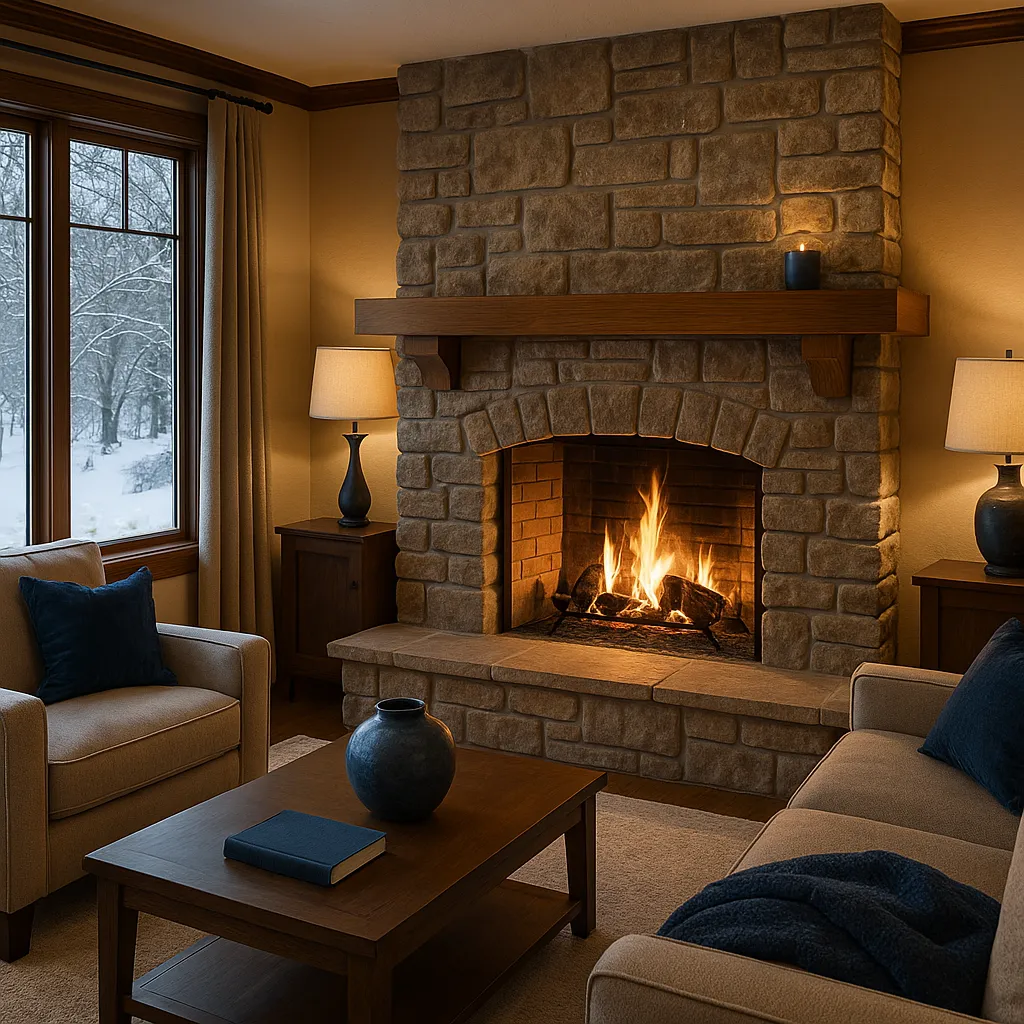
Few features sell a Minnesota home faster than a fireplace. There's something deeply appealing about one in a climate that routinely hits -20°F — the idea of a crackling fire while the wind howls outside is practically a Minnesota fantasy.
But fireplaces and chimneys are also one of the most commonly deferred maintenance areas in any home — and one of the most consequential to ignore. A chimney that hasn't been inspected in 10 years may have cracked liner tiles, a failing crown, compromised flashing, or a creosote buildup that's one hot fire away from a chimney fire.
At Circle Partners, when a home has a fireplace, we ask questions — because a fireplace that's been ignored isn't a cozy amenity. It's a liability.
Types of Fireplaces in Minnesota Homes
Masonry Wood-Burning Fireplace: The classic — brick or stone firebox built into the structure. The most durable option when properly maintained. Provides the authentic wood-burning experience that drives the feature's appeal.
Zero-Clearance (Factory-Built) Wood-Burning: A steel firebox assembly that can be installed close to combustible materials. Common in homes built from the 1980s onward. Less durable than masonry — the firebox is rated for a specific lifespan and must be inspected for deterioration.
Gas Fireplace (Vented): Burns natural gas or propane with a ceramic log set, venting combustion gases through a dedicated flue or direct-vent pipe through the wall. Requires annual inspection of the gas supply, ignition system, and venting.
Gas Fireplace (Unvented/Vent-Free): Burns gas and vents combustion products directly into the living space. Legal in Minnesota but controversial — introduces combustion byproducts and significant moisture. Have any vent-free unit evaluated by a licensed professional.
Gas Fireplace Insert: A gas firebox inserted into an existing masonry fireplace — converting wood-burning to gas while retaining the masonry aesthetic. Very common in Minnesota. The liner must be properly sized for the insert.
Electric Fireplace: No combustion, no flue. A cosmetic feature with electric resistance heat. No special inspection required beyond standard electrical evaluation.
The Chimney System: Key Components and What Can Go Wrong
The Flue: The interior passage for combustion gases. In masonry chimneys, typically lined with clay tile sections — the component you want inspected by video camera.
The Damper: Controls airflow and closes the flue when the fireplace is idle. A damper that doesn't fully close is a major energy efficiency problem — an open damper is equivalent to a large hole in your home's thermal envelope. This works against attic insulation and all other thermal envelope work.
The Chimney Crown: The concrete cap at the top that seals the space between the flue liner and chimney masonry. Cracked crowns allow freeze-thaw water infiltration — one of the most common Minnesota chimney problems. Crown repair or replacement: $300–$1,500.
The Chimney Cap: The metal cover over the flue opening. Every flue must have one — keeps rain, snow, and animals out. Replacement: $100–$300 installed.
Flashing: The metal seal where the chimney meets the roof. Flashing failure is one of the most common causes of water damage in Minnesota homes — often invisible until it's caused significant interior damage. This connects directly to exterior water management. Repair: $400–$1,500.
Common Chimney Problems in Minnesota
Creosote buildup: Wood burning deposits a tar-like residue on the flue liner. Highly flammable — a chimney fire burning through Stage 2 or 3 creosote can reach 2,000°F+, cracking the liner and potentially igniting framing. Annual cleaning removes Stage 1 before it progresses.
Cracked flue liner: Clay tile liners deteriorate from thermal cycling, acidic condensate in gas fireplaces, and chimney fires. Cracked tiles allow combustion gases and heat to escape into wall cavities — a serious safety issue requiring video inspection to identify. Liner repair or stainless steel liner installation: $1,500–$5,000.
Failed chimney crown: Cracks allow water into the chimney masonry which freezes, expands, and widens each season. Crown repair: $300–$800; crown replacement: $800–$1,500.
Masonry deterioration: Spalling brick faces and deteriorated mortar joints from freeze-thaw cycling. Tuckpointing (mortar repair): $500–$2,500. Structural failure requires more significant intervention.
Chimney Inspection Levels: What Buyers Need
Level I: Visual inspection of accessible areas. Appropriate for regularly maintained chimneys with no change in use.
Level II: Everything in Level I PLUS video inspection of the flue interior. Required when a home is being sold. Identifies cracked liner tiles, creosote staging, and internal defects invisible to Level I.
Level III: Everything in Level II plus destructive investigation — opening walls, removing components. Required when hidden damage is suspected.
When buying any home with a fireplace, request documentation of a recent Level II inspection, or negotiate for one as part of due diligence. Cost: $200–$400 by a CSIA-certified chimney sweep.
What Buyers Should Evaluate
From the exterior:
- Cap — present, intact, and properly sized
- Crown — look for visible cracks from the ground
- Masonry — significant spalling or mortar joint deterioration
- Flashing — fully sealed with no separation from chimney or roof surface
- Vegetation growing from the chimney — indicates severe mortar deterioration
From the interior:
- Firebox walls — cracks in refractory brick or mortar (through-cracks exposing the flue space are a concern)
- Damper operation — should open, close, and seal fully
- Evidence of water intrusion — staining on firebox floor, rust on damper, white mineral deposits
- Strong smoky or musty odor when damper is closed — indicates draft problem or significant creosote
Chimney safety is foundational to home safety for Minnesota homeowners and connects directly to your winter storm damage inspection checklist — cap displacement, crown damage, and flashing failures are all post-storm findings.
🏡 Real Estate Planner Perspective: A fireplace is one of the most powerful selling features in any Minnesota listing. It's also one of the most commonly neglected. We've walked homes where the fireplace "works great" according to the seller — and the chimney sweep finds Stage 2 creosote and three cracked liner tiles. A $350 inspection either confirms the feature or reveals a $2,000–$5,000 repair. That's information you want before you close. Book a consultation with Circle Partners →
Fireplace and Chimney Costs in Minnesota
| Item | Estimated Cost |
|---|---|
| Annual cleaning (Level I included) | $150–$300 |
| Level II inspection (video) | $200–$400 |
| Chimney cap replacement | $100–$300 installed |
| Crown repair | $300–$800 |
| Crown replacement | $800–$1,500 |
| Flashing repair/replacement | $400–$1,500 |
| Tuckpointing (mortar repointing) | $500–$2,500 |
| Clay liner tile repair | $1,500–$5,000+ |
| Stainless steel liner installation | $2,500–$5,000 |
| Full chimney rebuild | $5,000–$15,000+ |
| Gas fireplace insert installation | $3,000–$8,000 |
Frequently Asked Questions: Fireplaces & Chimneys in Minnesota
How often should a chimney be inspected and cleaned?
The CSIA recommends annual inspection for all chimney and fireplace systems, regardless of use frequency. For regularly used wood-burning fireplaces, annual cleaning accompanies the inspection. For gas fireplaces and occasional-use systems, an annual Level I inspection is still recommended — flashing, crowns, and caps deteriorate from weather regardless of use. When buying a home, a Level II inspection is the appropriate standard — it includes a video scan of the flue interior that can reveal cracked liner tiles and other interior defects not visible in a Level I inspection.
What is creosote and how dangerous is it?
Creosote is a tar-like residue from incomplete wood combustion that deposits on flue liner surfaces as gases cool while rising through the chimney. It ranges from a light powdery film (Stage 1) to a hard glazed coating (Stage 3). It's highly flammable — a chimney fire burning Stage 2 or 3 creosote can reach 2,000°F+, cracking clay liner tiles, spreading heat to adjacent framing, and potentially igniting the structure. Annual cleaning removes Stage 1 before it progresses. Burning only properly seasoned hardwood at adequate temperatures reduces creosote formation significantly.
What should I look for in a chimney inspection when buying a home?
Negotiate for — or request documentation of — a Level II chimney inspection when buying any home with a fireplace. Key items to evaluate: clay flue liner condition, creosote staging, chimney cap and crown condition, flashing integrity, damper operation and sealing, firebox refractory condition, and for gas fireplaces, gas supply, ignition system, and venting condition. A Level II inspection typically costs $200–$400 and is one of the most valuable pieces of due diligence for any home with a fireplace.
Can I use a fireplace in a Minnesota home I just purchased?
Not until the chimney has been inspected. Even if the seller says it works great — you have no way of knowing liner condition, creosote staging, or cap and crown integrity without a professional evaluation. Schedule a Level II inspection before the first use. A chimney fire in a home you just closed on, caused by inherited deferred maintenance, is an expensive way to learn this lesson.
What is the difference between a vented and unvented gas fireplace?
A vented gas fireplace exhausts all combustion products to the outside through a dedicated flue — combustion gases never enter the living space. An unvented (vent-free) gas fireplace burns within the living space and relies on complete combustion to produce only water vapor and CO₂. Vent-free units are legal in Minnesota but produce indoor humidity and small amounts of combustion byproducts. If you have a vent-free unit, ensure adequate ventilation, install a CO detector nearby, and have it serviced annually by a licensed professional.
How much does chimney repair or replacement cost in Minnesota?
Costs vary widely: annual cleaning runs $150–$300; chimney cap replacement $100–$300; crown repair $300–$800; flashing repair $400–$1,500; tuckpointing $500–$2,500; cracked liner repair or stainless steel liner installation $2,500–$5,000; full chimney rebuild $5,000–$15,000+. When a Level II inspection identifies significant repair needs, this is an opportunity to negotiate — either for repair credits, a price reduction, or seller-completed repairs before closing.
What is the best way to heat a Minnesota home with a fireplace?
A fireplace — wood or gas — is best understood as a supplemental heat source and an amenity, not a primary heating system. An open masonry fireplace actually draws warm air from the room and exhausts it up the flue, potentially making it net-negative for whole-home heating efficiency when the HVAC is running simultaneously. Gas inserts and sealed combustion fireplaces are significantly more efficient as supplemental sources. For primary heating, a properly sized and maintained furnace remains the most reliable solution — see our guide to furnace heating in your Minnesota home for the full picture.
The Fire You Love Needs the Maintenance It Deserves
A fireplace in a Minnesota home is a wonderful thing — if it's been maintained. If it hasn't, it's a liability dressed up as a feature.
At Circle Partners — KW Real Estate Planners, we help Minnesota buyers understand what they're buying — including the chimney that listing photos always feature but inspectors often only glance at. A well-maintained chimney is a selling point. A neglected one is a negotiating point. We help you know which you're looking at.
📞 Call us: 763-340-2002
📧 Email us: [email protected]
📍 Visit us: 16201 90th St NE, Suite #100, Otsego, MN 55330
📅 Book Your Free Real Estate Planning Consultation
Circle Partners is a licensed real estate team with KW Real Estate Planners, serving buyers and investors across Minnesota. This post is for informational purposes only and does not constitute legal, tax, or financial advice. For guidance specific to your situation, always consult a qualified attorney, CPA, or other qualified expert.