Let's be honest — when most people buy a home, the attic is not the first thing on their mind. You're picturing the kitchen, the backyard, the neighborhood. You're imagining Sunday mornings and summer cookouts.
But here's what we've learned after years of guiding families through home purchases across Wright County, Blue Earth County, and the Twin Cities metro: the attic tells the real story of a home. Its insulation levels, ventilation, and overall condition directly impact your monthly heating and cooling bills, your home's comfort in every season, your risk of ice dams, and even the long-term health of your roof.
In Minnesota's extreme climate — where we swing from -20°F in January to 95°F in July — your attic is working overtime, year-round. Understanding what's up there before you buy (or as soon as you move in) is one of the most important steps you can take as a homeowner.
For our comprehensive deep dive into attic systems, read: Understanding Your Attic Space in Minnesota: Insulation, Ventilation & Home Efficiency Guide →
Why the Attic Matters So Much in Minnesota
In most climates, the attic is a relatively passive space. In Minnesota, it is a battleground.
During winter, your home generates heat — and heat rises. Without adequate insulation, that heat escapes through your attic floor into the attic space above, then out through the roof. Your furnace runs longer and harder to replace that lost heat, driving up your energy bills and wearing out your HVAC system faster.
The same dynamic works in reverse in summer. Solar radiation heats your roof to 150°F or more on a hot day. Without proper insulation and ventilation, that heat radiates down through your attic floor into your living spaces — forcing your air conditioner to fight a battle it can never quite win.
And then there are ice dams — Minnesota's signature winter home hazard. When attic heat melts snow on your roof and that water refreezes at the cold eaves, ice dams form. Water backs up under your shingles, seeping into your attic, walls, and ceilings. Poor attic insulation is one of the primary contributors to ice dam formation — which is why what's happening in your attic affects your gutters, your roof, and your interior walls all at once.
For more on how ice dams connect to your gutter system, read: Why Does My Minnesota Home Need Gutters? →
Understanding R-Values: The Language of Insulation
Before we talk about insulation types, you need to know one term: R-value. R-value measures an insulation material's resistance to heat flow. The higher the R-value, the better the material resists heat transfer — and the more effective it is as insulation.
For Minnesota homes, the U.S. Department of Energy recommends the following attic insulation levels:
- Existing homes: R-49 to R-60
- New construction: R-49 minimum
Many older Minnesota homes — particularly those built before the 1980s and 1990s — have attic insulation levels of R-11 to R-19. That's a dramatic shortfall, and it translates directly into hundreds of dollars in wasted energy costs every year.
When you're buying a home, asking about the attic insulation's current R-value is one of the smartest questions you can ask. It gives you a clear picture of what you're inheriting — and what upgrading might cost.
Types of Attic Insulation Found in Minnesota Homes
Blown-In Fiberglass or Cellulose
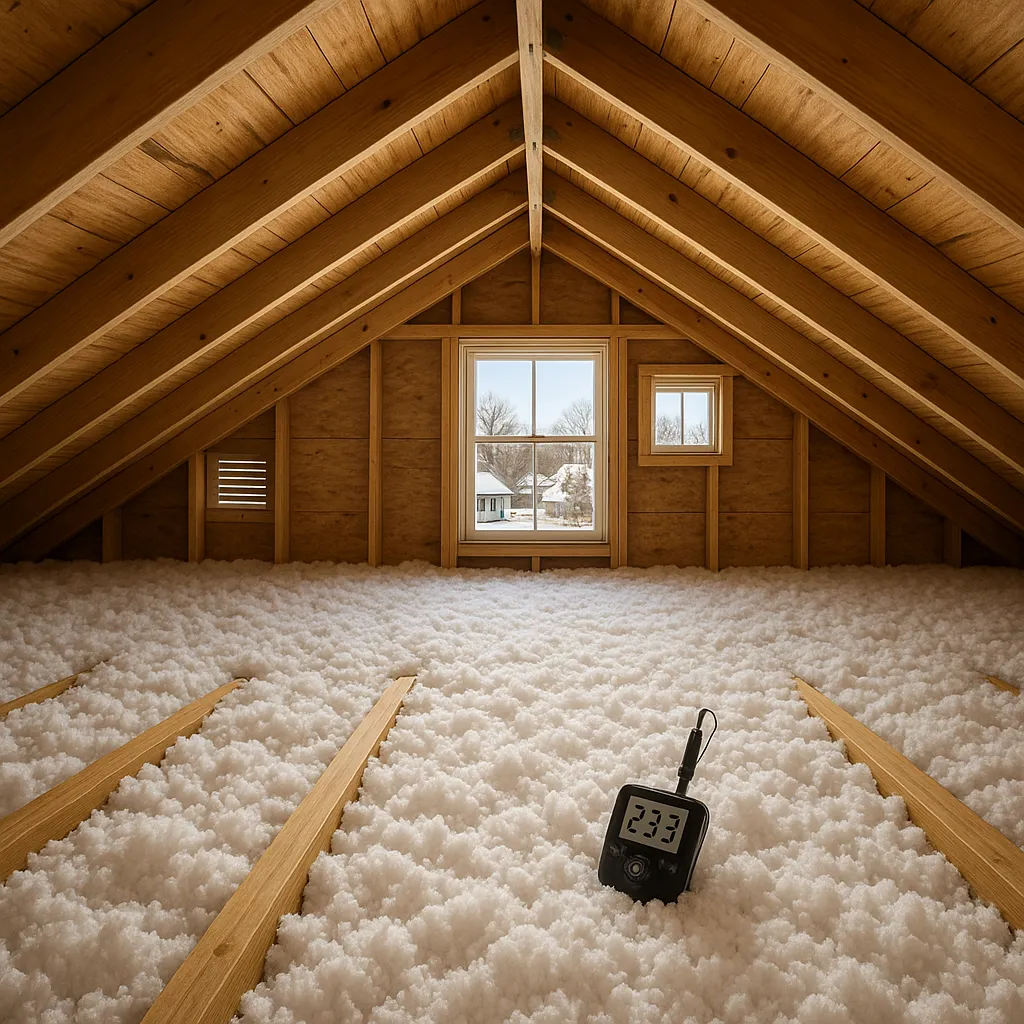
The most common type in Minnesota homes today. Loose insulation material is blown into the attic space to fill evenly between joists. Cellulose (made from recycled paper) and fiberglass are both excellent performers in Minnesota's climate. Blown-in insulation can be added on top of existing insulation to bring the total R-value up to the recommended level — making it one of the most accessible upgrades available.
Fiberglass Batt Insulation
The pink or yellow rolls most people picture when they think of insulation. Batts are cut to fit between attic joists and rafters. While effective when properly installed, they can lose performance over time if they become compressed, wet, or improperly fitted — gaps and compression dramatically reduce effective R-value.
Spray Foam Insulation
Typically used in cathedral ceiling applications, knee walls, or conditioned attic scenarios where ductwork runs through the attic. Spray foam seals air leaks while providing insulation — giving it an airtightness advantage that blown-in and batt insulation can't match on their own. More expensive but highly effective in the right applications.
Vermiculite or Older Loose-Fill Materials
Found in some older Minnesota homes (typically pre-1980s). If the attic insulation looks like gray-gold pebbles or pellets, it may be vermiculite — which has been associated with asbestos contamination in some cases. If you encounter this during a home inspection, we strongly urge having it tested by a qualified professional before disturbing it. This is absolutely not a DIY situation.
Attic Ventilation — The Other Half of the Equation
Here's something many homeowners don't realize: insulation and ventilation are both essential in your attic — and they work together. Without proper ventilation, even excellent insulation can fail to protect your home.
The goal of attic ventilation in Minnesota is to:
- Allow moisture to escape the attic space (preventing mold and rot)
- Keep the attic uniformly cold in winter (reducing ice dam risk)
- Exhaust heat buildup in summer (reducing cooling loads)
A properly ventilated attic has both intake vents (typically soffit vents along the eaves) and exhaust vents (ridge vents or gable vents at the peak). This creates continuous airflow through the attic — keeping it cold in winter and cool in summer.
Common ventilation problems to watch for:
- Blocked soffit vents — often buried under insulation during DIY projects
- Insufficient vent area for the attic square footage
- Bathroom or kitchen exhaust fans venting directly into the attic — a major moisture source
- No ridge vent combined with inadequate gable venting
During your home inspection, ask specifically whether all bathroom and kitchen exhaust fans are vented to the exterior — not the attic. This is a code requirement in most Minnesota jurisdictions, but it's still commonly found incorrectly in older homes.
Warning Signs of Attic Problems to Watch for When Buying
Before you fall in love with a home's kitchen, think about what might be happening in the attic. Here are the red flags that warrant a closer look:
- High energy bills in listing history: Consistently high utility costs in seller disclosures are often a direct signal of an under-insulated attic.
- Ice dam damage on the exterior: Staining on fascia boards, damaged gutters, or ice dam evidence at the roof edge in listing photos signals poor insulation or ventilation.
- Water stains on ceilings or upper walls: These can indicate past ice dam water intrusion through the attic.
- Visible mold or moisture in the attic: Found during inspection, this requires professional assessment — often caused by improperly vented exhaust fans or inadequate ventilation.
- Thin or compressed insulation: Less than 10–12 inches of blown-in insulation means the home is likely under-insulated for Minnesota standards.
- Blocked or missing soffit vents: A sign of potential ventilation issues that may have already caused moisture damage.
What Poor Attic Insulation Actually Costs You
Let's make this concrete. An under-insulated attic has real, measurable financial consequences:
- Higher heating bills: A home with R-19 attic insulation versus R-49 can cost 20%–30% more to heat through a Minnesota winter. On a $2,000 annual heating bill, that's $400–$600 in unnecessary cost every year.
- Higher cooling bills: The same insulation gap in summer drives AC overconsumption — typically 10%–25% higher cooling costs. Read: 10 Smart Ways to Lower Your Air Conditioning Bills in Minnesota →
- Ice dam damage: A single ice dam event can cause $5,000–$30,000+ in interior damage to ceilings, walls, insulation, and structural framing. Prevention through proper attic insulation and ventilation is dramatically less expensive.
- Shortened roof lifespan: Ice dams and trapped moisture accelerate shingle deterioration and damage roof decking.
- Reduced home comfort: Rooms too hot in summer, too cold in winter, and uneven temperatures across floors are all classic signs of attic deficiencies.
For the connection between your heating system and attic performance, read: Why a Furnace Is Still the Best Way to Heat Your Minnesota Home →
Upgrading Your Attic Insulation: What to Expect
If the home you're buying has under-insulated attic space, the good news is that attic insulation upgrades are among the most straightforward and cost-effective home improvements available. Here's what to expect:
- Blown-in insulation addition: If existing insulation is in good condition, a contractor can blow additional cellulose or fiberglass on top to bring the total to R-49 to R-60. Cost typically ranges from $1,500 to $4,000+ depending on attic size and access.
- Full attic insulation replacement: If existing insulation is damaged, wet, or contaminated, full replacement may be needed. Costs vary significantly based on scope and whether remediation is required.
- Air sealing before insulating: The most effective upgrades begin with air sealing — identifying and sealing gaps around electrical penetrations, plumbing, recessed lights, and attic hatches before adding insulation. This is often where the greatest efficiency gains come from.
Minnesota utilities and state energy programs may offer rebates for qualifying insulation upgrades. Check with your provider for current programs. For guidance on the financial aspects of homeownership, always consult a qualified financial advisor.
For a broader view of energy efficiency upgrades, read: The Complete Minnesota Homeowner's Guide to Improving Energy Efficiency →
Your Attic Inspection Checklist: What to Ask Your Home Inspector
When you're buying a home in Minnesota, use your home inspection as an opportunity to get specific answers about the attic. Here's what to ask:
- What type of insulation is present in the attic?
- What is the approximate current R-value?
- Are soffit vents clear and unobstructed?
- Are all bathroom and kitchen exhaust fans vented to the exterior?
- Is there any evidence of moisture, mold, or ice dam damage?
- Is the attic hatch insulated and weatherstripped?
- Is there any evidence of pest activity — mice, squirrels, or birds?
These questions give you a clear picture of what the attic's condition means for your comfort, your energy costs, and your negotiating position. Our team at Circle Partners is always in your corner at the inspection — making sure you understand what every finding means for your offer and your life in that home.
For more on what it costs to buy in Minnesota, read: How Much Are Closing Costs When Buying a Home? →
Your Annual Attic Checklist After You Move In
Once you're in your new home, put the attic on your annual fall maintenance list. Every October, before heating season kicks in, do a quick visual check:
- Make sure nothing is blocking your soffit vents
- Check that insulation hasn't been disturbed or compressed
- Look for signs of moisture, animal activity, or new air gaps
- Confirm all exhaust fans are working and venting to the exterior
Our October Home Maintenance Checklist covers your full pre-winter attic prep: Home Maintenance Checklist for October →
7 Frequently Asked Questions: Attic Insulation in Minnesota Homes
Q: What R-value should my attic insulation be in Minnesota?
A: The U.S. Department of Energy recommends R-49 to R-60 for attic insulation in Minnesota's cold climate zone. Many older homes fall well short of this — particularly those built before the late 1980s. If your home has less than R-38, upgrading is one of the highest-ROI improvements you can make.
Q: How do I know if my attic is under-insulated?
A: Signs include higher-than-expected energy bills, rooms that are too cold in winter or too hot in summer, ice dam formation each winter, and cold floors on upper levels. A home energy auditor or HVAC contractor can measure your current R-value and assess ventilation as part of a broader assessment.
Q: What type of attic insulation is best for a Minnesota home?
A: Blown-in cellulose or blown-in fiberglass is generally the top recommendation for Minnesota attics. Both achieve excellent R-values, fill gaps well, and can be added on top of existing insulation. Spray foam is excellent for specific applications like sealing air leaks and insulating knee walls, but is typically more expensive as a primary attic solution.
Q: What causes mold in a Minnesota attic?
A: Attic mold is almost always a moisture problem. The most common causes are bathroom or kitchen exhaust fans venting into the attic instead of to the exterior, inadequate ventilation, and air leaks allowing warm, humid interior air into a cold attic space. Any visible attic mold should be assessed by a qualified professional before you purchase the home.
Q: Does attic insulation help with ice dams in Minnesota?
A: Yes — significantly. Ice dams form when heat escaping from your living spaces warms the roof deck, melting snow from below. That melt water runs down and refreezes at the cold eaves. A well-insulated and properly ventilated attic keeps the roof deck uniformly cold, dramatically reducing the conditions that drive ice dam formation.
Q: Should attic insulation issues affect my home offer in Minnesota?
A: Absolutely — it should be factored in. If a home has significant attic insulation deficiencies, you can request the seller address the issue before closing, negotiate a price reduction to cover the upgrade cost, or request a seller concession post-closing. Our team at Circle Partners helps you understand the cost of every inspection finding and how to use it to negotiate in your best interest.
Q: Are there grants or rebates for attic insulation upgrades in Minnesota?
A: Yes — Minnesota's major utilities (Xcel Energy, CenterPoint Energy) and some county-level programs offer rebates for qualifying attic insulation improvements. The Minnesota Department of Commerce also administers energy assistance and weatherization programs for qualifying homeowners. Rebate amounts and eligibility change regularly — always check with your provider directly. For personalized financial guidance, consult a qualified financial advisor.
Your Attic Is an Asset — Let's Make Sure It's Working For You.
The best homeownership experience starts with knowing your home — fully and honestly. Not just the kitchen and the yard, but the systems you can't always see: the attic, the insulation, the ventilation. These are the things that determine whether your home is a joy to live in or a constant source of frustration and unexpected bills.
Our team at Circle Partners are certified Real Estate Planners who help you see past the surface and understand exactly what you're buying — so you can negotiate confidently, budget accurately, and build the foundation for a home that truly serves your family for years to come.
We'd love to sit down with you, walk through your goals, and make sure your next home is right on every level — even the one you can't always see.
📅 Book Your Free Strategy Session →
Have questions? Reach us at [email protected] or call 763-340-2002. Our office is at 16201 90th St NE, Suite #100, Otsego, MN 55330.
*This article is for informational purposes only and does not constitute legal, financial, or tax advice. For guidance specific to your situation, please consult a qualified attorney or tax professional.