11 Things Every Minnesota Homeowner Should Do to Keep Their Home Safe
Buying a home is one of the biggest financial decisions you'll ever make. But once you're in the door, the responsibility shifts — and it shifts fast. Because a home isn't just an investment. It's where your family lives. And keeping that family safe in a Minnesota home requires more than good instincts. It requires intentional action.
At Circle Partners, we work as Real Estate Planners — not just transaction facilitators. That means we think about the long game. And nothing protects your long-term wealth — or your family — like a home that's built around safety.
Here are 11 essential things every Minnesota homeowner should do. Some take five minutes. Some are a once-a-decade investment. All of them matter.
1. Test Your Smoke Detectors — Then Put It on Your Calendar
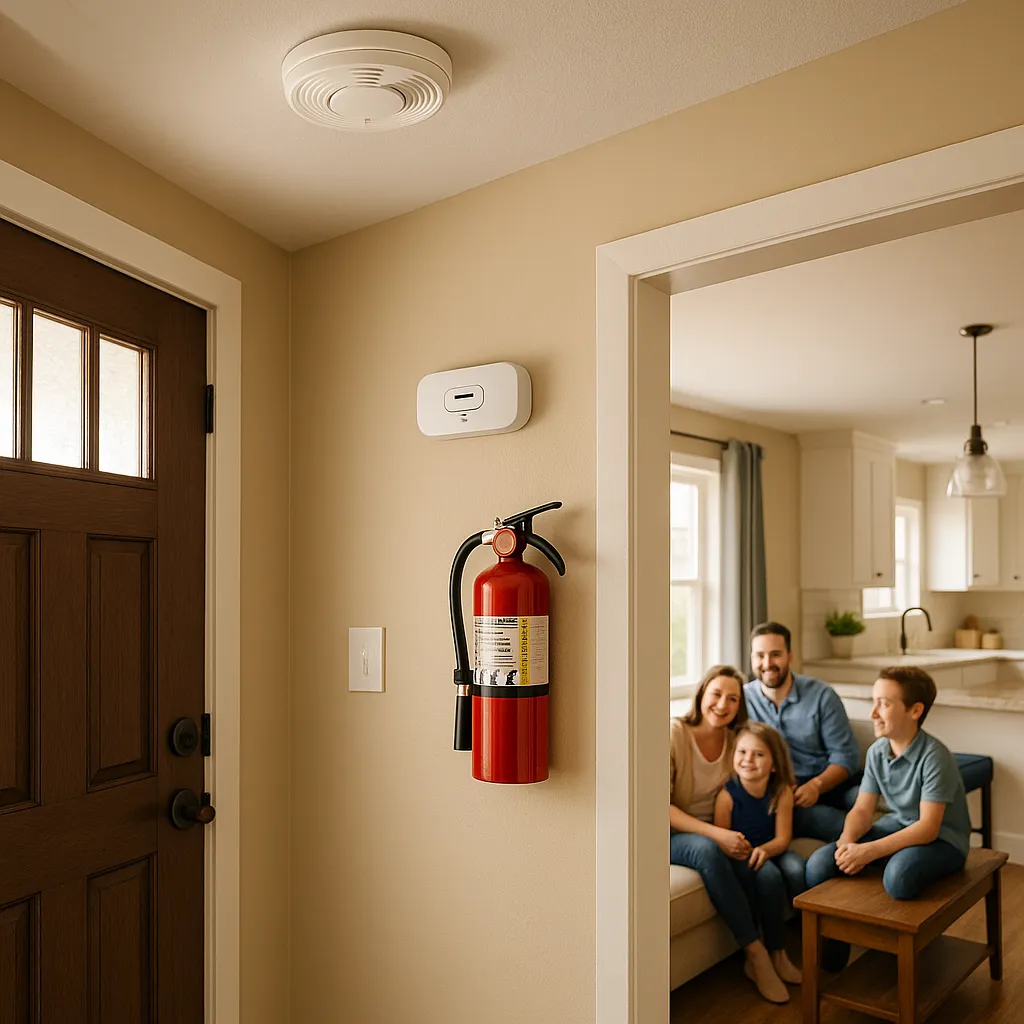
This one sounds basic. It isn't. According to the National Fire Protection Association, nearly two-thirds of home fire deaths occur in homes with no working smoke alarms — or alarms that failed when needed. A smoke detector with a dead battery is the same as no smoke detector at all.
Minnesota homeowners: here's your action plan:
- Test every smoke detector in your home monthly by pressing the test button
- Replace batteries in battery-powered units every year — pick a date you'll remember
- Replace the entire unit every 10 years — smoke detectors degrade over time regardless of battery condition. Check the manufacture date on the back of the unit.
- Placement matters: Smoke detectors should be on every level of the home, inside every sleeping room, and outside each sleeping area. In Minnesota homes with basements, that means a detector in the basement too.
- Interconnected systems: If one alarm sounds, they all sound. Modern interconnected systems are significantly more effective — especially in larger homes.
If you're buying a home, verify the age and placement of every smoke detector before you close. This is one of the fastest, cheapest safety upgrades available — and one of the most consequential.
2. Install Carbon Monoxide Detectors — Minnesota Law Requires It
Carbon monoxide (CO) is called the silent killer for a reason. Colorless, odorless, and tasteless — you can't detect it without a detector. And in Minnesota, where homes run furnaces, water heaters, gas appliances, and attached garages for many months of the year, the risk is year-round and real.
Minnesota law requires carbon monoxide alarms to be installed within 10 feet of each sleeping room in all new construction and when a home is sold. But legal compliance is the floor — not the ceiling.
Circle Partners recommends:
- At minimum, one CO detector on every level of the home and within 10 feet of every sleeping room
- Combination smoke/CO detectors for simplified coverage
- Interconnected CO alarms — if one triggers, all alert
- CO detectors have a lifespan of 5-7 years — check and replace accordingly
The highest CO risks in a Minnesota home:
- A furnace that hasn't been serviced — a cracked heat exchanger can leak CO into living spaces. Our guide on your furnace and heating system explains why annual furnace service is non-negotiable in Minnesota.
- Attached garages — running a car in an attached garage, even briefly, can allow CO to migrate into the home
- Gas generators used during winter power outages — NEVER operate a generator indoors or in an attached garage
- Gas fireplaces and stoves with improper venting
If your CO alarm sounds — evacuate immediately, leave the door open, and call 911 from outside. Do not re-enter until emergency services have cleared the home.
3. Test for Radon — Minnesota's Invisible Health Hazard
If you haven't tested your home for radon, this needs to move to the top of your list. Not next month. Now.
Radon is a naturally occurring radioactive gas that seeps from the ground into homes through foundation cracks, floor drains, and sump pits. It accumulates in basements and lower levels — and it is the second leading cause of lung cancer in the United States, responsible for approximately 21,000 deaths per year. Minnesota is one of the highest-risk states in the country, with approximately 2 in 5 Minnesota homes having radon levels at or above the EPA's action level of 4 pCi/L.
What to do:
- Test your home if you haven't in the last two years — short-term test kits are available at hardware stores for $15-$30, or hire a certified measurement professional
- If levels are at or above 4 pCi/L, contact a certified radon mitigation contractor
- Mitigation systems typically cost $800-$2,500 and reduce radon levels by 80-99%
- Retest after any major renovations or changes to the foundation
Our complete guide on radon testing before you buy covers everything you need to know — including what to look for in a new home purchase.
4. Know Where Your Main Shutoffs Are — Before You Need Them
This one costs nothing. It takes fifteen minutes. And it can prevent catastrophic damage in an emergency.
Every Minnesota homeowner needs to know the location of three critical shutoffs:
Water Main Shutoff: Located either in the basement near where the water service enters the home, or near the water meter. In a burst pipe emergency, getting to the main shutoff within seconds can mean the difference between a minor cleanup and a gutted basement. Our guide on plumbing in Minnesota homes covers this and more.
Gas Main Shutoff: Located where the gas line enters the home from the street or at the meter outside. If you smell gas, don't search for the indoor shutoff — leave immediately, don't touch any switches, call your gas company from outside, and let them shut it off.
Electrical Main Shutoff: Your main breaker panel. Know where it is, know which breaker controls which circuit, and make sure the panel is labeled. In a flood situation — a real possibility in Minnesota basements during snowmelt — shutting power before water reaches electrical components can prevent fires and electrocution.
Action step: Walk your home with every family member and locate all three shutoffs. Write the location on a card and post it inside a kitchen cabinet. Do it today.
5. Place Fire Extinguishers Strategically Throughout Your Home
A fire extinguisher is only useful if it's accessible in the first 30 seconds of a kitchen fire — not if it's buried in a garage closet. Proper placement is everything.
Minnesota homeowner fire extinguisher guide:
- Kitchen: Mount within reach of the stove — but not directly next to it
- Garage: A second extinguisher near the garage door opener or workbench area
- Basement: Especially if your basement has a workshop, laundry, or mechanical equipment
- Each additional floor: One per level for larger homes
Look for an ABC-rated dry chemical extinguisher — handles ordinary combustibles (A), flammable liquids (B), and electrical fires (C). Know how to use it — PASS: Pull, Aim, Squeeze, Sweep. Check pressure gauges annually and replace or recharge after any use.
6. Upgrade to GFCI Outlets Near Water — It's Code and It's Life-Saving
Ground Fault Circuit Interrupter (GFCI) outlets — the special outlets with the small test and reset buttons — instantly shut off power when they detect a ground fault, preventing electrocution in areas where water and electricity coexist.
Required locations in Minnesota homes: All bathroom outlets, kitchen countertop outlets within 6 feet of a sink, garage outlets, outdoor outlets, basement outlets near any water source, and laundry areas.
When buying an older home: pre-1975 homes may not have GFCI outlets in these locations. This is a legitimate safety upgrade to request as an inspection item — or to budget for immediately after purchase. Also check your electrical panel. Older Federal Pacific Stab-Lok or Zinsco panels have documented safety issues and may warrant professional evaluation and possible replacement.
7. Set Your Water Heater to 120°F — Prevent Scalding
Most water heaters are factory-set at 140°F — hot enough to cause a third-degree burn in just five seconds of exposure. The U.S. Consumer Product Safety Commission recommends 120°F as the safe default for residential use. At 120°F, scalding requires about five minutes of exposure — a dramatically safer threshold, especially for young children and older adults.
Locate the thermostat on your water heater and dial it down to 120°F. This takes about 30 seconds and can prevent a serious burn injury. If you have an older dishwasher without an internal heating element, check the manufacturer's requirements before adjusting the temperature.
8. Secure Your Basement — Minnesota's Unique Safety Challenges
Minnesota basements are functional spaces — but they're also where several specific safety hazards concentrate.
Egress and emergency exit: Minnesota building code requires egress windows in basement sleeping rooms — windows large enough to climb through in an emergency. If your basement has a bedroom or sleeping area without a proper egress window, this is a code violation and a genuine safety risk. Egress window installation typically runs $1,500-$3,500 per window.
Sump pump reliability: A failing sump pump during Minnesota's spring snowmelt is a fast path to a flooded basement. Test your sump pump seasonally, ensure the battery backup is operational, and replace units over 8 years old. Full details in our guide on basements and foundation types in Minnesota.
Stair safety: Basement stairs in older Minnesota homes are frequently steep, narrow, and poorly lit. Install solid handrails on both sides, ensure adequate lighting at both the top and bottom of the stairs, and apply non-slip treads — especially important in a state where wet and muddy boots come with the territory.
9. Prepare for Minnesota's Severe Weather — Tornadoes and Blizzards
Minnesota isn't just cold. It's a state where tornadoes, severe thunderstorms, and blizzards are recurring realities — and where being unprepared can have life-threatening consequences.
Tornado preparedness:
- Identify your home's safest interior space on the lowest level — an interior bathroom, closet, or under a stairwell
- Keep a weather radio or reliable alert app active during storm season (May through September)
- Know the difference between a tornado watch (conditions favorable) and tornado warning (take shelter immediately)
- Helmet storage in your shelter area provides meaningful head protection
Blizzard and power outage preparedness:
- Maintain a 72-hour emergency kit: water (one gallon per person per day), non-perishable food, flashlights, batteries, first aid supplies, medications, and blankets
- Generator safety: Never operate a generator indoors, in a garage, or within 20 feet of a window or door. Carbon monoxide from generators is a leading cause of Minnesota winter deaths.
- Keep your vehicle's fuel tank above half during winter months
Our guide on winter storm damage and home safety covers seasonal preparedness in detail.
10. Lock Up and Secure Entry Points — Your Home's Physical Security
Home security is part of home safety. Foundational physical security measures make your home a harder target.
Doors: All exterior doors should have grade-1 or grade-2 deadbolts. Reinforce door frames with steel strike plates using 3-inch screws that reach the stud behind the frame. For sliding glass doors, use a security bar in the floor track and consider a pin through the upper frame to prevent lifting.
Windows: Consider auxiliary window locks or security pins on ground-floor and basement windows. Window sensors connected to a security system provide an additional layer of alerting.
Lighting: Motion-activated exterior lighting at all entry points is one of the most cost-effective security deterrents available. Well-lit entries eliminate shadows that provide cover.
Smart home security: Video doorbells, door and window sensors, and monitored alarm systems have become increasingly affordable — even a basic system that alerts you to unexpected entry provides meaningful peace of mind.
11. Maintain Your Home Proactively — Safety Is a Habit, Not a Checklist
The most important safety habit isn't any single item — it's the mindset of consistent, seasonal home maintenance. The homeowners who face the fewest safety crises are the ones who catch small problems before they become dangerous ones.
Build these into your routine:
- Spring: Inspect the roof and gutters after winter, test sump pump, check for foundation cracks after frost, service the AC system
- Summer: Check deck and outdoor structure integrity, test smoke and CO detectors, trim trees near the home and roofline
- Fall: Service the furnace before heating season begins, clean gutters, check weatherstripping and caulking, stock your emergency kit
- Winter: Keep furnace vent clear after snowfall, use calcium chloride ice melt on steps and walkways, test CO detectors
A deep clean of your home twice a year also surfaces hidden safety issues — mold behind appliances, pest activity, deteriorating caulking around plumbing, and more.
Real Estate Planner Tip: When you're evaluating a home to buy — or preparing your current home to sell — safety systems matter. Homes with documented, functioning safety systems command buyer confidence and often move faster. Our team at Circle Partners helps buyers and sellers understand which safety upgrades have the highest impact. Book your consultation today
Frequently Asked Questions: Home Safety in Minnesota
What are the most important home safety features in a Minnesota home?
The top priorities for Minnesota homeowners are: working smoke detectors on every level and in every sleeping area, carbon monoxide detectors near all sleeping rooms (required by Minnesota law in homes sold or newly built), radon testing and mitigation if levels are elevated, GFCI outlets near water sources, a properly functioning sump pump with battery backup in homes with basements, knowledge of all utility shutoff locations, and severe weather preparedness including tornado shelter identification and a 72-hour emergency kit.
Do I need a carbon monoxide detector in my Minnesota home?
Yes — and Minnesota law requires it. Carbon monoxide alarms must be installed within 10 feet of each sleeping room in all new construction and at the time of home sale. Beyond legal compliance, CO detectors are essential safety equipment in any Minnesota home with a fuel-burning furnace, attached garage, gas appliances, or gas fireplace. CO detectors have a lifespan of 5-7 years — check the manufacture date and replace as needed.
How often should I test smoke detectors in my Minnesota home?
Smoke detectors should be tested monthly by pressing the test button. Batteries in battery-operated units should be replaced annually. The entire unit should be replaced every 10 years regardless of apparent function — the sensors degrade over time. Check the manufacture date on the back of each unit. Homes should have smoke detectors on every level, inside every sleeping room, and outside each sleeping area.
What home safety features should I look for when buying a home in Minnesota?
Key safety features to evaluate in any Minnesota home purchase include: the age and placement of smoke and CO detectors, whether radon has been tested and what levels were found, the condition and age of the electrical panel, the presence and functionality of GFCI outlets in kitchens, bathrooms, garages, and basements, egress windows in any basement sleeping rooms, sump pump age and battery backup, and the general condition of stair handrails and lighting throughout the home.
How do I make my basement safer in a Minnesota home?
For Minnesota basements specifically: verify egress windows are present and functional in any sleeping area, test the sump pump and ensure battery backup is operational, install solid handrails and adequate lighting on basement stairs, apply non-slip treads on stair surfaces, test for radon (basements are where radon concentrates), and ensure the CO detector covers the basement level. Also confirm the water main shutoff location and that it operates freely.
What fire safety steps should every Minnesota homeowner take?
Place ABC-rated fire extinguishers in the kitchen, garage, basement, and on each additional floor. Test smoke detectors monthly and replace them every 10 years. Know two exit routes from every room in the home. Practice a fire escape plan with your household and designate a meeting point outside. Never leave cooking unattended, and keep dryer lint traps clean. Have your chimney cleaned annually if you use a wood-burning fireplace.
Are there home safety features that can lower my homeowners insurance in Minnesota?
Many Minnesota insurance carriers offer discounts for homes with monitored security systems, fire sprinklers, deadbolt locks, smoke detectors, and sometimes newer electrical panels or updated roofing. The specific discounts vary by carrier and policy — contact your insurance agent directly to find out what improvements qualify. For guidance on how safety improvements might affect your taxes or home cost basis, always consult a qualified tax professional.
Your Home Should Be Your Safest Place
In Minnesota, we invest in our homes. We maintain them against the elements, we build equity in them over years, and we raise our families in them. They deserve to be safe — not just comfortable.
At Circle Partners — KW Real Estate Planners, we help Minnesota buyers and homeowners make smart decisions about their properties — decisions that protect both their families and their financial futures. Safety isn't separate from smart homeownership. It's part of it.
Call us: 763-340-2002
Email us: [email protected]
Visit us: 16201 90th St NE, Suite #100, Otsego, MN 55330
Circle Partners is a licensed real estate team with KW Real Estate Planners, serving buyers and investors across Minnesota. This post is for informational purposes only and does not constitute legal, tax, or financial advice. For guidance specific to your situation, always consult a qualified attorney, CPA, licensed contractor, or other qualified professional.