What's Under Your Home: The Minnesota Buyer's Complete Guide to Basements, Crawlspaces & Slab Foundations
Before you fall in love with the kitchen or get excited about the backyard, there's something you need to understand about every home you're considering in Minnesota: what it's sitting on.
The foundation isn't glamorous. It doesn't show up in listing photos. Nobody posts about it on Instagram. But it is the single most structurally consequential part of any home — and in Minnesota, where freeze-thaw cycles, clay soils, hydrostatic pressure, and brutal winters put our foundations through stress that most of the country never experiences, understanding what type of foundation a home has — and what condition it's in — is one of the most important things you can do as a buyer.
At Circle Partners, we work as Real Estate Planners. That means we help you look past the staging and the countertops and ask the harder, more financially important questions — like what's holding this home up, and what's it going to cost to keep it that way?
Here's your complete buyer's guide to Minnesota foundation types.
Why Minnesota's Climate Makes Foundation Evaluation Critical
Most of the country doesn't think much about foundations. Minnesota buyers have to.
Minnesota building code requires footings to be placed below the frost line, which generally falls between 42 and 48 inches below grade. This requirement exists because when moisture-laden soil freezes, it expands — a phenomenon called frost heave — that can push, crack, and shift any structure not properly anchored below it.
Add to that:
- Clay-heavy soils across much of the Twin Cities Metro and Wright County, which expand significantly when wet and contract sharply when dry — creating continuous lateral pressure on foundation walls
- Extreme snowmelt events that saturate the soil and create hydrostatic pressure against basement and crawlspace walls
- Temperature swings from -30°F to 95°F that expand and contract concrete, mortar, and block year after year
The result is that Minnesota foundations work harder — and show their age more clearly — than in most other states.
Real Estate Planner Perspective: Foundation issues are the one category where we most frequently see buyers either panic unnecessarily or underestimate the problem. Not every crack is a catastrophe — but some are. Our team knows the difference and can help you evaluate any property with clear-eyed financial perspective. Book a consultation with Circle Partners
Foundation Type 1: The Full Basement — Minnesota's Most Common
Walk into almost any home built in Minnesota after 1950, and you'll find a basement. Since footings already need to go 4+ feet underground, adding another 4-5 feet to create a full basement adds relatively little marginal cost while delivering enormous functional value: living space, storage, mechanical room, and in many newer homes, fully finished square footage.
Types of Minnesota Basements
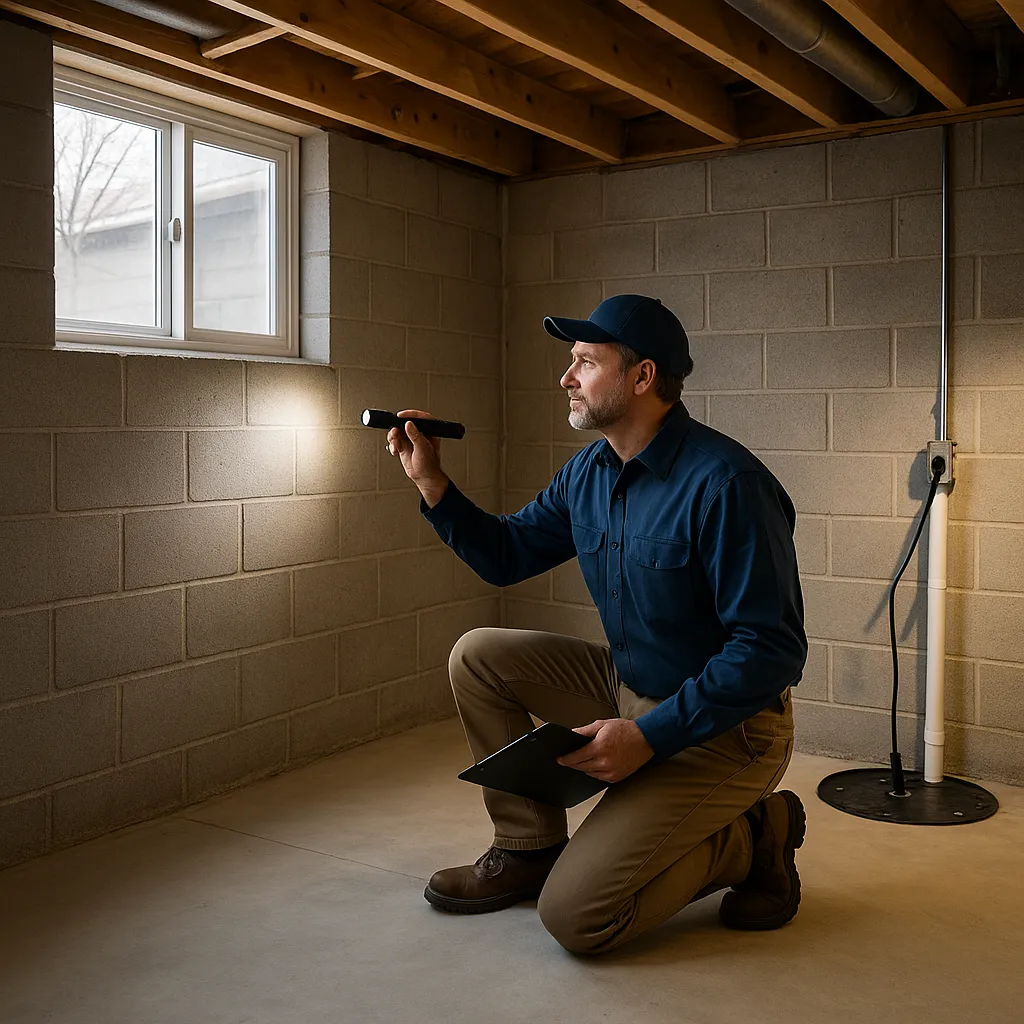
Full Basement (Standard): The most common configuration — four walls, a poured or block foundation, and a floor that sits entirely below grade. Offers maximum usable space and typically houses the furnace, water heater, sump pump, and utility systems.
Lookout Basement: The floor is partially below grade, with windows that look out at or near ground level. Allows for larger windows and more natural light. Very popular in sloped lot construction across the Twin Cities Metro.
Walkout Basement: One wall is entirely above grade, allowing direct exterior access through a door. Common on sloped lots in communities like Otsego, Rogers, and Dayton. Walkout basements are highly desirable — they feel more like main-level living space and add significant resale value.
Daylight Basement: Similar to a lookout, but with windows partially above grade on at least one side, allowing natural daylight without a full walkout.
What to Evaluate in a Minnesota Basement
Foundation Wall Material:
- Poured concrete: The modern standard. Stronger and more water-resistant than block. Look for vertical cracks (usually shrinkage — less concerning) vs. horizontal cracks (a serious red flag indicating lateral earth pressure).
- Concrete block (CMU): Very common in homes built before the 1980s. More susceptible to water infiltration through mortar joints. Stair-step cracks can indicate settlement — warrants professional evaluation.
- Stone or brick: Found in very old Minnesota homes. Charming but porous. Water management is critical.
Crack Assessment — What the Type Tells You
| Crack Type | Likely Cause | Concern Level |
|---|---|---|
| Hairline vertical (poured concrete) | Shrinkage during curing | Low — monitor |
| Wide vertical (more than 1/4 inch) | Settlement or movement | Medium — evaluate |
| Horizontal (block or poured) | Lateral soil pressure | High — engineer immediately |
| Stair-step (block walls) | Settlement or soil movement | Medium-High — evaluate |
| Diagonal from corners | Differential settlement | Medium — evaluate |
Water Infiltration Signs
- Efflorescence: White mineral deposits on the wall surface — indicates water has been moving through the wall
- Staining: Dark streaks or water lines on walls indicate past flooding events
- Active moisture: Run your hand along the base of the walls — any dampness during a dry period is a significant concern
- Musty odor: Often indicates ongoing moisture issues or mold growth behind finished surfaces
Sump Pump
Nearly every Minnesota basement should have a sump pump — and its age, condition, and backup capability are critical. We covered this thoroughly in our guide on sump pumps and plumbing in Minnesota homes. If the sump pump is over 8 years old, budget for replacement. If there's no battery backup, add one.
Radon
Radon gas accumulates in basements — and Minnesota has among the highest radon levels in the country. Every Minnesota basement must be tested for radon before purchase. Our complete guide on radon testing before you buy explains exactly what to look for and how to handle elevated levels in a purchase negotiation.
Egress Windows
Minnesota building code requires egress windows in all basement sleeping rooms — windows large enough to serve as an emergency exit. If you're evaluating a home with basement bedrooms and no egress windows, those rooms are not code-compliant. Factor in the cost of egress window installation ($1,500-$3,500 per window) or the impact on usable square footage.
Foundation Type 2: The Crawlspace — Less Common, More Complicated
A crawlspace is a low, unfinished space between the ground and the first floor of the home, typically 18-36 inches high. Rather than a full foundation with a basement, the home sits on a perimeter foundation wall or a series of piers, with an open or enclosed cavity underneath.
Crawlspaces are less common in Minnesota than in warmer climates — but they're found in older homes, home additions, and certain regional construction styles. And in our climate, they come with a specific set of challenges.
Why Crawlspaces Are Particularly Challenging in Minnesota
The fundamental problem with a crawlspace in a cold climate is moisture. Cold outdoor air meets the warm underside of the home's floor system, creating condensation. Ground moisture evaporates up from the soil below. Without proper management, the result is a chronically damp environment that causes:
- Wood rot in floor joists, subfloor, and structural beams
- Mold growth — which can migrate into the living space above
- Pest infiltration — rodents and insects actively seek the warmth and shelter of unclosed crawlspaces
- Reduced insulation effectiveness — moisture degrades insulation R-value
- Structural deterioration over time from wood decay
Ventilated vs. Encapsulated Crawlspaces
Older building practice called for ventilated crawlspaces — vents in the perimeter walls to allow airflow. In Minnesota's climate, this approach has proven problematic. Cold, humid outdoor air moving through the crawlspace in winter creates exactly the condensation conditions that cause damage.
The modern standard is a fully encapsulated crawlspace: a sealed vapor barrier covering the ground and walls, combined with a dehumidifier and proper air sealing. An encapsulated crawlspace dramatically reduces moisture, mold risk, and energy loss. Crawlspace encapsulation cost: $3,000-$10,000. If you're buying a home with an unencapsulated crawlspace, factor this into your offer.
What to Check in a Crawlspace Inspection
- Vapor barrier present and intact (covering at least the soil surface)
- Wood rot or softness in floor joists or beams
- Active moisture, standing water, or mold growth
- Insulation condition between floor joists
- Pest activity (droppings, gnaw marks, nest material)
- Access point condition — properly sealed at the access hatch
- HVAC ducts and plumbing running through the space — check for insulation on ducts and pipes
Foundation Type 3: Slab on Grade — Rare in Minnesota, But Worth Understanding
Slab on grade construction — where the home sits directly on a concrete slab poured at or near ground level — is the dominant foundation type across the Sun Belt. In Minnesota, it's significantly less common for residential construction, though it's used in certain commercial applications, garages, and some newer residential builds.
Why Slab on Grade Is Uncommon in Minnesota
The frost depth requirement is the primary reason. Since footings must go 42-48 inches deep regardless, builders in Minnesota usually add the additional depth to create a basement. A slab on grade home in Minnesota still requires frost footings — the slab simply sits on top of them at grade level without creating usable below-grade space.
Where You'll Find Slab Foundations in Minnesota
- Certain ranch-style homes built in the 1960s-1980s
- Homes in areas with high water tables where basements are impractical
- Attached garages and outbuildings (very common)
- Some modern architect-designed homes with radiant heated slab systems
- Commercial-to-residential conversions
What to Know About Buying a Slab Home in Minnesota
Radiant Heat: Many slab on grade homes incorporate radiant in-floor heating — a system of tubing embedded in the concrete through which heated water circulates. Radiant heat is extraordinarily comfortable and energy-efficient. However, if the system fails, accessing the tubing for repair means cutting into the concrete slab — a significant and expensive undertaking.
Plumbing Under the Slab: In a slab home, supply and drain lines run through or beneath the concrete. If a pipe fails, repair requires breaking through the slab — a costly and disruptive repair that can run $3,000-$15,000 or more depending on scope.
Slab Cracks: Hairline surface cracks in concrete slabs are common and usually result from normal curing shrinkage. Wider cracks — especially those with vertical displacement — indicate settlement and warrant professional evaluation.
No Radon Accumulation Zone: Without a basement or crawlspace, there's no enclosed below-grade space for radon to concentrate. Radon testing is still recommended, but the risk profile is generally lower.
Energy Considerations: A slab on grade home without proper perimeter insulation loses significant heat to the ground — especially at the slab edge. Our guide on energy efficiency in your Minnesota home discusses how building envelope performance affects heating costs in Minnesota winters.
Foundation Warning Signs Every Minnesota Buyer Must Know
Immediate Professional Evaluation Required
- Horizontal cracks in basement walls
- Bowing or inward-leaning foundation walls
- Stair-step cracks wider than 1/4 inch in block walls
- Active water intrusion during dry weather
- Doors and windows that stick or won't close — indicating frame movement from foundation shift
- Visible gaps between the foundation wall and the sill plate above
- Sagging or uneven floors on the first level
Monitor and Evaluate
- Hairline vertical cracks in poured concrete
- Efflorescence (white mineral deposits) on basement walls
- Musty odor without visible moisture
- Old waterproofing systems — verify they're functional
Foundation Repair Costs in Minnesota
| Issue | Typical Repair Cost |
|---|---|
| Crack injection (epoxy/polyurethane) | $500-$3,000 |
| Carbon fiber wall straps | $5,000-$15,000 |
| Interior drain tile system | $8,000-$20,000+ |
| Crawlspace encapsulation | $3,000-$10,000 |
| Underpinning/piering (settlement) | $15,000-$40,000+ |
| Full basement waterproofing | $10,000-$25,000+ |
How the Foundation Connects to Everything Else
The foundation doesn't operate in isolation. It connects directly to every other system in the home. Water infiltrating through a foundation wall saturates insulation, creates mold, and damages mechanical systems. Frost heave that shifts a foundation can crack drain lines, displace sump pump pits, and create gaps in the building envelope that drive up energy costs.
The same winter storm damage that stresses your roof and gutters is simultaneously testing your foundation through hydrostatic pressure and freeze-thaw movement. Think about your gutters for your Minnesota home — water not properly channeled away from the house ends up saturating the soil right next to the foundation. And without proper attic insulation in Minnesota, heat loss through the roof contributes to the freeze-thaw dynamics that stress the entire building envelope — from the top down and the bottom up simultaneously.
The whole-home approach is the only approach that makes sense in Minnesota's climate.
Frequently Asked Questions: Basements, Crawlspaces and Foundations in Minnesota
What is the most common foundation type in Minnesota homes?
The full basement is by far the most common foundation type in Minnesota. Because state building codes require footings to be placed 42-48 inches below grade to get below the frost line, builders typically add the additional depth to create a full basement — delivering significant usable space at relatively low marginal cost. Walkout and lookout basements are common on sloped lots. Slab on grade is rare in Minnesota residential construction; crawlspaces are found primarily in older homes and additions.
What should I look for in a Minnesota basement when buying a home?
Prioritize these items: foundation wall material and condition (look for horizontal cracks, bowing, or stair-step cracks — all serious red flags), evidence of water infiltration (efflorescence, staining, musty odor, active moisture), sump pump age and functionality, the presence and condition of any interior waterproofing systems, egress window compliance for basement bedrooms, and radon levels. Never skip a radon test in any Minnesota basement purchase.
Are crawlspaces a problem in Minnesota?
Crawlspaces present specific challenges in Minnesota's climate. Cold, humid air combined with ground moisture creates conditions that promote condensation, wood rot, mold, and pest infiltration — all of which can cause serious structural and air quality problems over time. A properly encapsulated crawlspace (sealed vapor barrier, dehumidifier, air sealed access) significantly mitigates these risks. If you're buying a home with an unencapsulated crawlspace, budget $3,000-$10,000 for professional encapsulation and factor that into your offer.
Is slab on grade foundation good for Minnesota's climate?
Slab on grade is functional in Minnesota when properly designed — with adequate frost footings, perimeter insulation to prevent slab edge heat loss, and careful attention to under-slab plumbing placement. However, it's uncommon in Minnesota residential construction because frost depth requirements make basement construction relatively cost-efficient by comparison. The primary drawbacks in our climate are the lack of below-grade storage and living space, costly access to under-slab plumbing, and greater vulnerability to slab edge heat loss without proper insulation.
How does Minnesota's freeze-thaw cycle affect home foundations?
Minnesota's freeze-thaw cycle is one of the most significant stressors on residential foundations. When moisture in the soil freezes, it expands — a phenomenon called frost heave — that can push, tilt, and crack any structure not properly anchored below the frost line. Clay-heavy soils common in the Twin Cities Metro and Wright County expand when wet and contract when dry, creating ongoing lateral pressure on basement walls. Spring snowmelt saturates the soil rapidly, creating hydrostatic pressure that drives water through even hairline cracks in foundation walls.
What foundation problems are red flags when buying a Minnesota home?
The most serious red flags include: horizontal cracks in basement walls (indicates lateral soil pressure — can lead to wall failure), bowing or inward-leaning foundation walls, stair-step cracks wider than 1/4 inch in concrete block walls, active water intrusion during dry weather, visible gaps between the foundation and sill plate, sticking doors and windows throughout the home, and sagging or noticeably uneven first-floor areas. Any of these findings warrants a structural engineer's evaluation before proceeding. For guidance on how these issues affect your purchase contract and negotiations, consult a qualified real estate attorney.
How much does foundation repair cost in Minnesota?
Foundation repair costs in Minnesota range widely by scope: crack injection with epoxy or polyurethane runs $500-$3,000; carbon fiber wall strap stabilization costs $5,000-$15,000; interior drain tile waterproofing systems run $8,000-$20,000+; underpinning or piering for settlement issues can reach $15,000-$40,000+; crawlspace encapsulation runs $3,000-$10,000. These costs make thorough foundation evaluation one of the most financially impactful parts of any Minnesota home purchase due diligence. For tax implications of major home repairs or seller concessions, always consult a qualified tax professional.
Ready to Buy Smart in Minnesota?
The foundation of a home is the foundation of your investment. And in Minnesota — where the ground itself fights back every winter — understanding what a home is built on isn't optional. It's essential.
At Circle Partners — KW Real Estate Planners, we help Minnesota buyers evaluate the full financial picture of every property — from the foundation up. Because the best real estate decisions aren't made on emotion. They're made on information.
Call us: 763-340-2002
Email us: [email protected]
Visit us: 16201 90th St NE, Suite #100, Otsego, MN 55330
Circle Partners is a licensed real estate team with KW Real Estate Planners, serving buyers and investors across Minnesota. This post is for informational purposes only and does not constitute legal, tax, or financial advice. For guidance specific to your situation, always consult a qualified attorney, CPA, structural engineer, or other qualified professional.