Pipes, Pressure & Peace of Mind: The Minnesota Home Buyer's Complete Guide to Plumbing
It doesn't get the same attention as a beautiful kitchen or a finished basement — but plumbing is one of the most expensive and consequential systems in any home you buy. And in Minnesota, where subzero temperatures, hard water, and aging housing stock create a unique set of challenges, understanding what's inside the walls matters more than most buyers realize.
At Circle Partners, we work as Real Estate Planners — and that means helping you see the full financial picture of any property before you commit. Plumbing problems have a way of hiding until they become emergencies, and emergencies always cost more than prevention. The buyers who navigate Minnesota's real estate market successfully are the ones who ask the right questions about the systems they can't see.
Here's what you need to know about plumbing before you buy a home in Minnesota.
Why Plumbing Deserves More Attention Than Most Buyers Give It
Plumbing issues are among the most common — and most expensive — surprises new homeowners face. Unlike a cosmetic issue you can see and budget for, a failing pipe, a corroded water heater, or a blocked sewer line hides quietly until it becomes a crisis.
| Plumbing Issue | Typical Repair Cost in Minnesota |
|---|---|
| Water heater replacement | $900-$2,500 |
| Burst or frozen pipe repair | $500-$5,000+ |
| Sewer line repair or replacement | $3,000-$15,000+ |
| Main water line replacement | $2,500-$8,000 |
| Sump pump replacement | $500-$1,500 |
| Whole-home re-pipe (galvanized) | $8,000-$20,000+ |
| Drain cleaning (roots/blockage) | $200-$1,500 |
Real Estate Planner Perspective: Plumbing isn't just a maintenance issue — it's a negotiation lever. A failing water heater, galvanized pipes, or a sump pump that hasn't been serviced in years can and should be factored into your purchase offer. Our team helps buyers use these findings strategically. Book a consultation with Circle Partners
Pipe Materials: What's in the Walls of a Minnesota Home
One of the most important plumbing questions a buyer can ask is: what are the pipes made of? The answer tells you a great deal about the home's plumbing risk profile.
Copper Piping
The gold standard of residential plumbing for decades, copper is durable, corrosion-resistant, and reliable. Many Minnesota homes built between the 1950s and 1990s have copper supply lines. Well-maintained copper can last 50+ years, but Minnesota's hard water can accelerate corrosion in certain conditions. Look for green buildup (verdigris) at joints — a sign of corrosion that warrants closer inspection.
PEX (Cross-Linked Polyethylene)
The modern standard. PEX is flexible, freeze-resistant (it can expand slightly without bursting — a major advantage in Minnesota), and significantly easier and cheaper to install than copper. Most new construction in Minnesota uses PEX for supply lines. If you're buying a newer home or a recently updated older home, PEX is a positive sign.
CPVC (Chlorinated Polyvinyl Chloride)
A rigid plastic pipe used for hot and cold supply lines. CPVC is reliable but can become brittle with age — especially in Minnesota's temperature extremes. Homes with CPVC should be inspected for cracking at joints, particularly in unheated spaces.
Galvanized Steel — The Red Flag
Common in homes built before 1960, galvanized steel pipes corrode from the inside out. As they age, the interior rusts and narrows, reducing water pressure and eventually failing. If you're buying a home with galvanized supply lines — you'll know because water pressure may be noticeably weak and water may have a brownish tint — budget for re-piping. This is an $8,000-$20,000 whole-home project.
Polybutylene (Gray Plastic) — Another Red Flag
Installed in approximately 6 million homes nationwide between 1978 and 1995, polybutylene (poly-B) reacts with chlorine in municipal water supplies and deteriorates from the inside, leading to catastrophic and sudden failure. If you see gray plastic supply lines in a home built in this era, get a plumber's assessment immediately. This is a potential re-pipe scenario.
Cast Iron Drain Lines
Common in homes built before the 1970s, cast iron drain lines are actually very durable — but they do eventually corrode, crack, and in worst cases, collapse. In older Minnesota neighborhoods, it's worth having a camera inspection run through the drain lines to verify their condition.
The Water Heater: The Unsung Hero with a Ticking Clock
Every home buyer should know the age and condition of the water heater before closing. This is a system with a finite and relatively predictable lifespan — and in Minnesota, that lifespan is shortened by our hard water.
Tank Water Heaters
The standard in most Minnesota homes, tank water heaters typically last 8-12 years — and Minnesota's mineral-rich water can push that toward the lower end by scaling the interior and reducing efficiency. Check the manufacturer's label for the installation date. A water heater over 10 years old should be budgeted for replacement in the near term.
Signs a water heater is nearing end of life:
- Rust-colored or metallic-tasting hot water
- Rumbling or popping sounds during heating (mineral buildup on the heating element)
- Visible rust or corrosion on the tank exterior
- Pooling water around the base
Tankless (On-Demand) Water Heaters
Growing in popularity in Minnesota due to energy savings and longer lifespan (15-25 years), tankless units heat water on demand, eliminating standby heat loss. They require periodic descaling in hard-water areas. Our guide on energy efficiency in your Minnesota home explains how a well-maintained tankless system can meaningfully reduce utility costs year-round.
Minnesota-Specific Plumbing Challenges Every Buyer Must Understand
Frozen Pipes: Minnesota's Number One Plumbing Emergency
Minnesota's subzero winters make frozen pipes one of the most common and costly plumbing emergencies homeowners face. As we covered in our comprehensive guide on winter storm damage and frozen pipes, pipes in exterior walls, unheated garages, crawl spaces, and near poorly insulated areas are at highest risk. When buying a home, ask specifically whether the property has ever experienced frozen pipes — and if so, where. A plumber can pressure-test supply lines to check integrity.
Hard Water: The Silent System Killer
Much of Minnesota — particularly the Twin Cities Metro, Wright County, and communities like Otsego, Rogers, and Elk River — has moderately hard to very hard water. Hard water accumulates minerals inside pipes, fixtures, water heaters, and appliances, resulting in reduced water flow, shortened water heater lifespan, degraded seals and washers, and clogged showerheads and aerators.
Water Softeners
Because of Minnesota's hard water, water softeners are common in homes throughout the state. When evaluating a property, check the softener's age (most last 10-15 years), whether it's properly sized for the household, and the condition of the brine tank. A functioning water softener significantly extends the life of plumbing fixtures and appliances.
Sump Pumps: Non-Negotiable in Minnesota
If you're buying a home in Minnesota with a basement, the sump pump is one of the most important mechanical systems to evaluate. Minnesota's groundwater table, snowmelt cycles, and heavy spring rain events make basement water intrusion a very real risk for homes without a properly functioning sump pump.
What to check:
- Age: Most sump pumps last 7-10 years. Anything over 8 years should be budgeted for replacement.
- Battery backup: Power outages often coincide with the exact storms that make sump pumps most critical. A battery backup system is strongly recommended.
- Discharge line: Verify the exterior discharge line isn't blocked and that water is being routed away from the foundation.
- Float switch: Test the pump by pouring water into the pit and verifying the float switch activates the pump correctly.
The Sewer Line: The Inspection Most Buyers Skip
Here's a costly oversight we see far too often: buyers who get a full home inspection but skip the sewer line camera inspection — and then discover after closing that their main sewer line is cracked, root-invaded, or partially collapsed.
Main sewer line issues are especially common in homes over 40 years old with clay or cast iron drain lines, properties with large mature trees, and older Minnesota neighborhoods where original sewer infrastructure is aging.
A sewer scope inspection typically costs $150-$350 and takes less than an hour. It can reveal root intrusion, cracked or offset pipe joints, grease or debris buildup, and partial or full collapses. A sewer line repair can cost $3,000-$8,000. A full replacement can run $10,000-$15,000 or more. For $200, a sewer scope is one of the highest-ROI inspections any buyer can add to their due diligence.
Water Quality and Well Systems
Municipal Water
Most homes in Otsego and the surrounding Twin Cities Metro area are connected to municipal water systems. We recommend checking water pressure at multiple fixtures (normal range is 40-80 PSI) and testing for any discoloration or odor.
Well Water
Rural and some suburban Minnesota properties rely on private wells. If you're buying a home on well water, a full water quality test is essential — test for coliform bacteria, nitrates, arsenic (naturally occurring in some Minnesota geological formations), hardness, and pH levels. Well pumps typically last 10-15 years; replacement costs run $1,000-$3,000.
Septic Systems
Properties not connected to municipal sewer lines use septic systems. A septic inspection — including pumping and inspection of the tank and drain field — is strongly recommended everywhere and required in many Minnesota counties. A failed septic system is not a minor repair; drain field replacement can cost $10,000-$25,000+. For questions about septic disclosure requirements and contractual obligations in your specific county, always consult a qualified real estate attorney.
What to Check During a Plumbing Inspection
Water Pressure Test
Turn on multiple fixtures simultaneously and observe whether pressure drops significantly. A dramatic pressure drop indicates supply line restriction, often from galvanized pipe corrosion or undersized lines.
Hot Water Response Time
Run the hot water at the fixture furthest from the water heater. Slow hot water delivery can indicate an undersized water heater, a failing circulation pump, or significant pipe length issues.
Drain Speed
Run water in every sink, tub, and shower for 30-60 seconds. Slow drains indicate blockage — either localized (easily fixed) or in the main drain line (potentially expensive). A drain that gurgles as it empties may indicate a venting problem.
Visible Pipe Inspection
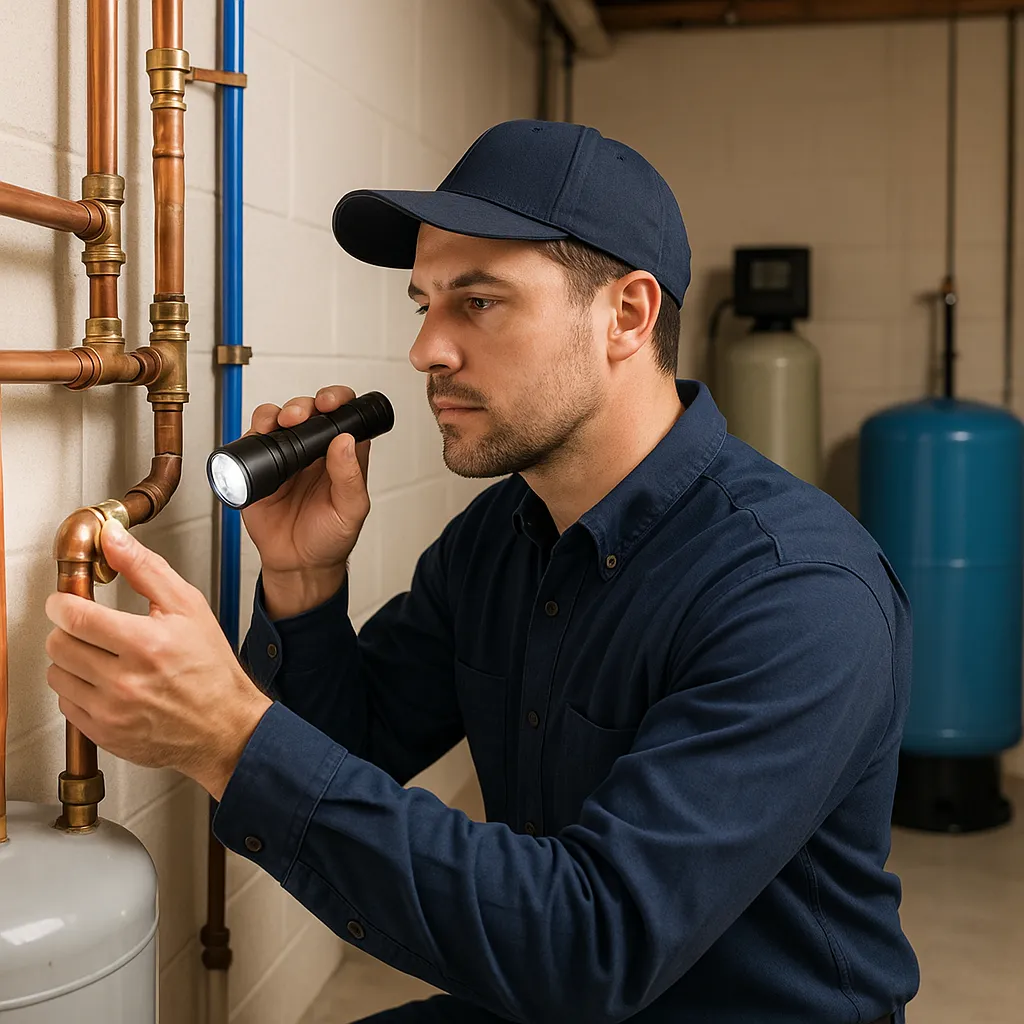
In the basement and utility room, look at exposed pipes. Check for galvanized steel (dull gray, often with rust streaks), polybutylene (gray plastic), active corrosion at joints, and evidence of previous repairs (mismatched fittings, wrapped joints, clamps).
Under Every Sink
Open every cabinet under every sink. Look for water stains, active moisture, swollen particleboard (a sign of past or ongoing leaks), and corroded drain connections.
The same whole-home thinking that applies to attic insulation in Minnesota, your furnace and heating system, radon testing before you buy, and how the roof affects your purchase applies equally here. Plumbing is part of the interconnected system that determines the true value — and the true cost — of any Minnesota home.
Frequently Asked Questions: Plumbing in Minnesota Homes
What plumbing issues should I look for when buying a home in Minnesota?
The top issues to watch for include galvanized steel or polybutylene supply pipes (both red flags requiring re-piping), aging water heaters over 10 years old, sump pump age and functionality, evidence of frozen pipe repairs, hard water scale buildup in fixtures and water heaters, slow drains indicating blockage or main line issues, and any evidence of water intrusion under sinks or around the water heater. Always request a dedicated plumbing inspection and consider adding a sewer scope to your due diligence.
How do Minnesota winters affect home plumbing systems?
Minnesota's subzero temperatures make frozen pipes a significant risk — particularly in pipes located in exterior walls, unheated garages, crawl spaces, and near poorly insulated areas. Frozen water expands, cracking or bursting pipes and causing water damage when they thaw. Minnesota's freeze-thaw cycles also stress sump pumps, exterior hose bibs, and foundation drainage systems. Any home you're buying should be evaluated for its history of freeze events and how well vulnerable pipes are insulated and protected.
What type of pipes are best for Minnesota homes?
PEX (cross-linked polyethylene) is the preferred material for Minnesota's climate. It's flexible enough to expand slightly when water freezes rather than cracking, making it significantly more freeze-resistant than rigid alternatives. Copper is also reliable and long-lasting when maintained properly. The pipes to avoid — or factor heavily into your offer — are galvanized steel (corrodes from the inside) and polybutylene gray plastic (prone to sudden failure). Both indicate re-piping may be in the near-term future.
How long does a water heater last in Minnesota?
Standard tank water heaters last 8-12 years nationally, but Minnesota's hard water accelerates mineral buildup — often pushing the functional lifespan toward the lower end of that range. Tankless water heaters last 15-25 years but require periodic descaling in hard-water areas. Always check the manufacture date on the water heater label. Any unit over 10 years old should be budgeted for replacement and factored into purchase negotiations.
What is a sump pump and do I need one in Minnesota?
A sump pump is installed in a pit at the lowest point of a basement to collect and pump out groundwater before it floods the basement floor. In Minnesota — where snowmelt, spring rains, and high water tables regularly challenge basements — a properly functioning sump pump with battery backup is essential for any home with a basement. When buying, verify the sump pump's age (replace every 7-10 years), test the float switch, confirm the discharge line is clear, and strongly consider a battery backup system.
How much does plumbing repair or replacement cost in Minnesota?
Costs vary widely by scope: water heater replacement runs $900-$2,500; burst pipe repair runs $500-$5,000+; sewer line repair is $3,000-$15,000+; whole-home re-piping from galvanized steel is $8,000-$20,000+; sump pump replacement runs $500-$1,500. These figures make the case clearly for thorough plumbing due diligence before purchase — discovering these issues after closing is almost always more expensive than negotiating them before.
Should I get a plumbing inspection when buying a home in Minnesota?
Yes — absolutely. While a standard home inspection includes a visual review of accessible plumbing, a dedicated plumbing inspection by a licensed plumber goes significantly deeper. They can pressure-test supply lines, evaluate water heater condition, assess sump pump operation, identify pipe materials, and flag issues a general inspector might miss. For homes over 30 years old, also add a sewer scope inspection. The combined cost of $300-$600 is one of the best investments any Minnesota buyer can make during due diligence.
Ready to Buy Smart in Minnesota?
Understanding the plumbing system of any home you're considering isn't about becoming a plumber — it's about making informed financial decisions before you commit. Because in Minnesota, the difference between a well-maintained home and a money pit often comes down to what's inside the walls.
At Circle Partners — KW Real Estate Planners, we help Minnesota buyers see the full picture — not just the finishes and the floor plan, but the systems, the costs, and the long-term financial implications of every property. That's what Real Estate Planning looks like in practice.
Call us: 763-340-2002
Email us: [email protected]
Visit us: 16201 90th St NE, Suite #100, Otsego, MN 55330
Circle Partners is a licensed real estate team with KW Real Estate Planners, serving buyers and investors across Minnesota. This post is for informational purposes only and does not constitute legal, tax, or financial advice. For guidance specific to your situation, always consult a qualified attorney, CPA, licensed plumber, or other qualified professional.