Here's something we tell every family we work with — whether they're buying their first home, moving into something new, or simply making the most of the home they already love: a deeply clean home feels different. It feels lighter. Calmer. More like yours.
And here's the best part: you do not need to spend a fortune to get there.
Some of the most effective cleaning solutions ever invented cost less than $5 combined. The difference between a home that feels fresh and one that feels tired often comes down to consistency and method — not expensive products or a professional cleaning service.
In this guide, we're sharing our best budget-friendly deep cleaning strategies for Minnesota homeowners — room by room, season by season. Whether you've just gotten the keys to a new home or you're giving your current one a serious refresh, this is the guide to keep.
For a comprehensive look at the full scope of deep cleaning your home, read: The Ultimate Minnesota Homeowner's Guide to Deep Cleaning: Floors, Appliances, Bathrooms, and Beyond →
Why Deep Cleaning Is a Homeownership Habit, Not a One-Time Event
Regular surface cleaning keeps your home tidy. Deep cleaning protects it.
When grime builds up inside your oven, behind your refrigerator, in your bathroom tile grout, and inside your HVAC vents — it doesn't just look bad. It affects air quality, appliance efficiency, pest attraction, and the long-term condition of your surfaces and finishes.
For Minnesota homeowners specifically, deep cleaning takes on added importance because of our unique seasonal rhythms:
- After winter: Six-plus months of tracking in salt, sand, and mud takes a real toll on floors, entryways, and air quality. Spring deep cleaning isn't optional here — it's essential.
- Before and after the heating season: Furnace filters, HVAC vents, and utility areas accumulate significant dust during our long heating season.
- Before selling: A deeply cleaned home photographs better, shows better, and consistently sells for more than a comparable home that feels lived-in and tired.
Your Budget Deep-Cleaning Arsenal: 5 Ingredients That Clean Almost Everything
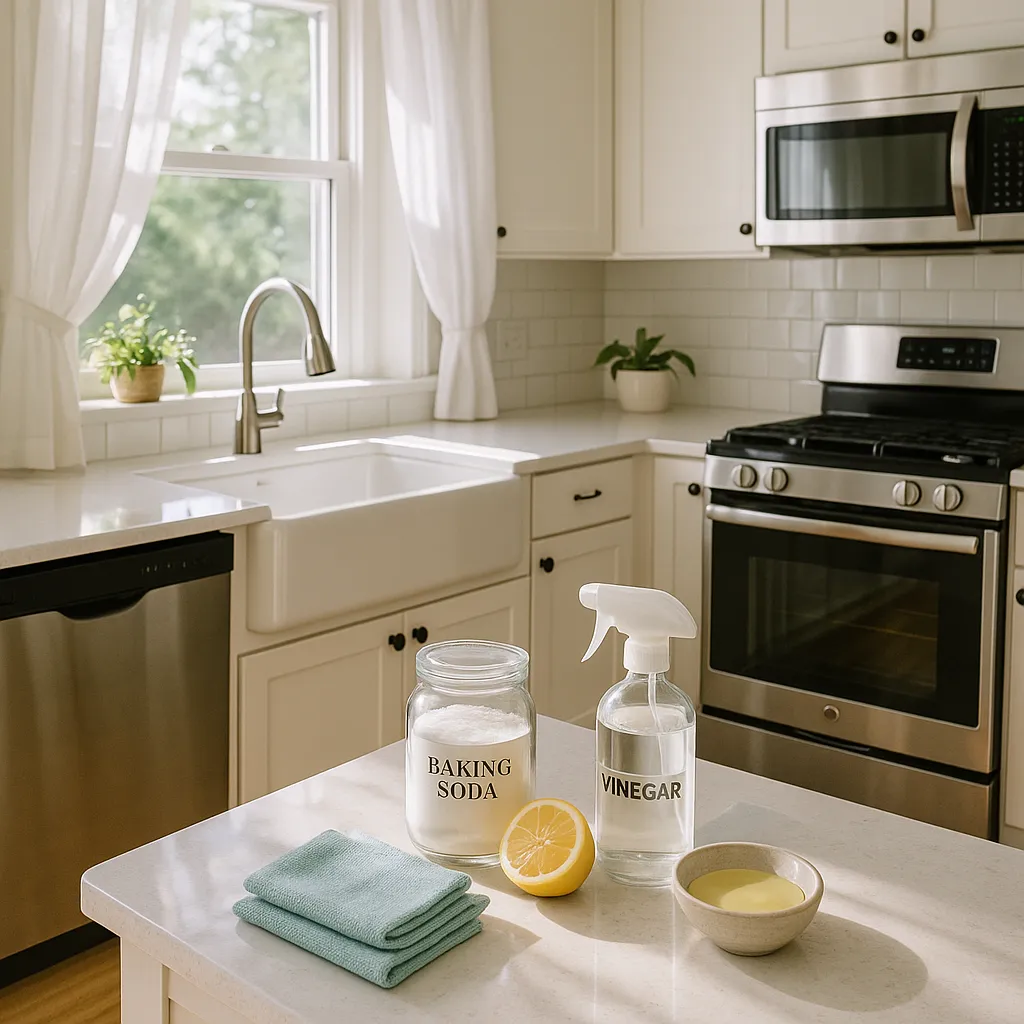
Before we get into the room-by-room guide, let's build your cleaning toolkit. Skip the expensive specialized products for most tasks. These five budget staples will handle 90% of what you need:
- White Distilled Vinegar (~$3/gallon): Cuts grease, dissolves mineral deposits, deodorizes, disinfects
- Baking Soda (~$1/box): Gentle abrasive, deodorizer, stain lifter
- Dish Soap — Blue Dawn (~$3/bottle): Cuts grease, gentle on most surfaces
- Hydrogen Peroxide 3% (~$1/bottle): Disinfects, whitens grout, kills mold spores
- Microfiber Cloths 6-pack (~$8–$12): Traps dust and bacteria without chemicals; washable and reusable
Total investment: Under $20. These five items, used correctly, can deep clean your entire home — kitchen, bathrooms, floors, appliances, and more.
Circle Partners Tip: When touring a home you're considering buying, pay attention to whether the cleaning has been thoughtful and consistent. A well-maintained, clean home — right down to the grout lines and appliance interiors — is almost always a home that's been cared for in the ways you can't see, too.
Room-by-Room Budget Deep Cleaning Guide
The Kitchen — Start Here, It Matters Most
The kitchen is where deep cleaning delivers the most impact — and where the most buildup accumulates. Work top to bottom, and tackle one section at a time.
Refrigerator: Remove everything and toss expired items. Pull out drawers and shelves and wash with warm dish soap water. Wipe interior walls with a solution of 1 part white vinegar to 1 part water — this deodorizes and sanitizes simultaneously. Wipe down door gaskets (the rubber seals) — these are prime mold growth zones in Minnesota's humid summers. Vacuum the coils on the back or bottom. Dusty coils reduce efficiency and increase energy use. A clean refrigerator is a more efficient one — for more on appliance efficiency: Your Energy Bills Are Too High: 10 Proven Ideas to Save Money →
Oven: Remove racks and soak in hot soapy water. Coat the oven interior with a paste of baking soda and water. Let it sit overnight. Wipe clean the next morning. For stubborn spots, spray with white vinegar — it reacts with the baking soda to lift residue. Cost: $0 in cleaning products if you already have baking soda and vinegar.
Cabinets: Wipe cabinet fronts with a damp microfiber cloth and a few drops of dish soap — especially around handles and pulls, where grease accumulates. Clean inside cabinets by removing everything, wiping shelves, and replacing only what you actually use.
Sink and Disposal: Scrub the sink basin with baking soda and a damp cloth. Run ice cubes and lemon halves through the garbage disposal — eliminates odor and cleans the blades naturally. Clean the faucet and handle base with white vinegar on a cloth to remove mineral deposits — especially important in many Minnesota communities with hard water.
Small Appliances: Descale your coffee maker by running a cycle with equal parts white vinegar and water, then two cycles of plain water. Clean microwave interior by microwaving a bowl of water and lemon for 5 minutes, then wiping — the steam loosens all baked-on residue instantly.
Bathrooms — Grout, Tile, and Everything In Between
Tile and Grout: Apply a paste of baking soda and hydrogen peroxide to grout lines. Let sit 10 minutes. Scrub with an old toothbrush. Spray tile with white vinegar and wipe with a microfiber cloth for a streak-free shine. This combination costs pennies and outperforms most commercial tile cleaners.
Shower and Tub: For soap scum on glass shower doors: spray full-strength white vinegar, let sit 5 minutes, wipe with a microfiber cloth. For stubborn buildup, use a paste of dish soap and baking soda. For hard water stains on fixtures: soak a cloth in white vinegar, wrap around the fixture, leave 30–60 minutes, then wipe clean.
Toilet: Pour 1 cup white vinegar into the bowl and let sit 30 minutes before scrubbing — this cleans and deodorizes without harsh chemicals. Clean the base, tank, handle, and seat with a microfiber cloth and diluted dish soap. Don't forget the area where the toilet meets the floor — a prime zone for buildup and bacterial growth.
Exhaust Fan: Remove the cover and wash in soapy water. Use a dry microfiber cloth or old paintbrush to dust the fan blades. A clean, functioning exhaust fan is critical in Minnesota — it prevents moisture buildup that leads to mold in our cold-weather homes. Make sure your fan vents to the exterior, not into the attic.
Living Areas and Bedrooms — The Details That Make the Difference
Baseboards: Wipe with a damp microfiber cloth. For stubborn dust buildup — especially common after Minnesota's winter heating season — use a dryer sheet. It cleans and leaves an anti-static coating that repels future dust.
Windows: Clean glass with a solution of 1 part white vinegar to 1 part water in a spray bottle. Wipe with a microfiber cloth for a streak-free finish — no expensive window cleaner needed. Clean window tracks with a damp cotton swab or old toothbrush. They accumulate remarkable amounts of debris, especially in Minnesota homes where windows are closed for months at a time.
Furniture and Upholstery: Vacuum upholstered furniture thoroughly, including under cushions. Deodorize fabric furniture by sprinkling baking soda, letting it sit 15–20 minutes, then vacuuming. For leather furniture, wipe with a damp cloth — avoid vinegar, which can damage leather finishes.
Mattress: Strip all bedding and wash in hot water. Sprinkle baking soda over the mattress surface, let sit 1–2 hours, then vacuum. This deodorizes and freshens at zero cost. Rotate or flip the mattress if applicable.
Utility Spaces — The Deep Cleaning Most Homeowners Skip
This is where the difference between a truly well-maintained home and one that just looks clean becomes apparent.
Furnace Filter: Check and replace your furnace filter. During the heating season, this should happen every 30 days. While you're at it, vacuum HVAC registers and return air grilles — they accumulate significant dust, especially in Minnesota's dry winter air.
Washer: Run an empty hot cycle with 2 cups white vinegar to clean and deodorize the drum. Wipe the rubber door gasket (on front-loaders) with a vinegar-dampened cloth — mold loves this spot. Clean the detergent drawer with warm soapy water.
Dryer: Clean the lint trap thoroughly — not just the screen, but the slot below it, which accumulates lint over time. Disconnect and vacuum the dryer exhaust duct annually. Lint buildup in the duct is a genuine fire hazard — one that's entirely preventable.
Smoke and Carbon Monoxide Detectors: Gently vacuum the exterior of all detectors to remove dust that can impair sensitivity. Test every detector. This is a quick, free step that should happen during every deep cleaning. For a full overview of smoke and CO detector requirements in Minnesota →
Minnesota-Specific Deep Cleaning Considerations
Living in Minnesota means our homes face unique cleaning challenges that don't get enough attention:
Post-Winter Salt and Sand Removal: From October through April, Minnesota roads are treated with road salt and sand — and every person who walks through your door brings it in. By spring, it has worked its way into carpet fibers, hardwood floor crevices, and tile grout. A thorough spring deep clean focused on floors and entryways is essential for protecting your flooring surfaces.
Pest Prevention Through Cleanliness: A deeply clean home is significantly less attractive to pests. Crumbs under appliances, grease in cabinet corners, and moisture under sinks are all pest attractants. Deep cleaning these zones twice a year dramatically reduces the conditions that invite unwanted guests. For more on Minnesota's most common home pests and prevention →
Seasonal Timing: Minnesota homeowners benefit most from two annual deep cleaning events:
- Spring (March–May): Post-winter reset. Our March Home Maintenance Checklist → and May Home Maintenance Checklist → align perfectly with spring deep cleaning season.
- Fall (September–October): Pre-winter prep. A clean home going into winter performs better and costs less to heat.
Deep Cleaning When You're Buying or Selling a Home
If you're in a real estate transition — buying a new home or preparing yours for sale — deep cleaning becomes a strategic tool, not just a maintenance task.
When buying: Before moving your furniture in, deep clean your new home room by room. This is the one moment when every surface is accessible and nothing is in the way. You'll also spot maintenance issues — stained grout, failing caulk, buildup around fixtures — that might have been obscured during the showing.
When selling: A deeply clean home photographs dramatically better and shows far better than one that's simply tidy. Buyers notice grout lines. They open refrigerators and ovens. They look inside closets and cabinets. A clean, fresh-smelling home creates an emotional response that directly influences offers. This is one of the highest-ROI things a seller can do before listing — and it costs almost nothing if you do it yourself.
For more on what buyers are really looking at — and what you need to know about the costs of buying in Minnesota: How Much Are Closing Costs When Buying a Home? →
7 Frequently Asked Questions: Deep Cleaning Your Minnesota Home on a Budget
Q: What is the cheapest and most effective all-purpose cleaner I can make at home?
A: A solution of equal parts white distilled vinegar and water in a spray bottle handles most non-stone surfaces — countertops, appliances, glass, tile, and more. Add a few drops of dish soap for extra grease-cutting power. Cost: under $0.25 per full bottle. Do not use vinegar on natural stone (granite, marble) or unsealed grout — it can etch the surface.
Q: How often should I deep clean my Minnesota home?
A: For most Minnesota households, a thorough twice-yearly deep clean — spring and fall — is the gold standard. Spring cleaning (March–May) addresses the post-winter buildup of salt, sand, and accumulated dust. Fall cleaning (September–October) preps your home for the long heating season. High-traffic areas like kitchens and bathrooms benefit from a monthly focused clean in between.
Q: What is the single most overlooked area in a home deep clean?
A: Without question: the dryer exhaust duct and the refrigerator coils. The dryer duct accumulates lint that creates a genuine fire hazard. The refrigerator coils accumulate dust that makes your refrigerator work harder and consume more energy. Both are free to clean and take under 15 minutes — yet most homeowners never do it.
Q: Can natural cleaning products really compete with commercial cleaners?
A: For most household cleaning tasks, yes — absolutely. Baking soda is a mild abrasive that's more effective on oven interiors and grout than many commercial products. White vinegar dissolves mineral deposits and kills many common bacteria. Hydrogen peroxide is a legitimate disinfectant. For general home cleaning, the budget alternatives perform remarkably well and cost a fraction of commercial alternatives.
Q: How do I deep clean carpet without renting a machine?
A: Sprinkle baking soda generously over carpet, let sit at least 30 minutes (longer for odors), then vacuum thoroughly. For stains, mix 1 teaspoon dish soap with 1 cup warm water and blot — never rub — from the outside of the stain inward. For a true deep clean of carpet, renting a steam cleaner from a hardware store ($30–$50 per day) is the budget-smart alternative to hiring a professional carpet cleaning service.
Q: What should I deep clean first when moving into a new Minnesota home?
A: Start with the kitchen and bathrooms — these have the most impact on health and comfort. Then move to HVAC registers, furnace filter, and dryer duct — all critical maintenance items best addressed before you settle in. Do windows last, since clean windows make the whole home feel finished. Having a clean, fresh home from day one sets the tone for how you'll maintain it going forward.
Q: Is it worth hiring a professional deep cleaner before moving in?
A: It depends on the home's condition. For a well-maintained, recently vacated home, a thorough DIY deep clean using the strategies in this guide is completely adequate. For a home with significant buildup, pet odors, or conditions requiring specialized cleaning (mold, severe staining, heavy smoker residue), a one-time professional deep clean can be a worthwhile investment before your furniture arrives. Always get multiple quotes and ask specifically about the products and methods they use.
A Clean Home Is a Loved Home. Let's Help You Find Yours.
There's something powerful about a home that's truly clean — not just surface-clean, but deep-clean. It reflects care. Intention. Pride of ownership. And those qualities show up in every corner of a home's story, from the day you move in to the day you pass it on.
At Circle Partners, we help families find homes worth caring for — and we help you understand exactly what you're getting into before you commit. The condition of a home tells a story. Our job is to help you read it clearly, negotiate wisely, and move forward with confidence.
Whether you're buying your first home, upgrading to a space that fits your life better, or simply wanting someone in your corner who understands the full picture — we're here.
📅 Book Your Free Strategy Session →
Questions? Reach us at [email protected] or call 763-340-2002. Our office is at 16201 90th St NE, Suite #100, Otsego, MN 55330.
*This article is for informational purposes only and does not constitute legal, financial, or tax advice. For guidance specific to your situation, please consult a qualified attorney or tax professional.