Is the Power On? The Minnesota Buyer's Complete Guide to Electrical Systems, Panels & EV Charging
Is the Power On? The Minnesota Buyer's Complete Guide to Electrical Systems, Panels & EV Charging
When you tour a home in Minnesota, you flip a light switch. It works. And most buyers stop thinking about electricity right there. That's a mistake.
The electrical system in a Minnesota home is one of the most consequential — and most frequently under-examined — systems in the entire property. An aging panel that can't support a modern household's load, wiring that hasn't been touched since the 1960s, a garage with no EV-capable outlet, an aluminum wiring installation that's been patched in all the wrong ways — none of these problems show up when you flip a switch. They show up in inspector reports, in insurance denials, and sometimes, in fire investigations.
At Circle Partners, we work as Real Estate Planners. When we evaluate a property with a buyer, the electrical system is one of the first conversations we have — because what you can't see can cost you the most.
Understanding the Electrical Panel
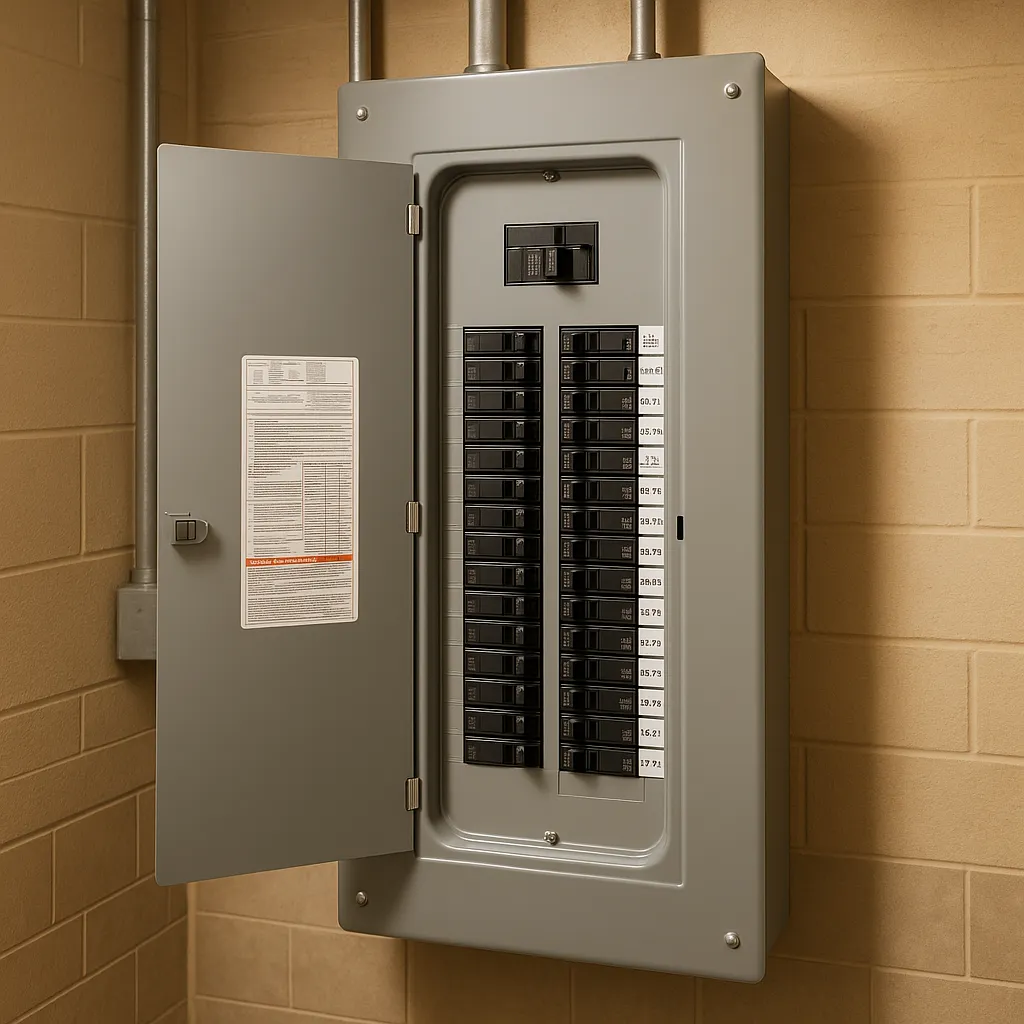
The electrical panel is where utility power enters the home and gets distributed to every circuit. It's the single most important electrical component in any home evaluation.
| Panel Size | Adequacy Level | Notes |
|---|---|---|
| 60 amps | Outdated | Adequate only for very small older homes. Most insurers won't cover. |
| 100 amps | Minimum acceptable | Adequate for smaller homes without EV charging |
| 150 amps | Good | Handles most modern households comfortably |
| 200 amps | Recommended | Standard for new construction; handles EV, HVAC, modern loads |
| 400 amps | Premium | Large homes, EV charging, dual-unit configurations |
When buying a Minnesota home in 2026 — especially if you own or plan to own an electric vehicle — a 200-amp panel is the target. Upgrading from 100A to 200A typically costs $1,500–$4,000.
Panel Brands to Know
Federal Pacific Electric (FPE) Stab-Lok — Installed widely from the 1950s through the 1980s. Documented failures where breakers don't trip properly during overloads. Most insurers will not write a new policy on a home with an FPE panel. Budget for replacement.
Zinsco/Sylvania — Similar documented breaker failure issues. Considered problematic by most electricians and insurers.
Pushmatic — Pushbutton breakers are no longer manufactured. When one fails, the whole panel must be replaced.
Wiring Types: What's in the Walls
Copper wiring — The modern standard. Safe, durable, universally accepted.
Aluminum branch circuit wiring (1965–1973) — Used during a copper shortage for small-gauge branch circuits. Expands and contracts more than copper, loosening connections over time, creating heat, arcing, and fire risk. Proper remediation requires COPALUM connectors or CO/ALR-rated devices at every connection point. This is a disclosure-required item in Minnesota — consult a qualified real estate attorney about obligations. It connects directly to home safety every Minnesota homeowner should understand.
Knob-and-tube wiring (pre-1940s) — Ungrounded, commonly modified improperly over decades, and routinely declined by insurers. A licensed electrician's assessment is essential — full rewiring may be required before the home is insurable at a reasonable cost.
Romex/NM cable — The plastic-sheathed cable with copper conductors used in virtually all modern construction. The safe, well-understood standard.
Grounding and GFCI/AFCI Protection
A properly grounded system provides a safe path for fault current. Signs of inadequate grounding: two-prong outlets throughout the home; three-prong outlets that test as ungrounded; no ground rods visible at the panel.
GFCI protection is required in bathrooms, kitchens, garages, and outdoors. It detects current leakage and shuts off power before a shock occurs.
AFCI protection is required in bedrooms and living areas in new construction. AFCIs detect arcing patterns associated with damaged wiring — a leading cause of electrical fires. Verify coverage during inspection and factor any needed upgrades into your offer. This is foundational to energy efficiency in your Minnesota home — the safest home is also the most efficient.
EV Charging: The Question Every Buyer Should Ask
Level 1 (120V, standard outlet): 3–5 miles of range per hour. Adequate for plug-in hybrids; impractical for most full EVs.
Level 2 (240V, 40–50 amp circuit): 20–30 miles of range per hour — the real-world home charging standard. Requires a dedicated 240V outlet on a 40–50 amp circuit. Installation cost: $400–$1,200.
When touring a home, check the garage for a 240V outlet or installed EVSE. If neither is present, assess whether the panel has capacity for an additional 40–50 amp circuit. This connects to everything we covered in our complete garage guide. The central AC system and furnace and heating system both draw from the same panel — panel capacity evaluation should consider all major loads together.
What Buyers Should Look For
At the panel: Identify the brand. Note the amperage. Look for double-tapped breakers (two wires on one terminal — a code violation). Check for available spaces for additional circuits.
Throughout the home: Test outlets for grounding. Count two-prong outlets. Verify GFCI in kitchens, baths, garage, and outdoors.
In the garage: Is there a 240V outlet or EVSE? Adequate outlets and lighting?
Red flags requiring a licensed electrician:
- FPE Stab-Lok, Zinsco, or Pushmatic panel
- Aluminum branch circuit wiring
- Knob-and-tube wiring
- 60-amp panel in any home
- Evidence of DIY electrical work
- No GFCI protection in required locations
🏡 Real Estate Planner Perspective: Electrical is one of the areas where buyers often trust the inspection report too much. A standard home inspection identifies obvious issues — but it's not a substitute for a licensed electrician's evaluation when there are concerns about panel brand, wiring type, or capacity. We help buyers know when they need that second look before they close. Book a consultation with Circle Partners →
Electrical System Costs
| Item | Estimated Cost |
|---|---|
| Panel upgrade 100A → 200A | $1,500–$4,000 |
| FPE/Zinsco panel replacement | $2,000–$5,000 |
| EV charging circuit (Level 2) | $400–$1,200 |
| GFCI outlet installation (each) | $100–$200 |
| Aluminum wiring remediation (whole home) | $2,000–$8,000+ |
| Partial rewiring (kitchen/baths) | $1,500–$4,000 |
| Full home rewiring | $8,000–$20,000+ |
Frequently Asked Questions: Electrical Systems in Minnesota Homes
What electrical panel size do I need for a Minnesota home?
For most modern Minnesota homes, a 200-amp service panel is the recommended standard — it comfortably handles HVAC systems, kitchen appliances, modern lighting, and an EV charging circuit. Homes with 100-amp service can function adequately for smaller households without EV charging, but leave little room for future additions. A 60-amp panel is outdated and often uninsurable. If you plan to add EV charging or significant appliances, a licensed electrician's load calculation confirms whether your panel can handle it.
What is aluminum wiring and should I be concerned when buying a Minnesota home with it?
Aluminum branch circuit wiring was installed in many homes built between 1965 and 1973. The concern is that improper connections create heat and arcing, which are fire risks. If a home has aluminum wiring, a licensed electrician should evaluate all accessible connections and recommend remediation — typically COPALUM connectors or CO/ALR-rated devices at each termination. This is a disclosure-required item in Minnesota — for questions about obligations, consult a qualified real estate attorney.
What is an FPE Stab-Lok panel and why is it a problem?
FPE Stab-Lok panels have documented failure rates — the breakers can fail to trip during an overload or short circuit, which is the core safety function breakers exist to perform. Most property and casualty insurers in Minnesota will not write a new homeowner's policy on a home with an active FPE Stab-Lok panel, or will require replacement as a condition of coverage. Budget for replacement and negotiate accordingly.
Can I charge an EV at home with a 100-amp electrical panel?
Yes, it's possible — but it requires evaluation by a licensed electrician. A 100-amp panel running full household loads operates near capacity. Adding a 40–50 amp EV charging circuit may or may not be feasible. A licensed electrician's load calculation determines whether there's capacity. If the panel doesn't have capacity, upgrading to 200 amps first is the cleaner long-term solution.
What is GFCI and AFCI protection and why does it matter?
GFCI outlets detect current leakage and shut off power instantly — protecting against shock in areas near water (kitchens, bathrooms, garages, outdoors). AFCI breakers detect arcing signatures associated with damaged wiring — a leading cause of residential electrical fires — and shut off the circuit before a fire starts. Both are required by code in new construction. In older homes, these protections are often absent or incomplete. Verifying coverage during inspection and factoring upgrade costs into your offer is a straightforward, important step.
What does a home electrical inspection cover?
A standard home inspection includes a visual evaluation of the panel, testing of a sample of outlets, and identification of obvious code violations. It does not include opening walls, performing load calculations, or the depth of evaluation a licensed electrician provides. For older homes, homes with known wiring concerns, or homes where you're planning significant electrical additions, a dedicated electrician's evaluation is worthwhile.
How do I know if a Minnesota home's wiring is safe?
The most important indicators are the age of the home cross-referenced with likely wiring type, the panel brand and condition, the presence of properly grounded outlets, and GFCI protection in required locations. A standard home inspection flags obvious concerns. For anything beyond visual indicators — particularly for homes with the wiring types or panel brands discussed above — a licensed electrician's evaluation provides the most reliable assessment.
Know What's Powering Your Home Before You Close
The electrical system is invisible until it isn't. At Circle Partners — KW Real Estate Planners, we help Minnesota buyers look at every system before they close — including the ones behind the walls. Because knowing what you're buying means understanding the power running through it.
📞 Call us: 763-340-2002
📧 Email us: [email protected]
📍 Visit us: 16201 90th St NE, Suite #100, Otsego, MN 55330
📅 Book Your Free Real Estate Planning Consultation
Circle Partners is a licensed real estate team with KW Real Estate Planners, serving buyers and investors across Minnesota. This post is for informational purposes only and does not constitute legal, tax, or financial advice. For guidance specific to your situation, always consult a qualified attorney, CPA, or other qualified expert.