Here's something we think about every time we sit down with a family who's buying their first home in Minnesota: if you're not thinking seriously about your heating system, you're not thinking seriously about your home.
That's not to scare you — it's to prepare you. Minnesota winters are real. We're talking temperatures that regularly drop to -20°F and windchills that can push well below -40°F in communities across Wright County, Blue Earth County, and throughout the metro. Your heating system isn't just a feature. In Minnesota, it's a lifeline.
So when buyers ask us, "Is a furnace really the best way to heat a home in Minnesota?" — the answer, for most homes and most families, is yes. In this guide, we'll walk you through why forced-air furnaces continue to dominate Minnesota home heating, what to look for when you're buying a home, and how to keep your furnace running at its best for years to come.
Minnesota's Unique Heating Challenge
Not all climates are created equal — and not all heating systems are designed for ours. Minnesota sits in a heating climate zone where outdoor temperatures regularly push into the extreme range. When temperatures drop below -10°F or -20°F (which they will), some heating technologies that work beautifully in milder climates simply can't keep up.
Traditional air-source heat pumps, for example, become dramatically less efficient — and in some cases, functionally inadequate — once temperatures drop below 15°F to 20°F. For a home in the Twin Cities, Buffalo, Otsego, or Mankato, that's not an edge case. That's November through February.
This is the defining reason why the forced-air gas furnace has been — and for the foreseeable future, will remain — the dominant heating system in Minnesota homes.
How a Furnace Works (In Plain English)
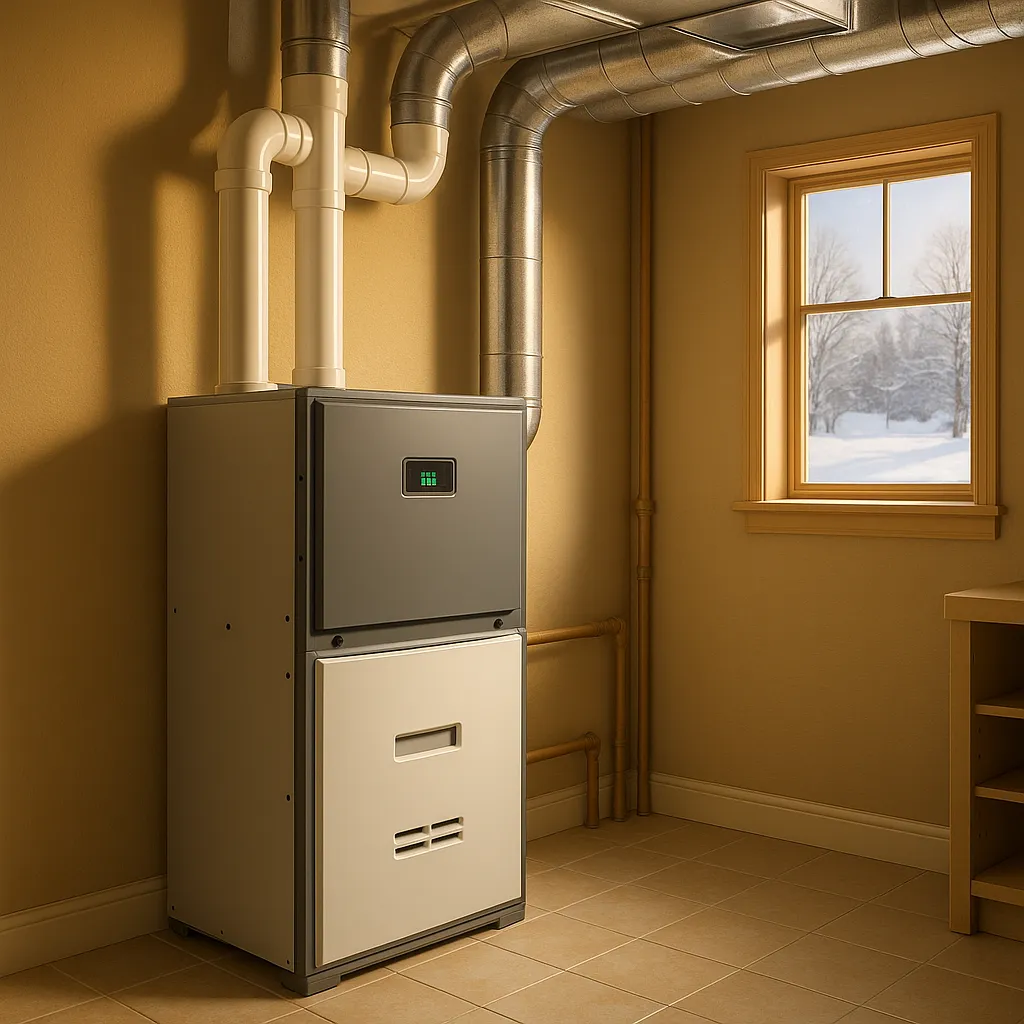
A furnace is a central heating system that burns fuel (most commonly natural gas in Minnesota) to generate heat through a heat exchanger. A blower motor then pushes that warmed air through your home's ductwork and out through the registers in each room. The cooled air returns through return air vents, gets reheated, and the cycle continues until your thermostat tells it to stop.
It's a simple concept — but it's proven, reliable, and when properly maintained, incredibly efficient. Modern high-efficiency furnaces in Minnesota homes can achieve Annual Fuel Utilization Efficiency (AFUE) ratings of 96%–98%, meaning nearly every dollar you spend on natural gas goes directly into heating your home.
6 Reasons a Furnace Is the Best Heating Choice for Your Minnesota Home
1. It Handles Minnesota's Extreme Cold — Period.
When temperatures plunge to -20°F or below, a gas furnace doesn't flinch. It burns fuel, generates heat, and delivers it throughout your home regardless of outdoor conditions. This is the single most critical reason furnaces dominate in Minnesota — nothing else handles extreme cold with the same reliability and consistency.
2. Fast, Consistent Heat Distribution
Forced-air systems heat your home quickly and evenly. Cold air returns from every room, gets heated centrally, and is distributed back through a network of ducts. When you wake up on a -15°F January morning and need your home at 68°F within minutes — a furnace delivers.
3. Natural Gas Is Cost-Effective in Minnesota
Minnesota has a well-developed natural gas infrastructure, and for most homeowners in Wright County, the Twin Cities metro, Blue Earth County, and surrounding areas, natural gas is the most cost-effective fuel for home heating. The combination of high-efficiency furnaces and the accessibility of natural gas makes furnace heating one of the most economical options available to Minnesota homeowners today.
For homeowners without access to natural gas — particularly in rural areas — propane furnaces offer similar performance and reliability. For a broader look at how energy efficiency impacts your home's value and monthly costs, read: The Complete Minnesota Homeowner's Guide to Improving Energy Efficiency in Your Home →
4. Integrated Air Filtration and Indoor Air Quality
One of the most underrated benefits of a forced-air furnace is that it works hand-in-hand with your home's air filtration. Every time air circulates through your system, it passes through a filter that captures dust, allergens, pet dander, and other particles. High-quality filters and whole-home air purifiers can be added to a forced-air system — making your home's air healthier, which matters enormously during Minnesota winters when we spend so much time indoors.
This also connects directly to your home safety systems. For a full overview, see: The Complete Minnesota Homeowner's Guide to Smoke Detectors and Carbon Monoxide Detectors →
5. Shared Infrastructure with Your Air Conditioning System
Here's a practical point many buyers overlook: if your home has central air conditioning, it almost certainly uses the same ductwork as your furnace. Your HVAC system — heating and cooling — shares blowers, vents, and returns. This means year-round climate control from a single integrated system, and maintaining (and eventually replacing) it is more straightforward than managing separate systems.
For a full picture of how your home's cooling system works alongside your furnace, read: Beat the Heat: A No-Nonsense Guide to Cooling Your Minnesota Home →
6. Proven Reliability and Widespread Service Networks
Gas furnaces have been heating Minnesota homes for decades. HVAC technicians across the state are trained, certified, and experienced with forced-air systems. Parts are readily available. Service networks are widespread — from Otsego to Mankato and everywhere in between. When your heat goes out at midnight on a January night, having a common, well-understood system means faster repairs and greater peace of mind.
Understanding Furnace Efficiency: What Is AFUE?
When shopping for a home — or evaluating the furnace in a home you're considering — you'll want to understand the AFUE rating. AFUE stands for Annual Fuel Utilization Efficiency, and it tells you what percentage of the fuel your furnace burns is actually converted to heat in your home.
- 80% AFUE (Standard Efficiency): The federal minimum for new furnaces sold in the northern U.S. Less expensive upfront but costs more to operate over time. The 20% of fuel that isn't converted exits as exhaust through a traditional flue.
- 90%–96% AFUE (High Efficiency): The most common choice for Minnesota homeowners. Significantly more efficient, typically using PVC exhaust pipes rather than a traditional chimney.
- 96%–98% AFUE (Ultra High Efficiency): The top tier available. Best for homeowners planning long-term occupancy where fuel savings can offset the higher upfront cost over time.
For Minnesota's climate, a high-efficiency furnace (90%+ AFUE) is almost always the right call. The savings during our long heating season add up quickly — and a licensed HVAC contractor can calculate the payback period for your specific home.
Types of Furnaces in Minnesota Homes
Understanding what kind of furnace is in the home you're buying is an important part of your due diligence:
- Natural Gas Furnace: By far the most common in Minnesota. Reliable, cost-effective, and widely serviced.
- Propane Furnace: Common in rural Minnesota where natural gas isn't available. Works identically to a gas furnace but uses propane stored in a tank on the property.
- Electric Furnace: Uses electric heating elements. Significantly more expensive to operate in Minnesota than gas or propane due to higher electricity costs per BTU.
- Oil Furnace: Older and less common today. Requires oil delivery and storage. Typically flagged as a priority replacement in home inspections.
Furnace vs. Other Heating Systems in Minnesota
Buyers sometimes ask about alternative heating systems. Here's how they compare in the context of Minnesota's climate:
- Air-Source Heat Pumps: Highly efficient in moderate climates, but lose significant efficiency — and in Minnesota's extreme cold, effectiveness — when temperatures drop below 15°F–20°F. Most Minnesota homeowners still pair them with a gas furnace backup for the coldest months. A standalone heat pump without a furnace backup is a risk we wouldn't recommend in Minnesota.
- Radiant Floor Heating: Luxurious and consistent — but expensive to install and typically a supplement to, rather than a replacement for, a central system. Common in bathrooms and additions.
- Electric Baseboard Heat: Simple and inexpensive to install, but very expensive to operate during Minnesota's long heating season. Rarely the right primary heating choice for a Minnesota home.
- Boiler (Hydronic) Systems: Found in older Minnesota homes. Circulates hot water through radiators or radiant panels. Even, comfortable heat distribution, but doesn't integrate with central air conditioning and can be expensive to maintain in older systems.
What to Look for When Buying a Home with a Furnace
When you're buying a home in Minnesota, the furnace is one of the most important systems your home inspector will evaluate. Here's what to pay attention to:
- Age of the furnace: Most gas furnaces last 15–20 years. A furnace approaching this range is a significant replacement cost to factor into your purchase decision. Ask for maintenance records.
- AFUE rating: Check the rating on the unit or in the home disclosures. A low-efficiency furnace means higher operating costs from day one.
- Heat exchanger condition: A cracked heat exchanger can allow combustion gases — including carbon monoxide — into your home's air supply. This is a non-negotiable repair or replacement item.
- Ductwork condition: Leaky or poorly insulated ductwork can reduce system efficiency by 20–30%. Ask your inspector to assess duct integrity.
- Maintenance history: A well-maintained furnace is a reliable furnace. Ask sellers for service records.
Our team walks buyers through every one of these details — because we believe you should enter homeownership fully prepared, not surprised. For more on the costs involved in buying a Minnesota home, read: How Much Are Closing Costs When Buying a Home? →
Furnace Maintenance: Your Minnesota Seasonal Checklist
A well-maintained furnace is a reliable furnace. Here's what to schedule as a Minnesota homeowner:
- September (Before Heating Season): Schedule your annual professional HVAC tune-up. A technician will clean burners, inspect the heat exchanger, test safety controls, and verify proper operation before you need it most.
- Every 1–3 Months (During Heating Season): Change your furnace filter. During the coldest months (December–February), change it monthly.
- October–November: Ensure carbon monoxide detectors are working properly. Replace batteries annually.
- Spring: After heating season ends, do a final filter change and address any repairs before the next winter arrives.
For a complete winterization and maintenance guide, see our November Home Maintenance Checklist →
And don't forget — your attic plays a direct role in how hard your furnace works. Poor insulation means your system runs longer, costs more, and wears out faster. Read: Understanding Your Attic Space in Minnesota: Insulation, Ventilation & Home Efficiency Guide →
7 Frequently Asked Questions: Furnaces in Minnesota Homes
Q: Is a furnace really better than a heat pump for a Minnesota home?
A: For most Minnesota homes and most Minnesota winters, yes. Standard air-source heat pumps lose significant efficiency when outdoor temperatures drop below 15°F–20°F — and in Minnesota, that's a regular occurrence from November through March. Even cold climate heat pumps typically require a gas furnace backup for our most extreme stretches. Unless you have a very specific situation, a gas furnace remains the most reliable, cost-effective primary heating system for Minnesota.
Q: How long does a furnace last in Minnesota?
A: Most quality gas furnaces last 15–20 years with proper maintenance. Minnesota's long heating season — roughly 6–7 months of active use — means our furnaces work harder than those in warmer climates. Annual professional tune-ups and regular filter changes are essential. If you're buying a home with a furnace that's 12–15 years old, start budgeting for a replacement within the next several years.
Q: What AFUE rating should I look for in a Minnesota furnace?
A: For Minnesota's climate, we recommend a minimum of 90% AFUE — and 96%+ if you're replacing a system or buying a newer home. The higher upfront cost of a high-efficiency furnace is typically offset by lower operating costs over 3–7 heating seasons, depending on gas prices and usage. A licensed HVAC contractor can calculate the payback period for your specific home.
Q: How much does it cost to replace a furnace in Minnesota?
A: Furnace replacement in Minnesota typically ranges from $3,000 to $8,000+ depending on the efficiency rating, size needed, and whether ductwork modifications are required. We always recommend getting multiple quotes from licensed, vetted HVAC contractors. Our team is happy to connect you with trusted vendors in Wright County and surrounding communities.
Q: What is a heat exchanger, and why does it matter?
A: The heat exchanger is the component that separates combustion gases — including carbon monoxide — from the air blown into your home. A cracked or failing heat exchanger is a serious safety issue and is often a trigger for full furnace replacement. Always have it inspected during a home purchase and annually thereafter.
Q: Should I ask about the furnace when buying a home in Minnesota?
A: Absolutely — and our team will make sure you do. We always guide buyers to ask for the furnace's age, AFUE rating, and maintenance history as part of the home inspection process. A furnace nearing end-of-life is a negotiating point that can mean thousands of dollars in seller concessions or price adjustments. Our certified Real Estate Planners are with you through every detail.
Q: Can I combine a furnace with other heating systems?
A: Absolutely. Many Minnesota homeowners use a gas furnace as their primary heat source paired with a ductless mini-split or cold-climate heat pump for shoulder-season heating (when temps stay above 20°F), reducing gas usage during milder stretches. Some also add radiant floor heating in specific rooms. A licensed HVAC professional can help you design a hybrid approach that maximizes comfort and efficiency for your specific home.
Ready to Find Your Perfect Minnesota Home? Let's Talk.
Whether you're buying your first home or upgrading to the space your family needs — knowing what's inside the walls (and the utility room) matters just as much as what's on the surface. Our team at Circle Partners are certified Real Estate Planners who help you evaluate every system in a home with the same care and expertise we'd want for our own families.
You deserve to walk into closing day confident — not hoping for the best. And we are here to make sure that happens.
📅 Book Your Free Strategy Session →
Have questions? Reach us at [email protected] or call 763-340-2002. Our office is located at 16201 90th St NE, Suite #100, Otsego, MN 55330.
*This article is for informational purposes only and does not constitute legal, financial, or tax advice. For guidance specific to your situation, please consult a qualified attorney or tax professional.