Minnesota winters get all the headlines — and rightly so. But here's something we've noticed sitting across the table from home buyers across Wright County, Blue Earth County, and the Twin Cities metro: summer energy bills can catch new homeowners completely off guard.
A home that managed a $150 gas bill in January can suddenly be pushing $250–$300+ in July electricity costs if the AC system is working overtime. And in Minnesota, that's more common than you'd think. Our summers have become hotter, more humid, and more unpredictable — and for homes without efficient cooling systems or proper insulation, those bills add up fast.
The good news? There's a lot you can do about it. Whether you're a first-time buyer preparing for your first Minnesota summer or a homeowner looking to right-size your cooling costs, this guide is for you. Here are 10 smart, practical strategies to lower your air conditioning bills — without sacrificing an ounce of comfort.
For a deep dive into how your home's cooling system actually works, be sure to read our full guide: Beat the Heat: A No-Nonsense Guide to Cooling Your Minnesota Home →
Why Minnesota AC Bills Run Higher Than Expected
Before we get into solutions, let's understand the problem. A few factors unique to Minnesota make cooling costs higher than homeowners often anticipate:
- Significant humidity: Minnesota summers bring genuine humidity that forces your AC to work harder removing moisture from the air — not just cooling it.
- Temperature swings: We can go from 55°F at night to 92°F by mid-afternoon. Those swings put constant demand on your system.
- Older home stock: Many homes in communities like Buffalo, Otsego, and Big Lake have older construction standards — less insulation and less efficient windows than newer builds.
- Aging or undersized AC units: A system that's too small, or approaching end of life, works harder and costs more to cool the same space.
10 Smart Ways to Lower Your AC Bills in Minnesota
1. Program Your Thermostat — Don't Just Set It and Forget It
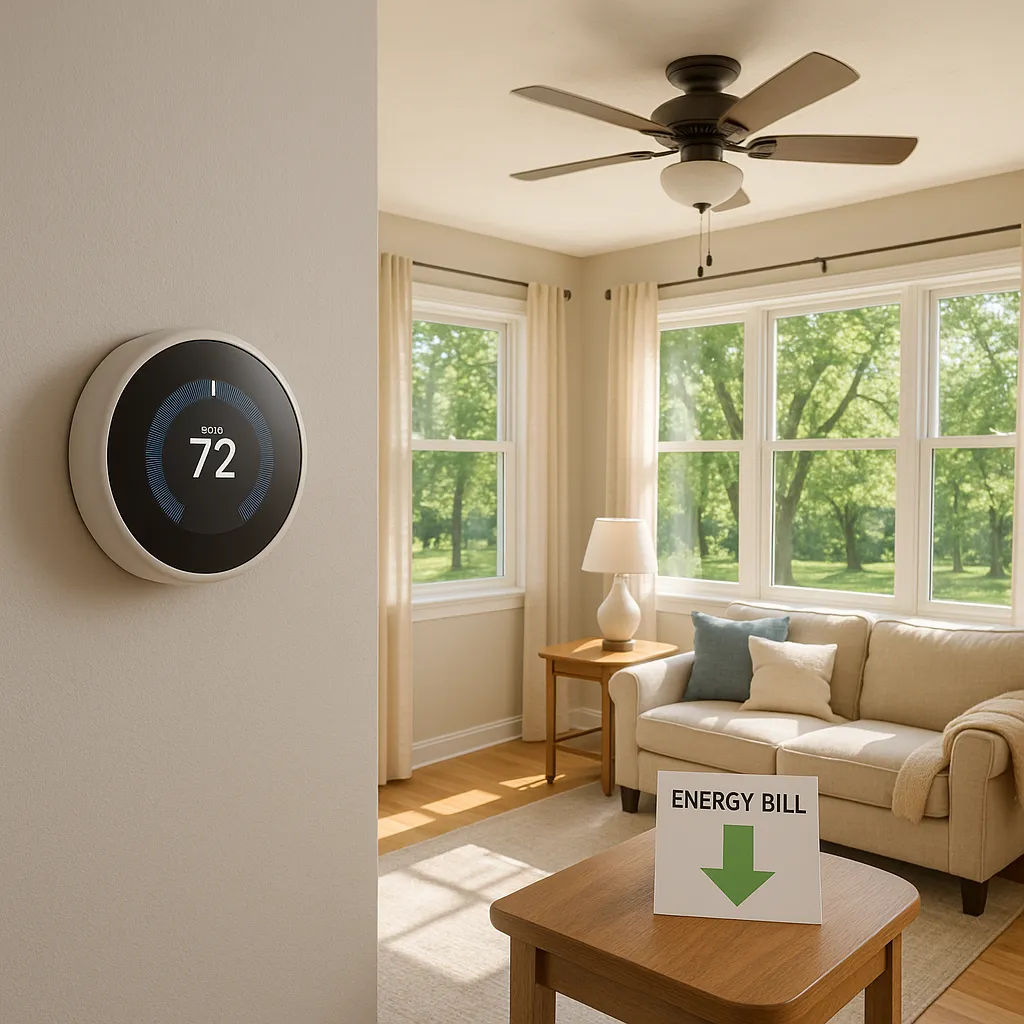
This is the single most impactful change most homeowners can make, and it costs nothing. Set your thermostat to allow your home to warm a few degrees while you're away during the day and cool back down before you return. For every degree you raise your setpoint in summer, you save approximately 1%–3% on your cooling bill.
A smart thermostat (Nest, Ecobee, or similar) takes this further by learning your schedule and adjusting automatically. If you're still using a manual thermostat, upgrading to a smart model typically pays for itself within one to two cooling seasons.
Circle Partners Tip: When evaluating a home you're considering buying, always ask what type of thermostat is installed. A smart thermostat is a small but meaningful signal that current owners have been attentive to energy efficiency.
2. Use Ceiling Fans — But Use Them Correctly
Ceiling fans don't cool the air — they create a wind-chill effect that makes you feel cooler, allowing you to raise your thermostat by up to 4°F without any difference in comfort. Make sure your fans are spinning counterclockwise in summer to push air downward, creating that cooling breeze. And always turn them off when you leave the room — fans cool people, not spaces.
3. Seal Air Leaks — Stop Paying to Cool the Outdoors
Air leaks around windows, doors, recessed lighting, and ductwork allow hot, humid outdoor air to seep in while conditioned air escapes — forcing your AC to run constantly just to maintain your set temperature. High-impact areas to check:
- Weatherstripping around doors and windows
- Caulking around window frames
- Attic hatch sealing
- Gaps around pipes and wiring penetrations in walls
- Ductwork connections — leaky ducts can waste 20–30% of your conditioned air before it ever reaches a room
Many of these fixes are DIY-friendly and inexpensive. For a comprehensive look at improving your home's overall energy performance, read: The Complete Minnesota Homeowner's Guide to Improving Energy Efficiency →
4. Upgrade Your Attic Insulation — Your Biggest Single Opportunity
Your attic is where most Minnesota homes lose the battle against summer heat. Heat radiates through the roof deck into your attic space, which then radiates down into your living spaces. An under-insulated attic can easily add hundreds of dollars to your annual cooling costs.
For most Minnesota homes, the recommended attic insulation level is R-49 to R-60. Many older homes fall well short — particularly those built before the 1990s. Adding blown-in insulation to an under-insulated attic is one of the highest-ROI home improvements available, typically paying back its cost within 3–5 years through energy savings.
Proper attic ventilation also plays a critical role. Read our full guide: Understanding Your Attic Space in Minnesota: Insulation, Ventilation & Home Efficiency Guide →
5. Use Window Treatments Strategically
South- and west-facing windows are the biggest solar heat gain culprits in Minnesota summer homes. Direct afternoon sun streaming through unprotected windows can raise a room's temperature by 10°F or more.
Blackout curtains, cellular shades, reflective window film, and exterior solar screens are all effective options. During the hottest part of the day (typically noon to 6 PM), close south- and west-facing window coverings. At night, when outdoor temps drop, open windows and let nature do the cooling — then close everything back up in the morning before the heat builds.
6. Schedule an Annual AC Tune-Up — Every Spring
A well-maintained air conditioning system runs more efficiently, cools more effectively, and lasts longer. An annual spring tune-up by a licensed HVAC technician typically includes cleaning condenser coils, checking refrigerant levels, inspecting electrical connections, and verifying airflow and duct condition. This typically costs $75–$150 and can meaningfully improve your system's efficiency from day one.
Our May Home Maintenance Checklist is the perfect reminder of when to schedule this: Home Maintenance Checklist for May →
7. Change Your Air Filter Regularly
A clogged air filter restricts airflow through your system, forces the blower motor to work harder, reduces cooling capacity, and increases energy consumption. During peak cooling season in Minnesota (June–August), change your filter every 30–45 days. If you have pets, allergies, or a particularly dusty home, lean toward 30 days. It's one of the fastest, cheapest ways to improve AC efficiency and extend the life of your equipment.
8. Plant Strategic Shade Trees — A Long-Term Investment with Big Returns
Mature trees strategically planted on the south and west sides of your home can reduce summer cooling costs by 15%–35% by shading your roof, windows, and outdoor AC condenser unit from direct afternoon sun.
For Minnesota, deciduous trees (oak, maple, elm) are ideal — they provide full shade in summer and drop their leaves in winter, allowing solar warmth to reach your home when you need it most. Your landscaping plan is worth thinking about both for comfort and long-term home value. Read more: Landscaping & Trees in Minnesota: A Complete Homeowner's Guide →
9. Get a Professional Home Energy Audit
If you're not sure where to start, a professional home energy audit is the smartest first investment before tackling any efficiency improvements. A certified auditor uses blower door testing, thermal imaging, and detailed inspection to pinpoint exactly where your home is losing conditioned air — and ranks improvements by return on investment.
In Minnesota, major utilities offer rebated or discounted home energy audits through their efficiency programs. Check with your utility provider for current offerings — rebates and incentives change regularly. For guidance on how home-related financial decisions affect your overall picture, consult a qualified financial advisor.
10. Consider Upgrading to a High-SEER Air Conditioner
If your AC system is 12–15+ years old, it may be operating at a SEER (Seasonal Energy Efficiency Ratio) rating of 10–13 — the older federal minimums. Modern high-efficiency units operate at SEER 16–20+, delivering the same cooling for significantly less electricity.
Upgrading can reduce cooling energy use by 20%–40%. While the upfront investment is significant ($3,000–$8,000+ installed, depending on home size and system type), the combination of lower monthly bills, utility rebates, and extended equipment life often makes it a strong long-term decision. When you're buying a home, always ask about the AC system's age and SEER rating — this information can be a meaningful negotiating point at the table.
What to Look for in a Home's Cooling System When Buying
Your home inspection is the moment to get clear-eyed about the cooling system you're inheriting. Here's what to pay attention to:
- Age of the AC unit: Most central AC systems last 15–20 years. Anything approaching that range is a future replacement cost to factor into your offer.
- SEER rating: Higher is better. Units below SEER 14 will cost noticeably more to operate from day one.
- Maintenance records: Annual tune-ups signal a well-cared-for system.
- Ductwork condition: Leaky or uninsulated ducts undermine even the best AC unit.
- Attic insulation level: Ask your inspector to assess it. This directly impacts your cooling costs every single month.
Our team at Circle Partners helps buyers understand all of these details before they close — because knowing what you're buying is the foundation of smart homeownership. For more on the financial picture of buying in Minnesota, read: How Much Are Closing Costs When Buying a Home? →
And for a full picture of your home's HVAC system — heating and cooling together — read: Why a Furnace Is Still the Best Way to Heat Your Minnesota Home →
7 Frequently Asked Questions: Lowering AC Bills in Minnesota
Q: What is the most effective way to lower my AC bill in Minnesota?
A: The highest-impact combination is programming your thermostat correctly (or upgrading to a smart thermostat) + improving attic insulation + sealing air leaks. These three changes together can reduce cooling costs by 20%–40% in many Minnesota homes. If your AC unit is aging, upgrading to a high-SEER system adds additional major savings.
Q: What temperature should I set my thermostat in summer in Minnesota?
A: The U.S. Department of Energy recommends 78°F when you're home and active, and 82°F+ when you're away or sleeping. Minnesota's humidity can make those temperatures feel warmer than in drier climates — pair your thermostat settings with ceiling fans to maximize comfort at higher setpoints. Every degree lower costs approximately 1%–3% more on your cooling bill.
Q: How often should I change my air filter in summer in Minnesota?
A: During peak cooling season (June–August), change your filter every 30–45 days. If you have pets, allergies, or a dusty environment, lean toward 30 days. A clean filter is one of the easiest and cheapest ways to improve AC efficiency and extend the life of your equipment.
Q: Does attic insulation really make a difference for summer cooling in Minnesota?
A: Absolutely — and it's one of the most impactful improvements you can make. An under-insulated attic allows summer heat to radiate directly into your living spaces, forcing your AC to run almost continuously. Bringing your attic insulation up to R-49 to R-60 can dramatically reduce cooling loads and typically pays back its cost within 3–5 years.
Q: Are there rebates available for energy-efficient AC upgrades in Minnesota?
A: Yes — Minnesota's major utilities including Xcel Energy and CenterPoint Energy offer rebate programs for qualifying high-efficiency AC equipment and home energy improvements. Rebate programs and amounts change regularly, so check directly with your utility provider for current offerings. For financial guidance on how these rebates affect your overall picture, consult a qualified financial advisor.
Q: Should I buy a home with an old AC unit in Minnesota?
A: Not necessarily — but you should factor the replacement cost into your offer or negotiation. An AC unit that's 12+ years old is approaching end of life. Knowing this gives you leverage to negotiate a price reduction, seller credit, or request replacement before closing. Our team at Circle Partners helps buyers identify these opportunities and advocate for their best financial interests at every step.
Q: Do window AC units or mini-splits help lower cooling bills in Minnesota?
A: They can, especially when used strategically. If you only need to cool one or two rooms regularly, a ductless mini-split or portable unit can be more efficient than running your whole-home central system. Modern ductless mini-splits are highly efficient and can also provide supplemental heat in mild weather — a great energy-saving option for certain home layouts and lifestyles.
Your Minnesota Home Should Work For You — Not Against Your Budget.
Buying a home is one of the biggest investments your family will ever make. The more you know about how your home operates — its HVAC systems, insulation, windows, and energy performance — the more confidently you can manage your costs and protect your investment for the long haul.
At Circle Partners, we're not just here to help you find a house. We're here to help you understand everything about the home you're buying — so you can make decisions that serve your family's financial well-being for years to come.
Let's sit down, talk through your goals, and make sure your next home is truly set up for your success.
📅 Book Your Free Strategy Session →
Questions? Reach us at [email protected] or call 763-340-2002. Our office is at 16201 90th St NE, Suite #100, Otsego, MN 55330.
*This article is for informational purposes only and does not constitute legal, financial, or tax advice. For guidance specific to your situation, please consult a qualified attorney or tax professional.