
Never Fall Behind: The Minnesota Homeowner's Complete Seasonal Maintenance Calendar
Never Fall Behind: The Minnesota Homeowner's Complete Seasonal Maintenance Calendar
Homeownership in Minnesota comes with something the listing didn't mention: a maintenance schedule that doesn't care what your weekends look like.
The difference between a home that holds its value — and one that quietly accumulates deferred maintenance until it shows up in an inspection report as a list of problems — is almost entirely whether the homeowner stays ahead of the seasonal rhythm.
At Circle Partners, we see it constantly. Homes that have been loved and maintained sell easily. Homes that have been ignored require conversations that nobody enjoys. The good news: most of what separates those two outcomes is a checklist and a little time each season.
This is that checklist — built specifically for Minnesota's climate and your home's needs.
Why Minnesota Requires a Different Maintenance Approach
Most home maintenance guides are written for moderate climates. Minnesota is not a moderate climate.
Our specific challenges:
- Freeze-thaw cycling damages every exterior material, joint, and penetration every spring and fall
- Heavy snowfall and ice load roofs, gutters, and structures differently than rain
- Below-zero temperatures stress mechanical systems in ways warmer climates don't encounter
- Spring snowmelt saturates soil and tests every drainage and waterproofing system at once
- High summer humidity and heat create conditions for mold, pest activity, and AC strain
The seasonal maintenance cycle in Minnesota isn't just about keeping things clean. It's about protecting your investment against a climate that actively tries to wear it down.
🌱 SPRING (March–May)
Spring is the most critical maintenance season in Minnesota. After a winter of thermal stress, snowload, and ice, your home has accumulated wear — and the spring thaw tests every drainage system simultaneously.
March
- Inspect the roof from the ground (or hire a professional) for missing shingles, displaced flashing, lifted edges, and ice dam damage
- Check attic for moisture or mold that may have developed during winter — ice damming can force water under shingles
- Begin clearing snow from the foundation perimeter as it melts — don't let snowmelt pool against the foundation
- Note ice buildup areas — wherever ice accumulated heavily indicates a drainage or insulation issue to address
April
- Walk the exterior perimeter after significant snowmelt — look for new foundation cracks, settling, and grading issues
- Test the sump pump — pour a bucket of water into the pit to confirm it activates; verify the discharge line is clear
- Check the battery backup on the sump pump before spring storm season
- Inspect window wells — clear debris and verify drains are open
- Apply pre-emergent weed control to the lawn (see our lawn care guide)
- First exterior caulking inspection — check around all windows, doors, penetrations, and corners
May
- Clean gutters — remove debris accumulated over fall and winter; see our gutter maintenance guide for the full picture
- Inspect and clear downspout extensions — confirm all downspouts discharge at least 6 feet from foundation
- Service the air conditioning system — schedule professional AC tune-up before summer (don't run the system when outdoor temps are below 60°F)
- Turn on outdoor hose bibs — verify they weren't damaged during winter freeze-thaw
- Deep clean the home — spring is the ideal time for the twice-yearly deep clean of appliances, under-sink areas, and storage spaces
- Inspect the deck or patio — check for loose boards, popped fasteners, deteriorated sealant, and frost heaving at posts
- Flush the garage floor to remove winter salt accumulation
☀️ SUMMER (June–August)
June
- Cottonwood season AC maintenance — rinse the condenser coil gently with a hose to remove cottonwood seed buildup that blocks airflow
- Test smoke detectors and CO detectors — replace batteries as needed
- Inspect exterior caulking — repair any that has cracked or separated since spring
- Confirm grading is correct — verify ground slopes away from foundation after spring soil settling
July
- Apply grub control to the lawn if grub pressure is a concern in your area
- Inspect irrigation system (if applicable) for broken heads, overspray, and leaks
- Check the sump pump pit — clear any debris and verify float operates freely
- Monitor AC performance — short cycling, weak airflow, or high indoor humidity warrant service
August
- Inspect deck/patio hardware — tighten loose fasteners before winter
- Begin planning fall aeration and overseeding — supplies sell out early
- Inspect window and door screens — replace damaged screens before fall insect season
🍂 FALL (September–October)
Fall is Minnesota's most important maintenance season — and the one most homeowners underinvest in. What you do in September and October directly determines how your home comes through winter.
September
- Aerate and overseed the lawn — the most impactful lawn care practice of the year (see lawn care guide)
- Apply fall fertilizer to the lawn — high-potassium, slow-release
- Schedule chimney inspection and cleaning — before heating season (see fireplace and chimney maintenance)
- Service the furnace — replace the filter, schedule professional tune-up if due (see furnace maintenance guide)
- Begin exterior sealing — seal gaps against fall pest infiltration (mice, boxelder bugs, cluster flies) before temperatures drop
October
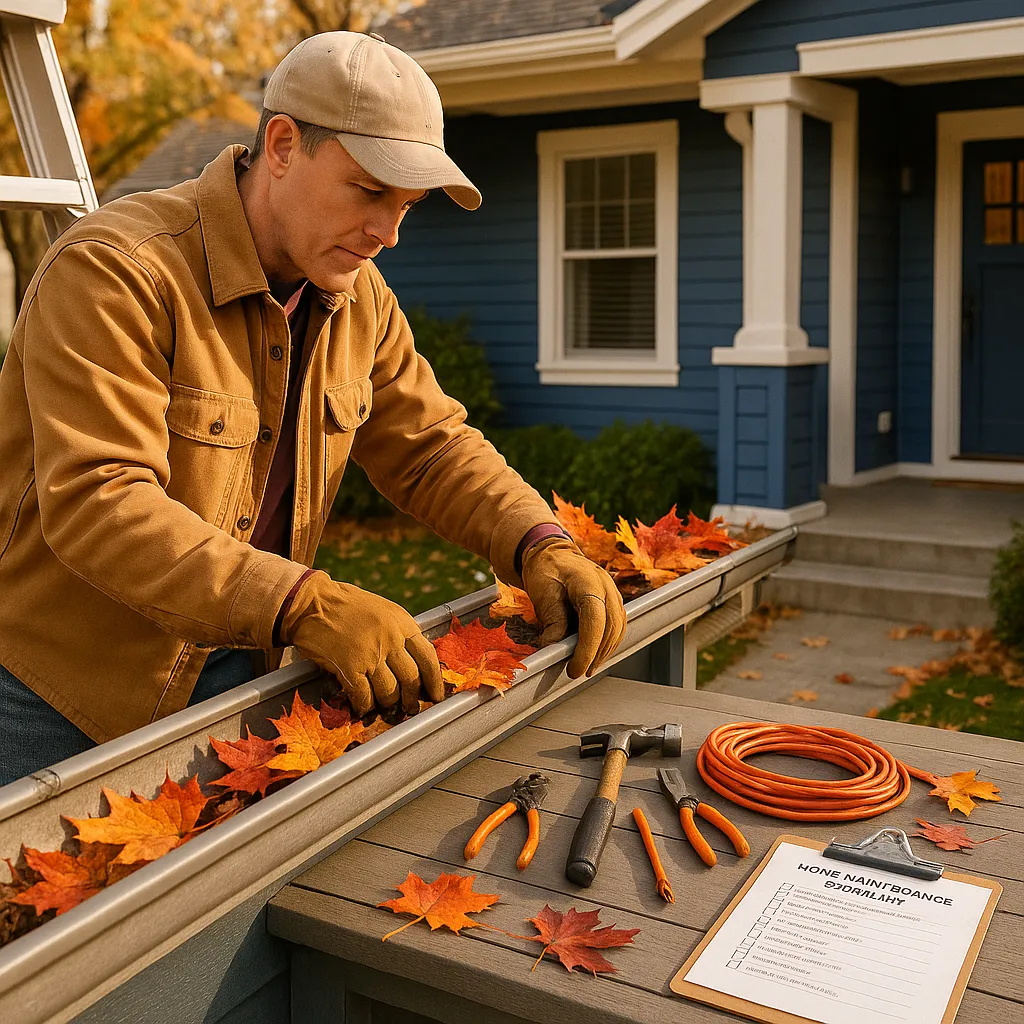
- Clean gutters — the most critical gutter cleaning of the year; gutters must be clear before freeze. Our gutter guide covers everything.
- Apply winterizer fertilizer to the lawn (late October)
- Disconnect and drain outdoor hose bibs and irrigation systems
- Test sump pump and battery backup before freeze season
- Caulk all exterior gaps — around windows, doors, utility penetrations, and foundation
- Inspect and replace door weatherstripping as needed
- Lower mowing height for the final 1–2 mows to reduce snow mold risk
- Drain and store outdoor furniture, grills, and water features
- Grade any low spots adjacent to the foundation before the ground freezes
❄️ EARLY WINTER (November–December)
November
- Install outdoor faucet covers on any exterior hose bibs
- Stock emergency supplies — generator, battery backup, ice melt (sand is better than salt for concrete and grass)
- Test the backup heating source if you have a gas fireplace, wood stove, or backup space heater
- Stock a full bag of furnace filters — Minnesota's heating season is long and filters need regular changes
December
- First post-storm inspection — after the first significant snow, check the roof for heavy accumulation
- Review your winter storm damage checklist — know what to look for
- Verify attic access is clear in case you need to check for ice dam formation
- Check pipes in unheated spaces — add insulation as needed before hard freeze
❄️ WINTER (January–February)
January
- Monitor for ice dams — look for icicles at the eaves and water staining inside near exterior walls
- Check basement moisture after hard freeze-thaw cycles
- Replace furnace filter if due (most filters need replacement every 1–3 months during heavy heating season)
- Use a roof rake after heavy snowfalls — remove snow from the bottom 3–4 feet of the roofline to reduce ice dam risk
February
- Inspect exposed pipes in utility rooms and crawlspaces during extreme cold snaps
- Note any condensation on windows — persistent condensation on double or triple-pane windows signals a seal failure
- Begin planning spring maintenance tasks — schedule contractors for roof, AC, chimney, and exterior projects early; good contractors book up fast
- Review your maintenance budget — identify what repairs or projects are coming this year
The Annual Maintenance Budget
Rule of thumb: Budget 1–2% of your home's value annually for maintenance. On a $350,000 home, that's $3,500–$7,000/year.
This doesn't all get spent every year — it accumulates in reserve for the years when a major system needs attention. The homeowners who get surprised by a $6,000 furnace replacement or a $12,000 roof are almost always the ones who never built the reserve.
Priority Maintenance by Consequence
| Priority | Examples | Consequence of Deferring |
|---|---|---|
| Immediate | Failing sump pump, CO detector, gas leak, structural failure | Safety or catastrophic damage |
| This season | Gutter cleaning before freeze, furnace filter before heating season, chimney inspection before use | Significant damage or system failure |
| This year | Aging roof, failing exterior caulking, foundation crack monitoring | Progressive damage; increasing repair cost |
| Plan for it | Aging HVAC, deck resurfacing, driveway sealing | Manageable if planned; expensive if emergency |
Frequently Asked Questions: Home Maintenance in Minnesota
What is the most important home maintenance task in Minnesota?
Fall preparation — specifically gutter cleaning, furnace service, chimney inspection (for homes with fireplaces), exterior caulking, and sump pump testing — is collectively the most critical maintenance window in Minnesota. What you do in September and October determines how your home handles winter. Missing this window means heading into the most stressful months for any Minnesota home without the protection you need.
How much should I budget for home maintenance annually in Minnesota?
The standard recommendation is 1–2% of your home's value annually. On a $350,000 home, that's $3,500–$7,000/year. This doesn't mean you'll spend that every year — it's a reserve that accumulates for the years when a major system (roof, furnace, water heater, AC) needs replacement. Minnesota's extreme climate accelerates wear on exterior materials and mechanical systems, making the higher end of this range appropriate for homes over 15 years old.
When should I clean my gutters in Minnesota?
At minimum, clean gutters twice annually: in late spring (after trees have fully leafed out and shed any seed pods), and in late fall (after most leaves have fallen, typically mid-to-late October). The fall cleaning is the most critical — gutters must be clear before hard freeze to prevent ice dams and overflow damage at the foundation. Homes with many overhanging trees may need a third cleaning. See our gutter guide for the full picture.
How often should I replace my furnace filter in Minnesota?
Furnace filter replacement frequency depends on filter type: basic 1-inch fiberglass filters every 1 month during heating season; pleated filters every 1–3 months; high-MERV filters every 3–6 months. Homes with pets, allergies, or heavy dust may need more frequent changes. During Minnesota's 6–7 month heating season, a standard 1-inch filter should be checked monthly and replaced as needed. A clogged filter reduces efficiency, strains the blower motor, and can lead to system failure.
What are the biggest home maintenance mistakes Minnesota homeowners make?
The most common mistakes: (1) skipping the fall exterior sealing and caulking check before mice and insects enter for winter; (2) letting gutters go into freeze season clogged; (3) not testing the sump pump until it fails during a spring flood; (4) deferring furnace service until the system struggles in January; (5) ignoring the lawn in fall — fall aeration and overseeding make more difference than everything done in spring and summer combined; and (6) not building a maintenance reserve, leaving homeowners financially unprepared for major system replacements.
What home maintenance tasks should I hire a professional for in Minnesota?
Hire professionals for: chimney inspection and cleaning (CSIA-certified sweep), HVAC annual tune-up (licensed HVAC technician), electrical work (licensed electrician), any work on your main water line or gas line, roof inspection and repair (licensed roofing contractor), and sewer line inspection or repair. DIY is appropriate for: gutter cleaning, filter replacement, exterior caulking, lawn care, deck sealing, and many interior maintenance tasks. When in doubt about your ability to do a task safely and correctly, hire a licensed professional.
What should I inspect after a Minnesota winter storm?
After significant snow or ice events, inspect: the roofline for ice dam formation (look for icicles at the eaves and water staining near exterior walls inside); the gutters for ice buildup or damage; downspout extensions for displacement; the chimney cap for displacement; the garage door weatherstripping; and the foundation perimeter for drainage issues as snow melts. Our complete winter storm damage inspection checklist covers each of these areas in depth.
The Homes That Hold Their Value Are the Ones That Are Maintained
A well-maintained Minnesota home is more than a comfortable place to live — it's a financial asset that holds its value and is ready when you need it to perform. The homes that surprise buyers with long deferred maintenance lists, failed systems, and water damage aren't unlucky. They're the ones where the seasonal calendar was skipped for a few years too many.
At Circle Partners — KW Real Estate Planners, we help Minnesota homeowners and buyers understand what ownership actually requires — and how to build the habits that protect their investment for the long term.
📞 Call us: 763-340-2002
📧 Email us: [email protected]
📍 Visit us: 16201 90th St NE, Suite #100, Otsego, MN 55330
🗓️ Book Your Free Real Estate Planning Consultation
Circle Partners is a licensed real estate team with KW Real Estate Planners, serving buyers and investors across Minnesota. This post is for informational purposes only and does not constitute legal, tax, or financial advice. Always consult a qualified attorney, CPA, or licensed professional for guidance specific to your situation.