
What's Holding Your Home Together? The Minnesota Buyer's Complete Guide to Siding Materials & Maintenance
What's Holding Your Home Together? The Minnesota Buyer's Complete Guide to Siding Materials & Maintenance
The siding on a Minnesota home does a lot more than just look good. It's the first line of defense against everything our climate throws at a structure — wind-driven rain, hail, below-zero cold, UV radiation, ice, and the relentless freeze-thaw cycling that tests every exterior material season after season.
When buyers evaluate siding, most are thinking about aesthetics: does it look clean? Does it look updated? But the better questions are: what material is it? How old is it? Has it been properly maintained? Is it keeping water out? And what will it cost to replace?
At Circle Partners, we help Minnesota buyers look past the paint and understand what's actually protecting their investment.
Why Siding Matters More in Minnesota
Our climate creates specific demands on exterior siding:
- Freeze-thaw cycling works on every seam, joint, and fastener each spring and fall
- Wind-driven snow and ice infiltrate any gap, crack, or failed caulk joint
- Sub-zero temperatures make some materials brittle — vinyl becomes fragile below -10°F
- High summer UV intensity fades and degrades surface finishes faster than most expect
- Snowmelt moisture finds failed flashing and caulk joints, entering wall cavities and creating ideal conditions for mold and rot
Vinyl Siding: The Most Common in Minnesota
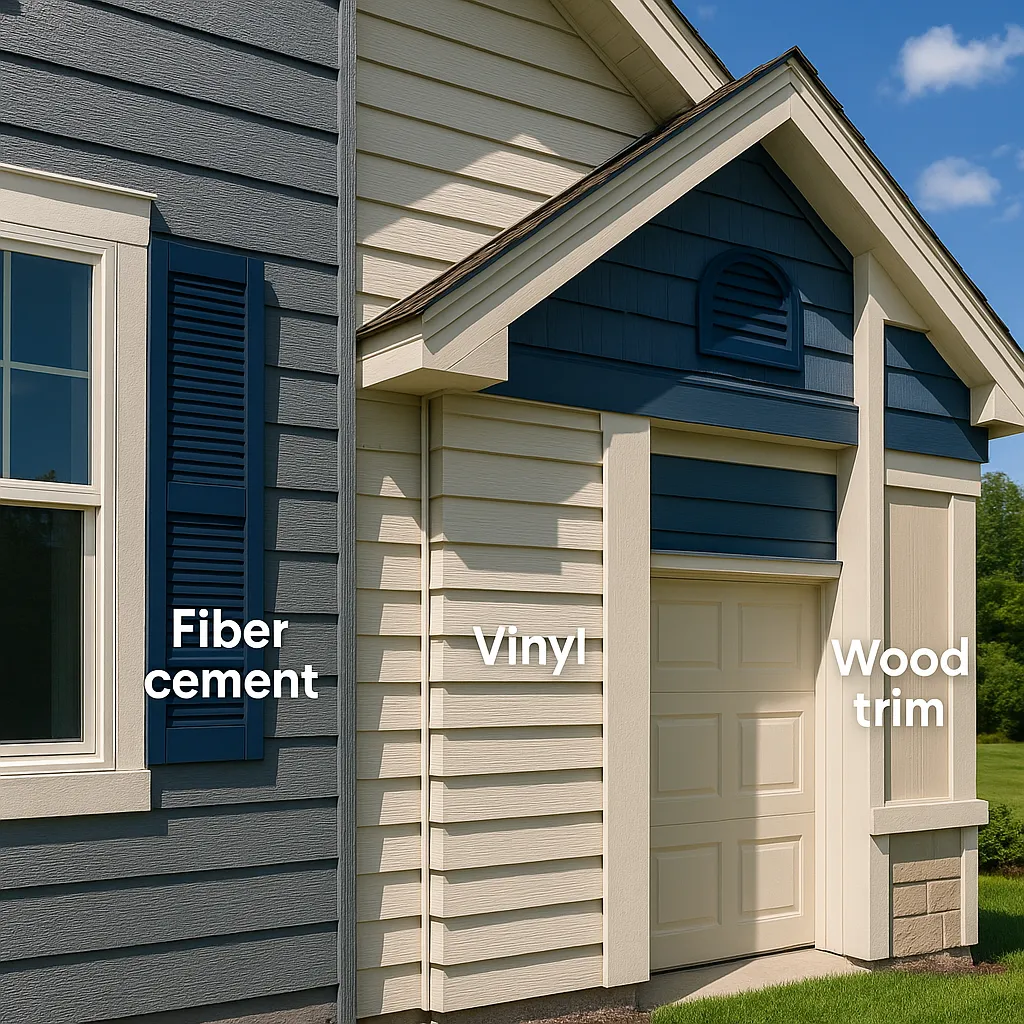
Vinyl (PVC) dominates Minnesota for good reason: affordable, low-maintenance, doesn't rot, and doesn't need painting.
The good: Doesn't rot or corrode. Wide range of profiles. Relatively affordable ($5–$12/sq ft installed). Insulated vinyl siding adds modest R-value.
Minnesota challenges: Becomes brittle below -10°F. Fading is real on 20+ year installations. Poor installation causes warping and buckling.
What to look for when buying:
- Cracks or impact damage, especially on north-facing elevations
- Warping or buckling (improper installation or heat exposure near grills)
- Missing caulk at corners, around windows, and at penetrations
- Mismatched sections suggesting past storm damage repairs
Fiber Cement Siding: The Premium Performer
Fiber cement (HardiePlank) is a composite of cement, sand, and cellulose fiber — increasingly popular as a premium alternative.
The good: 50+ year lifespan when maintained. Non-combustible. Doesn't rot. Not brittle in extreme cold. Takes paint exceptionally well.
Minnesota challenges: Must be painted every 10–15 years. Heavier — requires proper support. More expensive ($10–$20/sq ft installed). Bottom edges must be properly gapped above grade.
What to look for when buying:
- Paint condition — improperly painted or overdue for repainting shows peeling or checking
- Bottom edges — should be 6 inches above grade and properly caulked. Direct soil contact causes premature deterioration.
- Butt joint and trim caulking at all penetrations
- Chips at corners from impact damage
Wood Siding: Classic but Demanding
Original wood siding — cedar lap, pine boards, cedar shakes — is beautiful and was the standard through most of the 20th century in Minnesota.
The good: Authentically beautiful. Repairable piece by piece. Excellent insulation properties. Sustainable material.
Minnesota challenges: Requires painting or staining every 5–8 years. Susceptible to rot at ground contact and wherever paint has failed. A primary entry point for carpenter ants and woodpeckers when deteriorated — a direct connection to pest control in Minnesota. Most expensive to maintain of any siding type over 30 years.
What to look for:
- Soft or punky wood (press a screwdriver tip gently — soft spots indicate rot)
- Peeling, checking, or missing paint
- Horizontal surfaces where water pools (window sills, belt courses)
- Soil or mulch in contact with the bottom edge of siding
Stucco: A Minnesota-Specific Challenge
Traditional three-coat stucco — Portland cement over wire lath. Extremely durable when maintained. Requires periodic crack inspection — hairline cracking is normal; through-cracks at corners and around penetrations need repair before water infiltrates.
EIFS (Exterior Insulation and Finish System — synthetic stucco) — A completely different product from traditional stucco, despite similar appearance. Uses foam insulation board with a synthetic finish coat. Popular in the 1980s–1990s. Critical concern: water that gets behind EIFS has nowhere to go, creating rot in the wood substrate with no visible exterior indicator. Drainable EIFS systems with a drainage plane are significantly better. A licensed building inspector can identify which type is present.
What to look for in stucco/EIFS:
- Cracks at corners, around windows, and at changes in plane
- Staining around window and door penetrations — indicates past water infiltration
- Soft spots when probing lightly around penetrations (EIFS)
- Patches that don't quite match — suggest past water damage repairs
What Buyers Should Look For in Any Siding System
- Condition at penetrations — every place where something passes through the siding (windows, doors, outlets, hose bibs, dryer vents) is a potential water entry point. Caulk should be intact and crack-free.
- Condition at corners — corner trim is a common failure point. Missing, cracked, or deteriorated corner pieces allow wind-driven rain to infiltrate.
- Grade clearance — all siding should maintain at least 6 inches clearance from soil, mulch, or concrete. This connects to exterior water management, pest prevention, and keeping mulch and landscaping properly cleared from the home's foundation.
- Flashing at horizontal transitions — where siding meets the foundation, deck ledger, or roof-to-wall intersections.
- Evidence of past storm damage — mismatched sections, inconsistent profiles or color. Include siding in your winter storm damage inspection after every hard Minnesota winter.
🏡 Real Estate Planner Perspective: We see siding neglect constantly — homeowners who paint over checking paint instead of stripping properly, or skip the caulk line at windows for years. The visible consequence is cosmetic. The invisible consequence is water in the wall cavity, rot in the framing, and mold in the insulation. Our job is to help buyers understand which they're looking at. Book a consultation with Circle Partners →
Siding Replacement Costs in Minnesota
| Material | Installed Cost/sq ft | Lifespan | Maintenance |
|---|---|---|---|
| Vinyl (standard) | $5–$10 | 20–40 years | Low |
| Vinyl (insulated) | $8–$14 | 20–40 years | Low |
| Fiber cement | $10–$20 | 50+ years | Medium (paint every 10–15 yrs) |
| Wood (cedar lap) | $12–$25 | 20–40 years | High (paint every 5–8 yrs) |
| Traditional stucco | $10–$18 | 50+ years | Low-medium |
| EIFS | $8–$15 | 20–30 years | Medium (inspection/resealing) |
A typical Minnesota home requires 1,200–2,000 sq ft of siding. Insulated vinyl and fiber cement also connect to energy efficiency — reducing air infiltration and thermal bridging through the wall system.
Frequently Asked Questions: Siding in Minnesota Homes
What siding is best for Minnesota's climate?
Fiber cement is the premium performer for Minnesota's climate — it handles freeze-thaw cycling, doesn't become brittle in extreme cold, resists impact, and has a 50+ year lifespan when properly maintained. Vinyl is the most practical and cost-effective option for most Minnesota homes — widely available, affordable, and low-maintenance. Wood siding can perform beautifully in Minnesota but requires consistent repainting or restaining every 5–8 years. Homeowners who commit to that maintenance have exceptional-looking homes for decades.
How long does siding last in Minnesota?
Lifespan varies by material and maintenance: vinyl typically lasts 20–40 years; fiber cement 50+ years with periodic repainting; wood siding 20–40 years with consistent painting (less without); traditional stucco 50+ years with crack maintenance; EIFS 20–30 years. The single biggest variable is maintenance — all exterior materials last significantly longer when properly maintained. When buying a home, ask for the siding age and any documentation of major repairs or replacements.
What are the signs that siding needs to be replaced?
Signs include: widespread cracking, warping, or brittleness (vinyl); failing or peeling paint exposing bare material (fiber cement, wood); widespread rot or soft spots (wood); significant crack patterns with evidence of water infiltration (stucco/EIFS); missing sections; and extensive fading penetrating to the base material. Localized damage — a hail-impacted section, a cracked board — can often be repaired without full replacement if the underlying material is sound.
What is EIFS and should I be concerned if a Minnesota home has it?
EIFS is a multi-layer exterior system using foam insulation with a synthetic finish coat — often called synthetic stucco. The concern: water that gets behind the system has no place to go and can cause significant rot in wood framing with no visible exterior indicator. Not all EIFS is problematic — newer drainable EIFS systems include a drainage plane that manages water appropriately. If a home has EIFS, have a licensed building inspector evaluate it specifically, probing around all penetrations for soft spots in the substrate.
How do I evaluate siding condition when buying a Minnesota home?
Walk the entire perimeter and look for: cracking, warping, or missing sections; failed or missing caulk around all windows, doors, and penetrations; soft or punky spots in wood (gently probe with a screwdriver); staining around penetrations indicating water infiltration; mismatched sections suggesting patched repairs; soil or mulch in contact with the siding bottom edge; and flashing at all horizontal transitions. Pay special attention to north-facing elevations and the area around windows.
Does siding affect a home's energy efficiency in Minnesota?
Siding itself provides minimal thermal resistance — the insulation in the wall cavity matters most. However, insulated vinyl siding adds modest R-value (R-2 to R-4) and reduces thermal bridging. The bigger siding-related energy impact is air infiltration — failed caulking, missing trim, and penetration gaps allow cold air to bypass wall insulation entirely. Maintaining intact siding and caulking is one of the most cost-effective ways to reduce air infiltration and connects to the broader energy efficiency strategy for any Minnesota home.
What does it cost to replace siding on a Minnesota home?
A complete siding replacement on a typical Minnesota home (1,500 sq ft of siding area) runs $7,500–$30,000+ depending on the material chosen and installation complexity. Vinyl is at the lower end ($7,500–$15,000); fiber cement in the middle ($15,000–$30,000); wood siding at the higher end ($18,000–$37,000+). These costs factor significantly into a purchase negotiation when existing siding is near end-of-life or has significant damage. Get three quotes from licensed siding contractors before finalizing any negotiation credit.
The Envelope Matters as Much as the Interior
At Circle Partners — KW Real Estate Planners, we help Minnesota buyers evaluate the whole home — including what's holding it together on the outside. Because long-term value in a Minnesota property starts with a properly maintained building envelope.
📞 Call us: 763-340-2002
📧 Email us: [email protected]
📍 Visit us: 16201 90th St NE, Suite #100, Otsego, MN 55330
📅 Book Your Free Real Estate Planning Consultation
Circle Partners is a licensed real estate team with KW Real Estate Planners, serving buyers and investors across Minnesota. This post is for informational purposes only and does not constitute legal, tax, or financial advice. For guidance specific to your situation, always consult a qualified attorney, CPA, or other qualified expert.