Minnesota Outdoor Living: What Every Home Buyer Needs to Know About Decks, Patios & Fencing
In Minnesota, we don't just own homes — we protect assets against some of the most demanding weather in the country. Whether you're buying your first home in Otsego, investing near the Twin Cities Metro, or eyeing a property up in the Brainerd Lakes area, your outdoor living space is far more than a place to fire up the grill on a Saturday afternoon.
It is a critical driver of property value, a long-term wealth-building tool, and — when done right — one of the smartest investments you can make in Minnesota real estate.
At Circle Partners, we work as Real Estate Planners, not just agents. That means we help you think beyond the sale — and that includes helping you understand how outdoor improvements like decks, patios, and fencing affect your equity, your ROI, and your long-term financial picture.
Let's break it all down.
The Foundation of Value: Deck or Patio — Which Is Right for Your Minnesota Property?
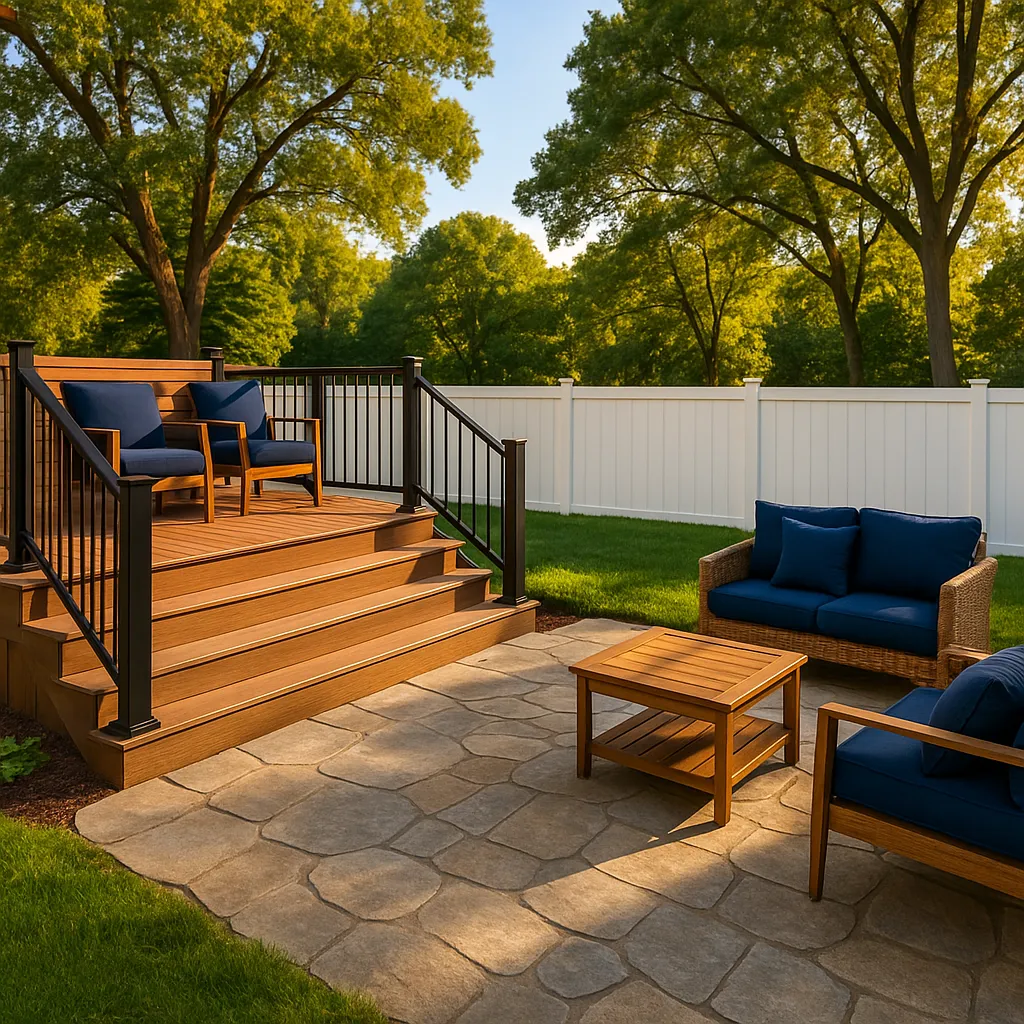
When evaluating outdoor improvements — whether you're a first-time buyer, a seasoned investor, or someone exploring how to maximize curb appeal in Minnesota — the first decision is usually the platform: deck or patio?
The right answer depends on your lot, your goals, and how you plan to use the property. Here's how to think about it like a Real Estate Planner:
| Feature | Deck | Patio |
|---|---|---|
| Best for sloped lots? | Yes | Requires grading |
| Long-term maintenance cost | Higher (staining, sealing) | Lower (minimal upkeep) |
| Average ROI at resale | 60-75% | 50-80% (paver patios) |
| Minnesota weather durability | Moderate (material dependent) | High (concrete/paver) |
| Great for investment properties? | Situational | Often preferred |
Decks Built for Minnesota's Terrain
If your property has a significant slope — common in the St. Croix Valley, the bluffs near Winona, or parts of Anoka County — a deck is often the most practical and visually striking solution.
Footing Depth: Don't Skip This Step
In Minnesota, deck footings must be installed below the frost line — typically at a minimum depth of 42 to 48 inches — to prevent heaving during the brutal freeze-thaw cycles we see every winter. Skimping on this step is the most common reason decks deteriorate prematurely. If you're buying a home with an existing deck, this is one of the first things to verify during inspection.
Material Matters in a Minnesota Winter
Traditional pressure-treated lumber remains a popular and cost-effective choice, but composite decking has become increasingly common across Minnesota. It resists moisture absorption, doesn't require annual staining or sealing, and holds up far better under heavy snow loads. Read our post on why gutters are essential for Minnesota homes — because improper drainage is one of the top reasons decks rot prematurely.
The Deck ROI Conversation
A mid-range composite deck addition typically returns around 60-75% of its cost at resale. In competitive Minnesota markets like Maple Grove, Plymouth, and Otsego, that number can climb higher when the deck is well-built, properly permitted, and enhances the overall outdoor living experience.
Real Estate Planner Tip: Before adding a deck to an investment property, run the numbers. A $20,000 composite deck in a $350,000 home may not move the needle the same way it would in a $500,000+ home. Our team can help you evaluate whether the investment makes financial sense — schedule a conversation with us here.
Patios: Low-Maintenance, High-Durability — The Investor's Choice
For homeowners and investors who want a beautiful outdoor living space without the ongoing maintenance headache of a wood deck, a paver or poured concrete patio is hard to beat in Minnesota's climate. A well-installed paver patio can last 25-50 years with minimal care. Read our post on energy efficiency for Minnesota homes — the same scrutiny applies to your outdoor structures.
Paver vs. Concrete: What's the Difference?
- Poured Concrete: More affordable upfront. Prone to cracking in Minnesota's freeze-thaw cycles without proper installation.
- Paver Patios: Higher upfront cost, but individual pavers can be replaced if damaged. Excellent curb appeal and perceived value.
- Stamped Concrete: Beautiful aesthetic with lower cost than pavers, but cracks must be addressed promptly to prevent water intrusion.
In the Otsego, Rogers, and Elk River areas where many of our clients are buying, paver patios have become increasingly common in new construction and renovation projects.
Fencing: More Than a Boundary — It's a Strategic Asset
A well-installed fence defines your property lines, adds security, and significantly increases appeal to future buyers and renters alike.
Privacy Fencing
Ideal for high-density neighborhoods in the Twin Cities Metro, Rochester, and Mankato. A solid privacy fence (typically 6 feet) can make a small suburban lot feel like a private retreat.
Security Fencing
For investment properties or homes where tools and equipment are stored on-site, security fencing protects your assets and reduces liability exposure. (For liability and legal guidance, always consult a qualified attorney.)
Decorative Fencing
Aluminum and wrought-iron style fencing adds curb appeal without fully enclosing a yard. Check out our full breakdown of the most profitable landscaping ideas for Minnesota homes.
Material Choice: What Holds Up in a Minnesota Winter?
| Material | Durability in MN | Maintenance Level | Best For |
|---|---|---|---|
| Wood (Cedar/Pine) | Moderate | High (stain/seal every 2-3 yrs) | Aesthetics, privacy |
| Vinyl/PVC | High | Very Low | Low-maintenance, rentals |
| Aluminum | Very High | Very Low | Decorative, front yards |
| Chain Link | Very High | Low | Security, back yards |
| Steel/Wrought Iron | Very High | Low-Moderate | High-end curb appeal |
Minnesota-Specific Maintenance: Staying Ahead of the Elements
Winter: The Biggest Threat to Decks and Patios
Snow removal is the single biggest killer of Minnesota decks and patios. Using the wrong ice melt product can eat through concrete, corrode deck hardware, and damage composite materials.
- Avoid: Rock salt (sodium chloride) — damages concrete surfaces
- Use Instead: Sand for traction, or calcium chloride-based products
- For Wood Decks: Use a plastic shovel to avoid scratching the surface
For a comprehensive look at seasonal home care, check out our post on how to deep clean your home without spending a fortune.
Spring: Inspection Time
Once the snow melts, look for deck boards that have cracked or warped, fence posts that have shifted from frost, concrete or paver settling, corrosion on hardware, and wood rot at deck posts. Catching these issues early is the difference between a $200 repair and a $5,000 replacement.
Summer: Staining, Sealing, and Pest Prevention
If water doesn't bead up on your wood deck surface, it's time to reseal. Also check for wood-boring insects, which are more active in the warmer months.
Fall: Prepare for the Cold
Clear debris from between deck boards and ensure patio drainage is working properly. Seasonal home care is connected across every system — from your furnace and heating system to your attic insulation to your outdoor structures.
Building Wealth Through Your Backyard: The Real Estate Planner's View
Every improvement you make to your home should be evaluated through the lens of a Real Estate Planner. Your backyard isn't just where you relax — it's an equity asset.
What to Evaluate Before You Build
- Neighborhood comps: Are other homes selling with decks and patios? If so, you need one to compete.
- Your hold time: Planning to sell in 12-18 months? Focus on high-ROI improvements. Staying 10+ years? Quality-of-life value matters more.
- Permit compliance: Unpermitted decks and fences are a red flag in inspections. Always pull the proper permits.
- HOA restrictions: Many communities in Wright County and Hennepin County have strict guidelines. Know the rules before you build.
For any tax-related questions — like whether outdoor improvements affect your cost basis — always consult a qualified tax professional.
Want to know if an outdoor project makes sense for your property? Our team at Circle Partners can walk you through the numbers. Book your free Real Estate Planning consultation today
Frequently Asked Questions: Decks, Patios and Fencing in Minnesota
Should I build a deck or a patio for my Minnesota home?
It depends on your lot and your goals. If your property has a significant slope, a deck is often more practical. If you want low-maintenance durability — especially for a rental or investment property — a paver or concrete patio typically wins on long-term cost efficiency.
How deep do deck footings need to be in Minnesota?
In Minnesota, deck footings must be installed below the frost line — generally 42 to 48 inches. Always check with your local building department before breaking ground.
What type of fencing holds up best in Minnesota winters?
Vinyl (PVC) and aluminum fencing are the most durable, low-maintenance options. Cedar wood fencing is beautiful but requires regular maintenance. Chain-link and steel offer excellent durability at a lower price point.
Does adding a deck or patio increase home value in Minnesota?
Yes — when done correctly. A mid-range composite deck typically returns 60-75% of its cost at resale, and quality paver patios can return 50-80%. ROI depends heavily on the neighborhood, price point, and quality of construction.
What should I use to melt ice on my deck or patio in Minnesota?
Avoid rock salt — it's highly corrosive. Use sand for traction or calcium chloride-based ice melt, which is significantly safer for your outdoor structures and landscaping.
Do I need a permit to build a deck or fence in Minnesota?
In most Minnesota cities and townships, yes. Skipping permits is one of the most common mistakes homeowners make and can create major headaches at the time of sale. Always check with your local building department first.
How do I know if an outdoor renovation is worth the investment?
This is exactly what a Real Estate Planner helps you evaluate. At Circle Partners, we help buyers and investors run these numbers before making decisions. Schedule a consultation with our team to get started.
Ready to Make Smart Moves with Your Minnesota Home?
At Circle Partners — KW Real Estate Planners, we're not just here to help you buy and sell. We're here to help you build lasting wealth through real estate — one smart decision at a time.
Call us: 763-340-2002 | Email: [email protected] | 16201 90th St NE, Suite #100, Otsego, MN 55330
Circle Partners is a licensed real estate team with KW Real Estate Planners, serving buyers and investors across Minnesota. This post is for informational purposes only and does not constitute legal, tax, or financial advice. For personalized guidance, please consult a qualified attorney, CPA, or financial advisor.