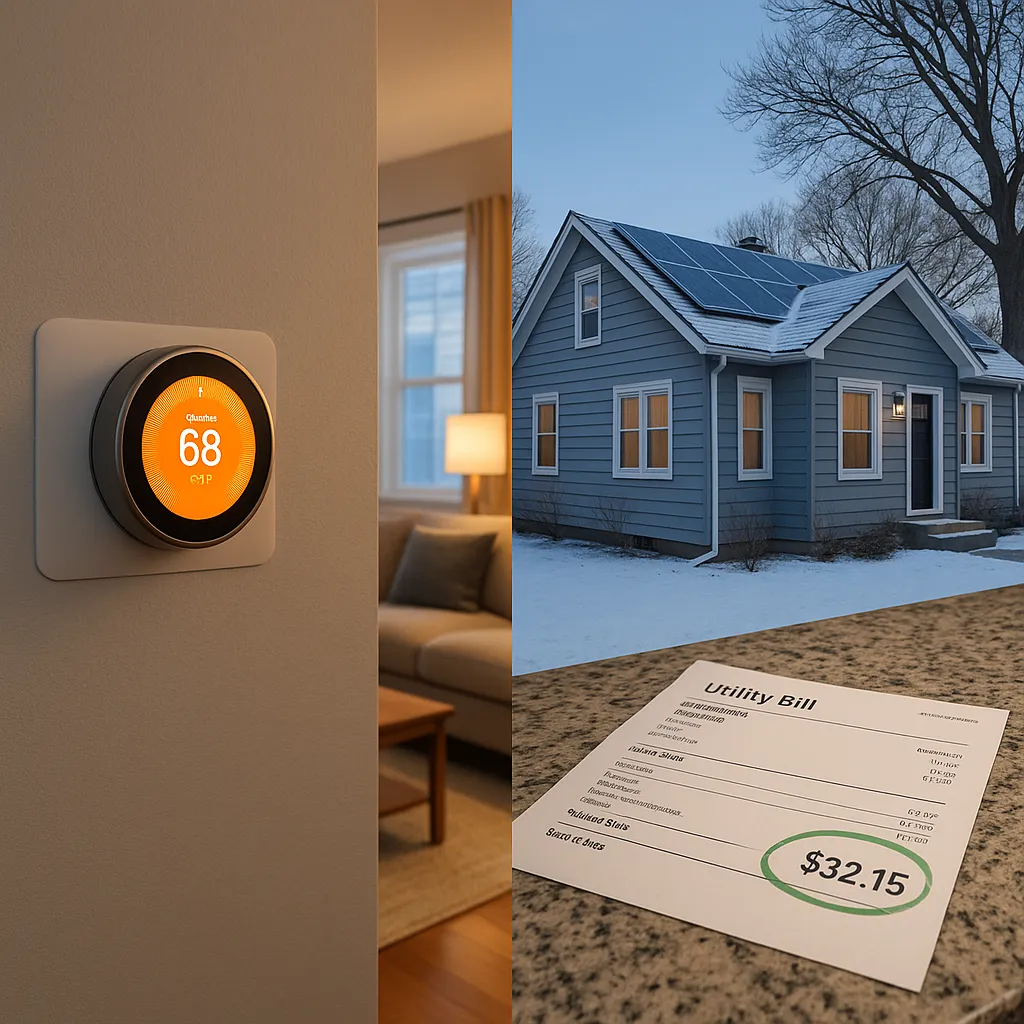
Let's talk about something that doesn't always come up at the closing table — but probably should: your monthly energy bill.
Here in Minnesota, energy costs are a real and significant part of the true cost of homeownership. We heat our homes for six to seven months a year. We air condition them through increasingly hot and humid summers. We run our appliances, our lights, our water heaters — year-round, in one of the most demanding climates in the country.
The average Minnesota household spends over $2,000 annually on energy. And the hard truth is that a large portion of that — in many homes, 20% to 40% — is wasted through poor insulation, air leaks, aging equipment, and habits that are easy to change once you know better.
That's where we come in. Whether you're buying your first home, settling into a new one, or looking at ways to make your current home work harder for you — this guide gives you ten practical, proven energy efficiency ideas that will put real money back in your pocket. Every month. All year long.
For our comprehensive deep dive into home energy performance, read: The Complete Minnesota Homeowner's Guide to Improving Energy Efficiency →
Why Minnesota Homes Are Particularly Energy-Hungry
Minnesota's climate is simply demanding. Consider what our homes endure:
- Heating season: 6–7 months of sustained cold, including stretches of -20°F or colder in communities across Wright County, Blue Earth County, and throughout the metro
- Cooling season: Increasingly hot, humid summers with heat index values regularly topping 100°F
- Extreme temperature swings: 130°F+ swings between our coldest winter nights and hottest summer afternoons — more than almost any other state
- Older housing stock: Many homes in markets like Buffalo, Otsego, and Big Lake were built before modern energy codes, meaning thinner insulation, older windows, and less airtight construction
All of this means that energy efficiency isn't a luxury in Minnesota — it's one of the smartest financial decisions you can make as a homeowner. And the good news? Most of the biggest gains are achievable without major renovations.
10 Proven Energy Efficiency Ideas to Save Money in Your Minnesota Home
Idea #1: Start with a Professional Home Energy Audit
Before you invest a dollar in any other energy efficiency improvement, this is the move that makes everything else smarter. A professional home energy audit — conducted by a certified energy auditor — uses blower door testing, thermal imaging cameras, and a detailed walkthrough to reveal exactly where your home is losing energy and how much it's costing you.
The auditor delivers a ranked list of improvements by return on investment, so you know whether to start with insulation, air sealing, equipment replacement, or something else entirely. In Minnesota, Xcel Energy and CenterPoint Energy offer rebated or subsidized energy audits for their customers — meaning this critical first step can cost very little or nothing at all. Don't guess. Know.
Idea #2: Upgrade Your Attic Insulation — The Highest ROI Improvement in Most Minnesota Homes
If there's a single improvement that delivers the most consistent return on investment for Minnesota homeowners, it's attic insulation. Heat rises — and in an under-insulated attic, it escapes straight through your ceiling into the cold attic space above, forcing your furnace to work constantly just to maintain comfortable temperatures.
For Minnesota, the recommended attic insulation level is R-49 to R-60. Many older homes in our area have R-11 to R-19 — a gap that can cost hundreds of extra dollars in heating costs every single winter. Adding blown-in cellulose or fiberglass insulation to reach the recommended level typically costs $1,500–$4,000 and can pay for itself within 3–5 years through energy savings alone.
Read our complete attic insulation guide: The Hidden Story in Your Attic: What Every Minnesota Home Buyer Needs to Know About Insulation →
Idea #3: Air Seal Your Home — The Most Overlooked Energy Efficiency Strategy
Your home breathes. And if it's breathing in all the wrong places — pulling cold outdoor air through electrical outlets, plumbing penetrations, recessed lights, attic hatches, and ductwork gaps — your heating and cooling system is fighting a battle it can never win. Air sealing identifies and plugs these unintended gaps, and in some Minnesota homes it can reduce energy consumption by 10%–20%.
High-impact air sealing locations:
- Around electrical outlets and switches on exterior walls (inexpensive foam gaskets)
- Attic hatch — often a major source of heat loss if uninsulated and unweatherstripped
- Around recessed light cans in the ceiling below the attic
- Where plumbing, wiring, and HVAC penetrate walls and floor plates
- Ductwork connections and returns — leaky ducts waste 20%–30% of conditioned air
Idea #4: Upgrade to a Smart Thermostat — One of the Fastest Paybacks Available
A smart thermostat (Nest, Ecobee, or similar) learns your schedule, adjusts automatically for outdoor temperatures, lets you control your HVAC from your phone, and ensures your heating and cooling system isn't running at full capacity when no one is home. The typical Minnesota household saves $130–$180 per year after installing one. At a device cost of $150–$250, the payback is often less than two heating seasons.
Smart thermostat settings for Minnesota:
- Winter: 68°F when home, 62°F–65°F when away or sleeping
- Summer: 78°F when home, 82°F+ when away
Each degree of setback in winter saves approximately 1%–3% on heating costs. Over Minnesota's long heating season, those degrees add up to real dollars. For more on cooling savings, read: Stop Overpaying: 10 Smart Ways to Lower Your AC Bills in Minnesota →
Idea #5: Annual Furnace Tune-Up and Monthly Filter Changes
Your furnace is your home's hardest-working energy consumer. A furnace running on a dirty filter, with unclean burners and an uninspected heat exchanger, works harder, consumes more fuel, and operates less safely than one that's been properly maintained.
Two non-negotiable habits for Minnesota homeowners:
- Change your furnace filter monthly during the heating season (October–April). A clogged filter restricts airflow, makes your blower motor work harder, reduces heating efficiency, and shortens equipment life. Filters cost $5–$20. There is no cheaper maintenance task with a higher return.
- Schedule an annual professional HVAC tune-up every fall. A technician will clean burners, inspect the heat exchanger, test safety controls, and verify proper operation. This typically costs $75–$150 and can prevent costly mid-winter breakdowns.
For more on why your furnace is your most critical energy system, read: Stay Warm All Winter: Why a Furnace Is Still the Best Way to Heat Your Minnesota Home →
Idea #6: Switch Entirely to LED Lighting
If you still have any incandescent or CFL bulbs in your home, replacing them with LED is one of the simplest and most cost-effective improvements available. LED bulbs use 75%–80% less energy than incandescent bulbs, last 15–25 times longer, and produce significantly less heat — reducing your summer cooling load. A full home LED conversion typically costs $50–$150 and can save $100–$200+ per year on electricity. One of the fastest-payback investments in the entire energy efficiency toolkit.
Circle Partners Tip: When evaluating a home you're considering buying, check whether the lighting has been updated to LED. It's a small detail that often signals the previous owners were attentive to maintenance — which usually indicates the same care was applied to bigger systems.
Idea #7: Seal Windows and Doors — Weatherstripping and Caulking
Old, leaky windows and doors are one of the most common — and most fixable — sources of energy waste in Minnesota homes. Before investing in full window replacement (expensive, long payback), address the sealing first:
- Door weatherstripping: You should feel no draft and see no light around the perimeter of a closed exterior door. Weatherstripping kits cost $10–$30 per door and take 30 minutes to install.
- Door sweeps: The gap at the bottom of exterior doors is often the largest single air infiltration point in older homes. A good door sweep costs $10–$20.
- Window caulking: Inspect the caulk around every window frame — interior and exterior. Cracked or missing caulk is a direct pathway for air infiltration.
- Window insulation film: For older single-pane or drafty double-pane windows, interior insulation film kits ($15–$40 per window) add meaningful thermal resistance during Minnesota winters.
Idea #8: Lower Your Water Heater Temperature and Add an Insulation Jacket
Water heating accounts for approximately 14%–18% of a typical household's energy use. Two simple steps can meaningfully reduce that:
- Lower your water heater thermostat to 120°F. Most water heaters come factory-set at 140°F — higher than necessary and a source of significant standby energy loss. Lowering to 120°F typically saves 6%–10% on water heating costs.
- Add a water heater insulation blanket ($25–$50). For older storage tank water heaters, this reduces standby heat loss — particularly effective in unheated utility rooms that experience Minnesota's cold winters.
If your water heater is more than 10–12 years old, consider upgrading to a high-efficiency model or a heat pump water heater, which can reduce water heating costs by 60%–70% compared to a standard electric model.
Idea #9: Plant Strategic Shade Trees — The Long-Game Energy Investment
Strategically planting deciduous shade trees on the south and west sides of your home creates natural cooling in summer by blocking direct solar radiation from hitting your roof and windows — reducing summer cooling costs by 15%–35%. These same trees drop their leaves in fall, allowing winter sun to warm your home and reduce heating costs. The homeowners who plant them are always glad they did. Read more: Curb Appeal That Pays: The Smartest & Most Profitable Landscaping Ideas for Your Minnesota Home →
And for the energy-saving connection between your gutters, grading, and overall home efficiency: Why Does My Minnesota Home Need Gutters? →
Idea #10: Replace Aging Appliances with ENERGY STAR Models
Your refrigerator, dishwasher, washing machine, and dryer collectively account for a meaningful portion of your home's electricity consumption. If these appliances are 10–15+ years old, they were manufactured under significantly less stringent efficiency standards than what's available today. Upgrading to ENERGY STAR certified appliances can reduce individual appliance energy consumption by 15%–50%.
When evaluating a home you're buying, ask about the age of major appliances and look for ENERGY STAR labels. Aging appliances are a known future cost — and that knowledge gives you negotiating power before closing. For more on the full financial picture of buying: How Much Are Closing Costs When Buying a Home? →
Minnesota Energy Rebate Programs — Don't Leave Money on the Table
One of the most frequently overlooked aspects of home energy efficiency is the rebate and incentive landscape available to Minnesota homeowners:
- Xcel Energy and CenterPoint Energy offer rebates on qualifying smart thermostats, high-efficiency furnaces, air conditioners, heat pump water heaters, insulation, and more
- Minnesota Power and Great River Energy offer similar programs for their service areas
- Minnesota Department of Commerce administers energy assistance and weatherization programs for qualifying households
- Federal energy efficiency tax credits are available for qualifying insulation, windows, doors, and HVAC equipment
Rebate programs, amounts, and eligibility change regularly. Always check directly with your utility provider and consult a qualified tax professional for guidance on credits specific to your situation. We always make sure our clients know these programs exist.
What to Look for When Buying an Energy-Efficient Minnesota Home
Shopping for a home? Here's how to evaluate energy performance before you commit:
- Ask for utility bills. Sellers in Minnesota are generally willing to provide 12 months of utility history. High bills relative to the home's size are worth investigating.
- Check the attic insulation level. Ask your home inspector to report the approximate R-value.
- Look for a smart thermostat and high-efficiency HVAC equipment. These signal a home that's been managed thoughtfully.
- Note the age of windows and weatherstripping condition. Drafty windows and worn seals are visible during any walkthrough.
- Look for ENERGY STAR appliances. Often noted in listing details — a small but telling detail.
- Ask about the home's last energy audit. If one has been done, request to see the results.
Our team at Circle Partners helps buyers look beyond the surface to understand what a home truly costs to own — not just the mortgage payment, but the utilities, the maintenance, and the systems that will either serve you well or quietly drain your budget.
7 Frequently Asked Questions: Energy Efficiency for Minnesota Homes
Q: What is the single most cost-effective energy efficiency improvement for a Minnesota home?
A: For most Minnesota homes, attic insulation is the highest-ROI single improvement — particularly if the current level is below R-38. Air sealing in combination with insulation is the most effective one-two punch available. After those structural improvements, a smart thermostat provides one of the fastest financial paybacks for minimal investment.
Q: How much can I realistically save on energy bills in my Minnesota home?
A: The range varies based on your home's current condition, but homeowners who implement the full suite of improvements in this guide — insulation, air sealing, smart thermostat, efficient equipment — commonly report 20%–40% reductions in annual energy costs. On a $2,500/year energy bill, that's $500–$1,000 in annual savings. Many improvements pay for themselves within 3–7 years and continue saving money for decades after.
Q: Are there energy efficiency rebates available in Minnesota?
A: Yes — and they're worth pursuing. Minnesota's major utilities (Xcel Energy, CenterPoint Energy, Minnesota Power) offer rebate programs for qualifying equipment and improvements. Federal tax credits are also available for certain improvements under current energy legislation. Rebate amounts and eligibility change regularly — always check directly with your utility provider and consult a qualified tax professional for guidance specific to your situation.
Q: What is the best temperature to set my thermostat in winter to save money in Minnesota?
A: The U.S. Department of Energy recommends 68°F when you're home and awake, and 60°F–65°F when you're away or asleep. Each degree of setback saves approximately 1%–3% on heating costs. Over Minnesota's 6–7 month heating season, consistent setbacks deliver meaningful savings. A smart thermostat automates this process so comfort and savings work together seamlessly.
Q: Is it worth replacing windows for energy efficiency in Minnesota?
A: Window replacement is one of the more expensive energy efficiency improvements — with a longer payback period than most alternatives. Before replacing windows, address air sealing and weatherstripping first (much cheaper, often comparable impact). If windows are single-pane, very old, or significantly damaged, replacement becomes more justifiable. Triple-pane windows are now the Minnesota standard for new construction. Always get multiple contractor quotes and evaluate the payback period carefully.
Q: What should I look for energy-efficiency-wise when buying a home in Minnesota?
A: Request 12 months of utility bills, ask your inspector about attic insulation R-value, note the age of the furnace and AC system, check for ENERGY STAR appliances, and assess window and door weatherstripping condition. These factors directly determine your monthly cost of living in the home — not just your mortgage payment. Our team at Circle Partners helps buyers evaluate all of this before they close, so there are no surprises after the keys change hands.
Q: Should I get a home energy audit before or after I buy a home?
A: Ideally both — or at minimum, after you move in. Before buying, your home inspection will surface major energy-related concerns. After moving in, a professional energy audit gives you a prioritized, data-driven action plan for improvements specific to your home. If the home has a recent energy audit on file, request it as part of your due diligence. It's one of the most useful documents a seller can share.
Your Home Should Put Money Back in Your Pocket — Not Drain It.
The smartest homeowners we know treat their home the same way they treat any other significant financial asset: proactively, strategically, and with an eye on the long term. Energy efficiency is one of the clearest expressions of that mindset.
Every improvement in this guide isn't just about lower bills — it's about a home that works better, feels more comfortable, holds its value longer, and serves your family more completely in every season of Minnesota life.
At Circle Partners, we help families make decisions like this well — not just at the closing table, but throughout the full arc of homeownership. Whether you're buying your first home, evaluating an upgrade, or planning ahead for what comes next, we'd love to be part of your story.
Let's talk. Let's plan. Let's make sure your home is one of your greatest financial assets — not your greatest ongoing expense.
📅 Book Your Free Strategy Session →
Questions? Reach us at [email protected] or call 763-340-2002. Our office is at 16201 90th St NE, Suite #100, Otsego, MN 55330.
*This article is for informational purposes only and does not constitute legal, financial, or tax advice. For guidance specific to your situation, please consult a qualified attorney or tax professional.