There's a reason our team at Circle Partners talks about landscaping with every buyer and seller we work with. Because what's happening outside your home doesn't just affect how it looks — it affects how it performs, what it costs to maintain, how much energy you use, how safe your foundation is, and ultimately, how much your home is worth.
Good landscaping is one of the few investments that pays you back in multiple ways at once: curb appeal, energy savings, foundation protection, privacy, and — when it's time to sell — serious market value.
But not all landscaping investments are created equal. In Minnesota's climate, some choices are home runs. Others are expensive mistakes. In this guide, we're sharing the smartest, most profitable landscaping ideas specifically for Minnesota homeowners — whether you're buying, settling in, or thinking ahead to your next chapter.
For our complete guide to trees, tree health, and landscape safety in Minnesota, read: Landscaping & Trees in Minnesota: A Complete Homeowner's Guide →
Why Landscaping ROI Matters More in Minnesota Than You Might Think
Real estate research consistently shows that well-executed landscaping can add 10%–15% to a home's resale value and significantly reduce time on market. In Minnesota's competitive suburban markets — Wright County, the northwest Twin Cities corridor, Blue Earth County — first impressions matter enormously.
But beyond resale, your landscaping directly impacts:
- Monthly energy costs — Strategic tree placement reduces cooling bills by 15%–35%
- Foundation health — Proper grading and drainage protects your home's most critical structural system
- Maintenance costs — Smart plant choices reduce upkeep time and expense year after year
- Quality of daily life — Privacy, shade, outdoor living, and seasonal beauty all add up to a home you genuinely love
The key is making choices that deliver value across all of these dimensions — not just the ones that look pretty in spring.
The 9 Smartest & Most Profitable Landscaping Investments for Minnesota Homes
1. A Healthy, Well-Maintained Lawn — Your Highest First-Impression ROI
Nothing signals pride of ownership to buyers, neighbors, and appraisers like a lush, well-kept lawn. And in Minnesota, a healthy lawn requires a Minnesota-smart approach.
For our climate:
- Seeding or overseeding in early fall (late August–September) is the single best time to establish new turf in Minnesota. Soil temps are warm, air temps are cool, and rainfall is typically reliable.
- Cool-season grasses (Kentucky bluegrass, fine fescue, perennial ryegrass) are the standard in Minnesota.
- Aeration every 1–2 years reduces compaction and dramatically improves turf density and color.
- Deep, infrequent watering (1 inch per week) builds deep roots that withstand Minnesota's dry spells and brutal winters.
A beautiful, healthy lawn costs relatively little to maintain annually and returns far more in perceived home value. It's the foundation on which every other landscaping investment is built.
2. Strategic Shade Trees — Beautiful, Functional, and Financially Smart
Mature trees are one of the highest-value assets a Minnesota property can have. On the south and west sides of your home, deciduous shade trees create natural cooling in summer while allowing winter sun to warm your home after they drop their leaves. The energy savings are real and measurable — strategic tree placement can reduce summer cooling costs by 15%–35%. Read more: Stop Overpaying: 10 Smart Ways to Lower Your AC Bills in Minnesota →
From a property value standpoint, mature trees add significant market value — particularly in Minnesota's suburban markets where shaded, established lots command meaningful premiums.
Minnesota's best shade tree choices:
- Bur Oak — Minnesota's gold standard. Incredibly hardy, long-lived, and highly resistant
- Sugar Maple — Stunning fall color, excellent shade coverage
- Northern Catalpa — Fast-growing with beautiful summer blooms
- American Linden (Basswood) — Fragrant summer flowers, excellent shade
Always consult with a certified arborist before planting large trees near your home or utility lines. Proper placement is as important as species selection.
3. Front Entry Enhancement — The Highest-Impact Investment Per Dollar Spent
If you have one area to focus your landscaping budget on for pure resale ROI, make it your front entry. Studies consistently show that a well-designed front entry — including the walkway, landing, foundation plantings, and lighting — delivers some of the highest returns in exterior home improvements.
A high-ROI front entry update in Minnesota typically includes:
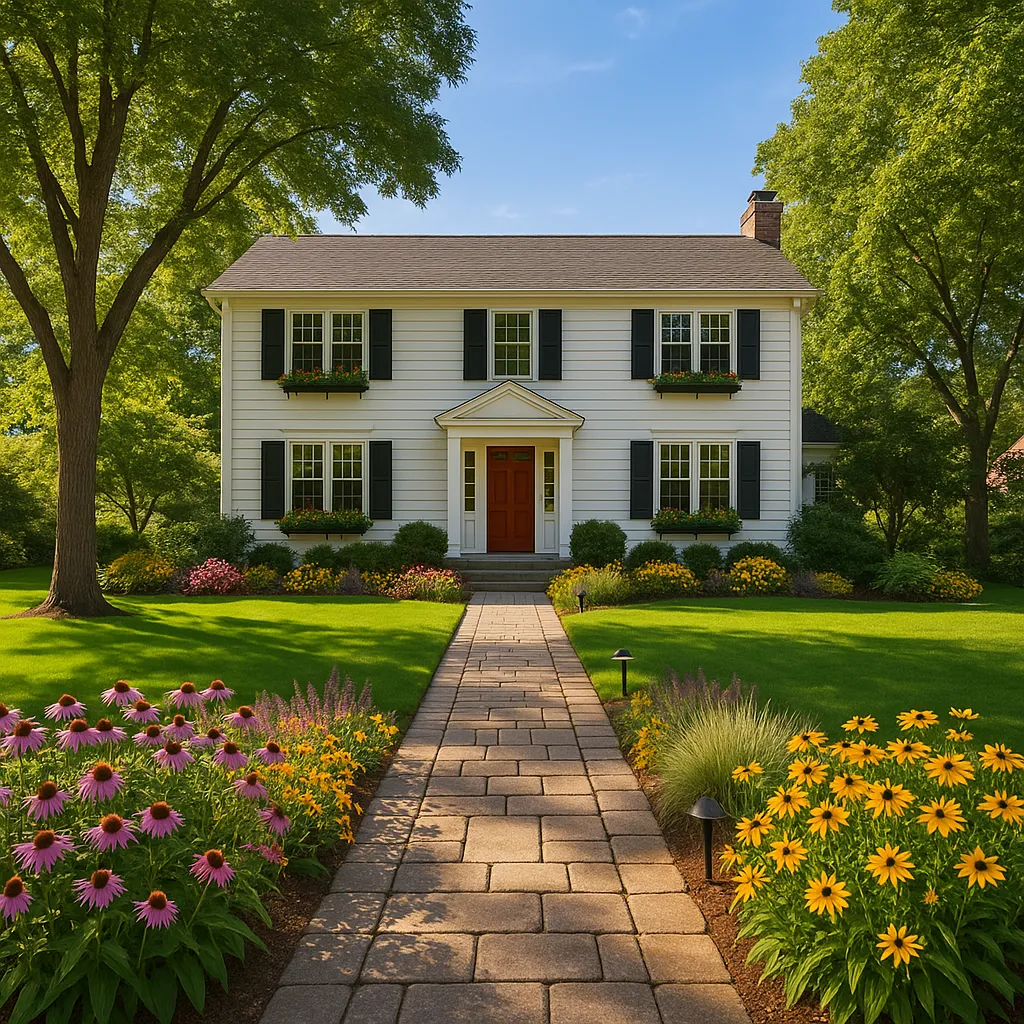
- A welcoming walkway: Natural stone, pavers, or stamped concrete replace tired concrete slabs. A curved path from the driveway to the door creates visual interest and slows the eye.
- Foundation plantings: Low-growing evergreen shrubs anchor the home visually and look great year-round — including during Minnesota's long winters.
- Seasonal color beds: A simple 12–18" deep border of perennials along the foundation adds enormous curb appeal impact. Choose Minnesota-hardy varieties that return year after year.
- Landscape lighting: Low-voltage path lights and uplights on the home's façade create safety, security, and dramatic nighttime curb appeal.
4. Native Perennial Gardens — Low Maintenance, High Visual Impact
Minnesota native perennial plants — coneflowers, black-eyed Susans, bee balm, wild bergamot, native grasses — are adapted to our climate, require minimal supplemental watering once established, and provide stunning seasonal color from May through October.
Compare this to annual flower beds that must be replanted and watered every single year. Native perennial gardens cost more upfront but dramatically less over time — and they signal to buyers that the home's landscaping is thoughtful, sustainable, and low-maintenance.
Minnesota native plants we love:
- Purple Coneflower (Echinacea) — Blooms June–September, extremely drought-tolerant
- Black-Eyed Susan (Rudbeckia) — Bright yellow blooms, self-seeding, virtually indestructible
- Little Bluestem Grass — Stunning copper-red fall color, four-season interest
- Wild Blue Indigo — Striking blue-purple spring blooms, deer resistant
- Prairie Dropseed — Fine-textured native grass, beautiful fall fragrance
5. Hardscaping — Patios, Retaining Walls, and Outdoor Living Spaces
This is where landscaping meets lifestyle — and where some of the most significant resale value can be created. A well-designed patio or outdoor living space extends your home's functional square footage and is consistently one of the top features buyers look for in Minnesota's spring and summer market.
For Minnesota's climate, here's what holds up and adds value:
- Natural stone or paver patios — Freeze-thaw resistant, long-lasting, aesthetically timeless. Consistently deliver strong ROI in Minnesota's market.
- Retaining walls — Both functional (critical for managing grade changes and drainage) and beautiful.
- Pergolas and shade structures — Increasingly popular in Minnesota's markets. They define outdoor living spaces and add year-round visual interest.
For a complete guide to decks, patios, and outdoor structures in Minnesota, read: Minnesota Outdoor Living: Decks, Patios & Fencing →
6. Privacy Landscaping — A Feature Buyers Pay a Premium For
In Minnesota's suburban neighborhoods — where lot lines can be relatively tight — privacy landscaping is enormously valuable. A well-established privacy screen is something buyers actively seek out and are willing to pay more for.
The most effective and beautiful privacy solutions for Minnesota:
- Emerald Green Arborvitae — Minnesota's most popular privacy screen. Fast-growing (12–18" per year), narrow columnar form, dark green year-round.
- Techny Arborvitae — Slightly more cold-hardy. Better for exposed, windy locations in northern Wright County.
- Skyline Honeylocust — A deciduous alternative providing summer privacy with filtered light and beautiful golden fall color.
- Mixed Native Shrub Borders — Using native shrubs (elderberry, nannyberry viburnum, native dogwood) for habitat, color, and privacy across seasons.
7. Proper Grading & Drainage — The Unsexy Investment That Protects Everything Else
Proper grading means the soil slopes away from your home on all sides — directing rainwater and snowmelt away from the foundation rather than toward it. When grading fails over time, water pools at the base of your home and creates foundation stress that can cost tens of thousands to repair.
For more on how grading and drainage protect your foundation: Minnesota Foundations: The Realities of Basements & Crawl Spaces →
And for the connection between grading, drainage, and your gutter system: Why Does My Minnesota Home Need Gutters? →
Signs of grading problems to watch for when buying:
- Soil that slopes toward the home rather than away
- Evidence of basement moisture or water stains on the lower foundation
- Dead or stressed plant material immediately adjacent to the home
- Downspouts that terminate at the foundation wall rather than directing water away
8. Landscape Lighting — Beautiful and Brilliantly Practical
A well-lit property is safer, more secure, dramatically more attractive at night — and in Minnesota's real estate market, where buyers often do evening neighborhood drives, it can make a meaningful difference.
High-ROI Minnesota landscape lighting priorities:
- Path lights along front walkways and driveways — safety, security, and curb appeal
- Uplights on signature trees or architectural features — dramatic and elegant
- Deck and patio lighting — extends outdoor living into the evening
- Motion-activated security lighting at garage and entry points — a feature buyers specifically request
9. A Minnesota-Smart Irrigation System — Protect Your Investment Year-Round
A properly designed irrigation system is increasingly considered a standard feature in Minnesota's higher-value homes. Consistent, efficient watering is the single most important factor in maintaining lawn and plant health through Minnesota's dry summer spells.
A smart irrigation system with weather-sensing controls delivers water only when needed — avoiding overwatering during rainy periods and ensuring consistent moisture during dry stretches. This protects your entire landscaping investment and reduces water bills simultaneously. For energy efficiency context, read: The Complete Minnesota Homeowner's Guide to Improving Energy Efficiency →
Landscaping Mistakes That Actually Hurt Minnesota Home Values
Not every landscaping choice adds value. Here's what to avoid:
- Overgrown foundation shrubs: Shrubs touching or covering windows, soffits, or the home's exterior create moisture issues, pest pathways, and a neglected appearance. Prune aggressively or replace.
- Invasive species: Buckthorn, Japanese barberry, and other invasives are problematic in Minnesota and signal poor landscape stewardship to knowledgeable buyers.
- Poorly placed large trees: A beautiful tree planted too close to the home's foundation, roof, or utility lines becomes a liability — not an asset. Always plant with mature size in mind.
- Neglected lawn with bare patches or weeds: Buyers notice. This is one of the cheapest things to fix (overseeding + fertilizer) with one of the highest impression impacts.
- Decorative gravel or rock mulch over large areas: In Minnesota it can create heat island effects around the home and signal high maintenance for future planting.
What to Look for in a Home's Landscaping When Buying
When you're evaluating a home in Minnesota, don't just look at how the landscaping looks today. Look at what it tells you about the home:
- Grading and drainage: Does water flow away from the home? Are there low spots that could indicate foundation drainage issues?
- Tree placement and health: Are large trees near the home healthy and well-maintained, or do they pose a risk to the roof, foundation, or utility lines?
- Irrigation system: Does one exist? Is it functional and properly winterized?
- Foundation shrub condition: Overgrown shrubs touching the home's exterior can indicate deferred maintenance and potential moisture issues.
- Overall maintenance level: Landscaping condition is one of the most reliable visual indicators of how a home has been cared for overall.
Our team at Circle Partners walks buyers through exactly what to look for — because what you see outside the home tells you a great deal about what's happening inside. For more on the full financial picture of buying in Minnesota, read: How Much Are Closing Costs When Buying a Home? →
7 Frequently Asked Questions: Landscaping for Minnesota Homes
Q: What landscaping improvements add the most value to a Minnesota home?
A: The highest-ROI landscaping investments for Minnesota homes are consistently: a well-maintained healthy lawn, mature shade trees, a welcoming front entry with walkway and foundation plantings, and a functional outdoor living space (patio or deck). Together these can add 10%–15% to perceived home value and meaningfully reduce time on market. Our team is happy to walk you through what makes the most sense for your specific property and goals.
Q: What are the best low-maintenance landscaping plants for Minnesota?
A: Minnesota native perennials and shrubs are the ultimate low-maintenance choice for our climate. Purple coneflower, black-eyed Susan, native grasses (little bluestem, prairie dropseed), and native shrubs (elderberry, nannyberry viburnum) are all well-adapted to our freeze-thaw cycles, require minimal supplemental watering once established, and return reliably year after year.
Q: How much should I budget for landscaping when buying a Minnesota home?
A: As a planning benchmark, a well-executed foundational landscaping investment — lawn care, front entry plantings, privacy screening, and grading corrections if needed — often runs $5,000–$20,000+ depending on the scope and the home's existing condition. Many of these investments deliver meaningful returns in comfort, energy savings, and eventual resale value. For personalized guidance on budgeting for home improvements, consult a qualified financial advisor.
Q: When is the best time of year to landscape in Minnesota?
A: In Minnesota, spring (May–early June) and fall (late August–early October) are the best planting windows. Fall is actually superior for lawn overseeding, tree planting, and many shrub installations because cooler temperatures reduce transplant stress while soil temps remain warm enough for root establishment. Planning your landscaping project for fall often gets you better plant selection, better pricing, and better results.
Q: Do shade trees really reduce energy bills in Minnesota?
A: Yes — significantly. Research consistently shows that strategically placed shade trees on the south and west sides of a home can reduce summer cooling costs by 15%–35%. In Minnesota, where summer air conditioning bills can be substantial, this represents meaningful annual savings. The added bonus: these same trees drop their leaves in fall, allowing winter sun to reach your home and reduce heating costs during our long cold season.
Q: How do I know if a home's landscaping has drainage problems?
A: Look for soil that slopes toward the home rather than away, low spots or depressions near the foundation, water stains on the basement walls or lower foundation, and dead or struggling plant material immediately adjacent to the home. During your home inspection, ask your inspector specifically about grade and drainage — it's one of the most important and most overlooked aspects of a home's exterior condition. Our team at Circle Partners helps buyers identify and evaluate these issues before closing.
Q: Are there tax benefits for landscaping improvements in Minnesota?
A: We always refer these questions to a qualified tax professional — tax rules around home improvements and energy-efficient landscaping are nuanced and change regularly. Certain landscaping improvements that improve energy efficiency may qualify for energy-related incentives in some programs. Always consult a trusted tax advisor for guidance specific to your situation.
Your Home's Best Investment May Be Right in Your Front Yard.
Landscaping done right is real estate planning done right. It protects your foundation. It saves you money on energy. It creates the kind of home your family actually loves to live in. And when the time comes to sell — it's one of the first things that brings buyers to the door and keeps them there.
At Circle Partners, we help families see every dimension of their home's value — not just today, but for every season of life that comes next. Whether you're buying your first home, right-sizing your space, or planning your family's long-term wealth strategy, we'd love to be in your corner.
Let's sit down together. Let's talk about your goals, your property, and the best path forward — for you and your family.
📅 Book Your Free Strategy Session →
Questions? Reach us at [email protected] or call 763-340-2002. Our office is at 16201 90th St NE, Suite #100, Otsego, MN 55330.
*This article is for informational purposes only and does not constitute legal, financial, or tax advice. For guidance specific to your situation, please consult a qualified attorney or tax professional.