Radon and the Minnesota Home Sale: What Sellers Need to Know
Radon and the Minnesota Home Sale: What Sellers Need to Know
Radon is one of the most commonly encountered topics in Minnesota home sales — and one of the most misunderstood. It's a naturally occurring radioactive gas that results from uranium decay in soil and rock, and it can accumulate to dangerous levels in homes without any visible sign. Minnesota has elevated radon levels compared to national averages, which means it's a routine part of the due diligence process in most transactions.
For sellers, understanding radon — what you're required to disclose, how mitigation works, and how to position it in your sale — can make the difference between a smooth transaction and a difficult inspection negotiation.
Minnesota's Radon Context
Minnesota is one of the states with the highest average radon concentrations in the country. The Minnesota Department of Health estimates that approximately 40% of Minnesota homes have radon levels at or above the EPA action level of 4 picocuries per liter (pCi/L). In some areas of the state — particularly the central and southeastern regions — the rate is significantly higher.
This means radon testing during the buyer's inspection period is essentially standard practice in most Minnesota transactions. As a seller, you should expect it — and prepare for it.
What Sellers Are Required to Disclose
Minnesota law requires sellers to disclose known material facts about a property's condition. For radon specifically:
- If you have had radon testing performed and the results were at or above the EPA action level (4 pCi/L), those test results must be disclosed on the seller's disclosure form.
- If a radon mitigation system has been installed, both the prior test results and the existence of the mitigation system must be disclosed.
- If you have never had radon tested, you can disclose that you have no knowledge of radon test results — but buyers should be advised to conduct their own test.
For specific questions about your disclosure obligations, consult a qualified real estate attorney. See our complete seller disclosure guide for the broader disclosure framework.
Should You Test for Radon Before Listing?
Knowing your radon level before listing gives you strategic options that you don't have if you wait for the buyer's test result to come back under contract. Consider testing before listing if:
- You have never had radon tested and are uncertain of your home's level
- Your home has a basement (basements have the highest radon concentration risk)
- You want to market a confirmed-low radon level as a positive
- You want to address any elevated level on your schedule rather than under contract pressure
A radon test costs $100–$200. If elevated levels are found, a mitigation system costs $1,000–$2,500 for most Minnesota homes — a relatively modest investment that eliminates a significant buyer negotiation point. See our complete radon testing guide for how radon tests work and what the results mean.
Radon Mitigation: What It Is and What It Does to Your Sale
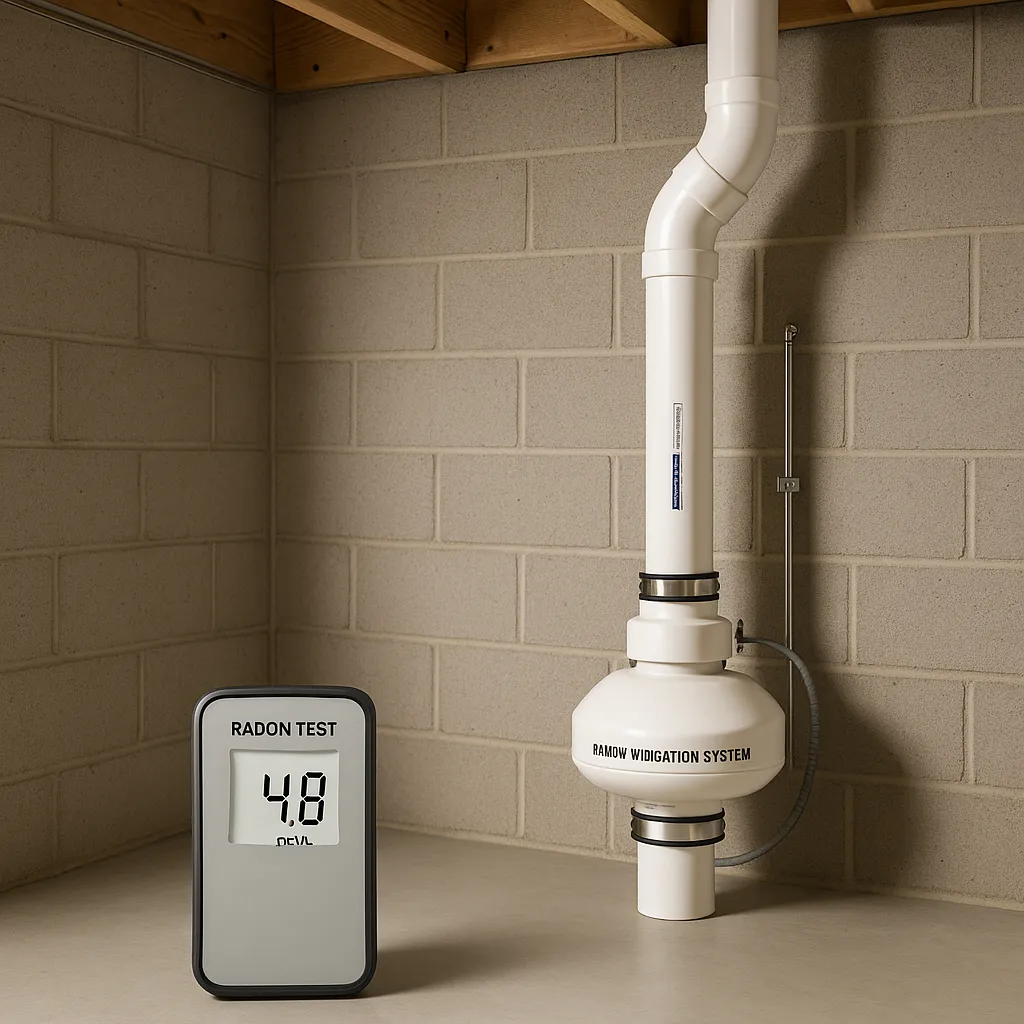
A radon mitigation system is a sub-slab depressurization system — essentially a pipe that runs from below the basement slab to the exterior of the home, with a fan that draws radon-laden air out before it can accumulate inside. It's an established, effective technology.
What a mitigation system does for your sale:
- Reduces radon levels — most systems bring levels well below the 4 pCi/L action level
- Eliminates the radon negotiation entirely — buyers can test, confirm low levels, and move on
- Becomes a marketable asset — a home with an installed, functional mitigation system is more attractive to informed buyers than one with unknown radon levels
- Costs a fraction of what buyers might demand as a credit — a $1,500 mitigation system beats a $3,000–$5,000 credit negotiation
Important: After installation, re-test to confirm effectiveness before listing. Most mitigation contractors include a post-mitigation test. Marketing a mitigated home requires documentation that the system is working.
What Happens When Buyers Test Your Home
During the inspection period, buyers typically place a radon test canister in the lowest livable level of the home for 48–72 hours. The canister is sent to a lab, and results are returned within a few days.
If results come back below 4 pCi/L: No issue. The buyer moves forward without radon being a factor.
If results come back at or above 4 pCi/L: The buyer will typically request one of three things:
- Seller installs a mitigation system before closing
- Seller provides a credit for the buyer to install mitigation after closing (typically $1,500–$2,500)
- In cases of very high levels, the buyer may consider walking away
Being proactive — testing before listing and mitigating if elevated — eliminates all three scenarios.
🏡 Real Estate Planner Perspective: We recommend radon testing as part of every Minnesota seller's pre-listing process. It costs $100–$200 and takes 48 hours. The information it gives you is worth far more than the cost — either peace of mind if levels are low, or the opportunity to mitigate on your schedule if they're not. Book a pre-listing consultation with Circle Partners →
Frequently Asked Questions: Radon and Selling a Home in Minnesota
Do I have to test for radon before selling my Minnesota home?
You are not legally required to test for radon before selling. However, if you have previously tested and results were at or above 4 pCi/L, you must disclose those results. If you have never tested, buyers will almost certainly conduct their own test during the inspection period. Testing before listing gives you information and options — it's strongly recommended for most Minnesota sellers, particularly those with basements.
What is the EPA action level for radon?
The EPA recommends taking action to reduce radon levels when results are at or above 4 picocuries per liter (pCi/L). The EPA also suggests considering mitigation at levels between 2 and 4 pCi/L, particularly in homes where occupants spend significant time in lower levels. Minnesota has elevated average radon levels compared to national data, making this a more common issue in MN transactions than in many other states.
How much does radon mitigation cost in Minnesota?
Radon mitigation installation (sub-slab depressurization system) typically costs $1,000–$2,500 for most Minnesota homes, depending on foundation type, home size, and system complexity. The cost includes installation, a post-mitigation test, and typically a warranty on the system. Licensed radon mitigators are available throughout Minnesota — look for contractors certified by the National Radon Proficiency Program (NRPP) or the National Radon Safety Board (NRSB).
Can I sell my Minnesota home if it has elevated radon?
Yes — many Minnesota homes have elevated radon levels, and they sell successfully every day. The key is disclosure and strategy: either mitigate before listing, offer a credit for buyer-managed mitigation, or price to reflect the need for mitigation. What doesn't work is concealing known elevated radon results — this creates significant legal liability. Consult a qualified real estate attorney for questions about your specific disclosure obligations.
How long does radon mitigation take?
A typical radon mitigation installation takes half a day to a full day for most homes. After installation, a post-mitigation radon test (48–72 hours) confirms the system is effective. Most sellers who test, discover elevated levels, and mitigate can complete the entire process in 2–3 weeks — well within a pre-listing preparation timeline of 4–8 weeks.
Will buyers accept a credit instead of seller-installed mitigation?
Often, yes — especially if you're offering a credit that covers the full cost of installation. Some buyers prefer to choose their own contractor; others want the work done before they take ownership. The right approach depends on your timeline, the buyer's preferences, and your agent's guidance. If you mitigate before listing, this negotiation doesn't happen at all — the buyer's test simply confirms low levels.
Does a radon mitigation system affect my home's value?
A properly installed and functioning radon mitigation system generally does not reduce a home's value — and for informed buyers in Minnesota, it can be a positive indicator. It demonstrates that the seller has addressed a known concern proactively and has documentation of the system's effectiveness. Homes with confirmed low radon levels (post-mitigation test on file) are straightforward for buyers who are evaluating several properties with unknown radon status.
Get Ahead of Radon — Don't React to It
Radon is a manageable issue in Minnesota real estate. The sellers who handle it best are the ones who test before listing, make an informed decision about mitigation, and come to the market with documentation rather than uncertainty.
At Circle Partners — KW Real Estate Planners, we include radon guidance in every pre-listing consultation for Minnesota sellers.
📞 Call us: 763-340-2002 | 📧 Email us: [email protected] | 📍 16201 90th St NE, Suite #100, Otsego, MN 55330
🗓️ Book Your Free Real Estate Planning Consultation
Circle Partners is a licensed real estate team with KW Real Estate Planners, serving buyers and sellers across Minnesota. This post is for informational purposes only and does not constitute legal, tax, or financial advice. Always consult a qualified attorney, CPA, or licensed professional.