What Sellers Need to Know About Minnesota's Well and Septic Disclosure Rules
What Sellers Need to Know About Minnesota's Well and Septic Disclosure Rules
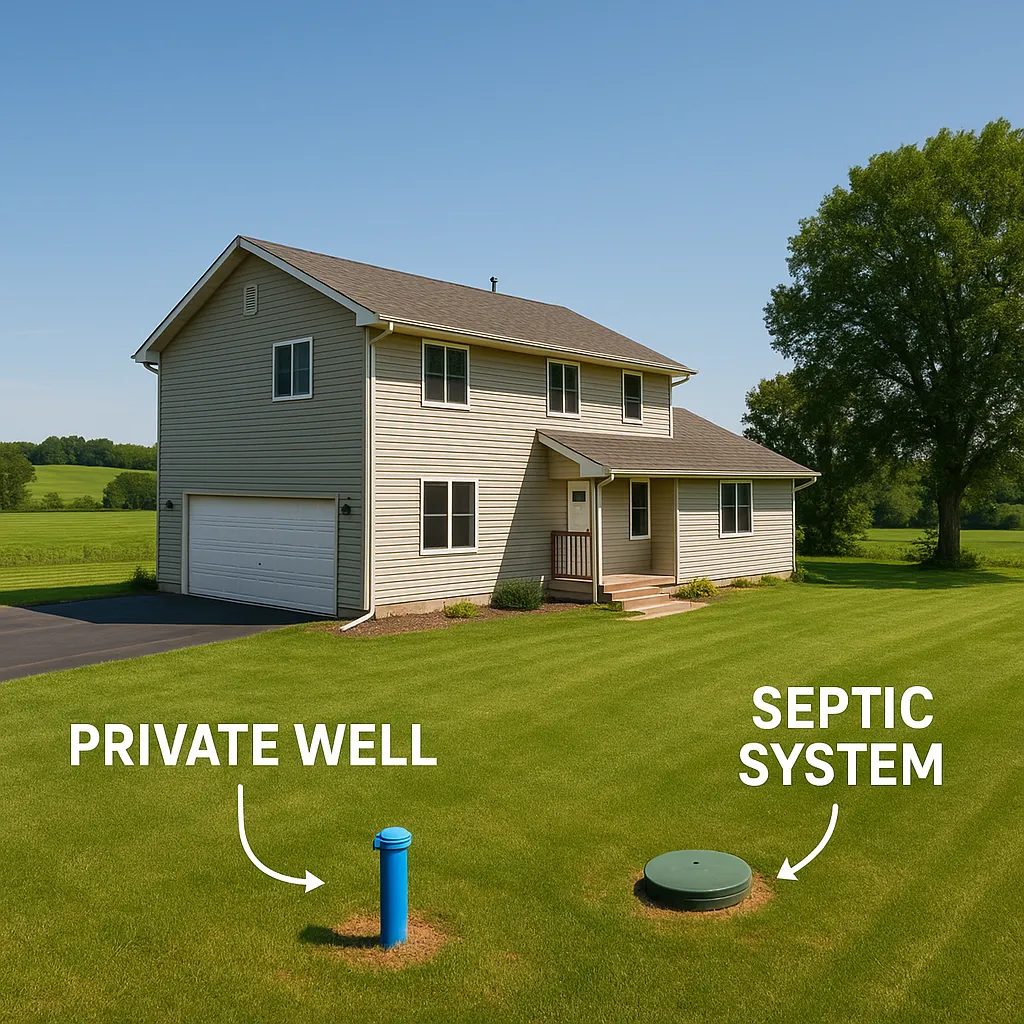
If you're selling a Minnesota property with a private well or septic system, the disclosure and inspection requirements go significantly beyond what applies to homes on municipal water and sewer. Minnesota has specific state laws governing the disclosure and inspection of these systems — and failing to comply can create serious legal and financial liability after closing.
At Circle Partners, we help sellers with rural and suburban properties understand these requirements early in the planning process. Here's what you need to know.
Private Wells: What Minnesota Sellers Must Disclose and Do
Well Disclosure Certificate
Minnesota law (Minnesota Statutes Chapter 103I) requires sellers to complete a Well Disclosure Certificate if any wells exist on the property — including active wells, wells serving the home, and any abandoned or sealed wells. This certificate must be filed with the county recorder at the time of the deed transfer and provided to the buyer.
The Well Disclosure Certificate requires sellers to identify:
- The location of all known wells on the property
- The status of each well (in use, not in use, sealed)
- Whether the well has been tested for water quality
- Whether a well sealing record exists for any sealed wells
Sellers who are uncertain about the well history of their property should research county records and, if necessary, consult with a licensed well contractor. For specific legal requirements regarding your property, consult a qualified real estate attorney.
Water Quality Testing
While not always legally mandated as a condition of sale, water quality testing is standard practice in Minnesota transactions involving private wells. Buyers routinely request water testing as part of their due diligence. Common tests include:
- Coliform bacteria and E. coli — the most common required tests in most lending scenarios
- Nitrates — particularly important in agricultural areas
- Arsenic, iron, manganese, and hardness — common in many Minnesota aquifers
- VOCs and pesticides — relevant in areas with prior agricultural or industrial use
Sellers should be prepared for buyers to request a water quality test and to negotiate based on results. If prior water quality testing has been conducted, those results should be disclosed. Our private wells and irrigation guide covers what buyers evaluate in detail.
Abandoned Wells
If any abandoned wells exist on the property — including wells that are no longer in use but have not been properly sealed — they must be disclosed. Minnesota law requires abandoned wells to be properly sealed by a licensed well contractor. An unsealed abandoned well is a potential source of groundwater contamination and a liability issue. If you have an abandoned well, consult a licensed well contractor about sealing requirements before listing. Costs vary but typically run $500–$2,000 depending on depth and accessibility.
Septic Systems: What Minnesota Sellers Must Disclose and Do
The ISTS Inspection Requirement
Minnesota law (Minnesota Statutes 115.55) requires that Individual Sewage Treatment Systems (ISTS) — commonly called septic systems — be inspected within three years prior to the transfer of property, or within six months after the transfer. Many lenders and buyers require inspection prior to closing rather than after.
In practice, most transactions involving properties with septic systems include a seller-ordered septic inspection prior to listing or as a condition of the purchase agreement. The inspection is conducted by a licensed ISTS inspector and results in a compliance or non-compliance report.
What a Septic Inspection Covers
- Tank condition and pumping status (the tank is typically pumped as part of the inspection)
- Distribution system (pipes, flow, distribution box)
- Drain field condition and adequacy
- System compliance with current Minnesota rules
Compliance vs. non-compliance: If the system is found compliant, this is a clean outcome that satisfies most buyer and lender requirements. If the system is non-compliant, the seller typically must either bring the system into compliance before closing or escrow funds for the buyer to do so after closing. Non-compliant systems must be disclosed and addressed — a buyer cannot knowingly take title to a property with a non-compliant septic system without a remediation plan in place. For specific legal requirements, consult a qualified real estate attorney.
Septic Inspection Costs
A standard septic inspection including tank pumping typically costs $300–$600 in Minnesota. If repairs or full system replacement are needed, costs vary significantly based on system type, soil conditions, and local regulations. Replacement systems can range from $5,000 to $25,000+ — which is why early inspection is important for pricing and planning purposes.
Planning Your Timeline
Both well and septic requirements have scheduling implications:
- Well water quality tests take 5–10 business days for results
- Septic inspections require scheduling a licensed inspector and often a pump truck — 1–3 weeks advance scheduling in busy seasons
- Any required remediation adds additional time
Build these steps into your pre-listing timeline — ideally 6–8 weeks before your target listing date. For the complete pre-listing preparation sequence, see our pre-listing checklist. For context on your full disclosure obligations, see our seller disclosure guide.
🏡 Real Estate Planner Perspective: Well and septic issues are among the most common causes of delayed closings and failed transactions on rural Minnesota properties. Addressing them early — with inspections completed and results disclosed before listing — is always better than discovering them under contract with a deadline. Book a pre-listing consultation with Circle Partners →
Frequently Asked Questions: Well and Septic Disclosure in Minnesota
Am I required to inspect the septic system before selling in Minnesota?
Minnesota law requires that ISTS (septic) systems be inspected within three years prior to property transfer, or within six months after. In practice, most buyers and lenders require the inspection before closing. Many sellers choose to order the inspection before listing — this gives them time to address any compliance issues on their schedule rather than under contract pressure. Consult a qualified real estate attorney for the specific requirements applicable to your property and transaction.
What happens if my septic system fails inspection?
A non-compliant septic system must be disclosed and cannot simply be sold as-is without a remediation plan. Options typically include: the seller repairs or replaces the system before closing, funds are escrowed at closing for the buyer to manage the repair, or the purchase price reflects the cost of remediation. The right approach depends on the nature of the non-compliance, the transaction terms, and the buyer's preferences. Consult a qualified real estate attorney and licensed ISTS professional for guidance specific to your situation.
What is a Well Disclosure Certificate in Minnesota?
A Well Disclosure Certificate is a legal document required under Minnesota law that identifies the location and status of all known wells on a property. It must be filed with the county recorder at the time of deed transfer and provided to the buyer. Sellers are responsible for completing this document accurately. If you're uncertain about the well history of your property, consult county records and a licensed well contractor. For legal questions about your specific obligations, consult a qualified real estate attorney.
Do I need to test the water quality before selling?
Water quality testing is not universally required by Minnesota law as a condition of sale, but it is typically required by lenders for properties with private wells, and buyers routinely request it as part of their due diligence. If prior water quality testing has been conducted, those results should be disclosed on the seller's disclosure form. Proactively testing before listing — and addressing any issues found — is generally the smoothest approach.
How much does a septic inspection cost in Minnesota?
A standard septic inspection including tank pumping typically costs $300–$600 in Minnesota. The cost varies by system type, tank size, site accessibility, and inspector. This cost is typically borne by the seller when ordered as part of the pre-listing process. If the inspection reveals needed repairs, those costs are separate and vary significantly based on the scope of work required.
What if I don't know whether my property has abandoned wells?
Search county records (the county recorder's office or the Minnesota County Well Index) for documented wells on your property. Walk the property and look for visible well casings, caps, or depressions that might indicate an old well location. If you find evidence of an abandoned well, consult a licensed well contractor about sealing requirements. Disclosing uncertainty honestly on the disclosure form — along with what steps you've taken to investigate — is the appropriate approach. Consult a qualified real estate attorney for specific guidance.
What disclosures are required when selling a rural Minnesota property?
Rural properties with private wells and/or septic systems require the standard seller's disclosure form plus: a Well Disclosure Certificate (if any wells exist), disclosure of any known water quality test results, and disclosure of the ISTS (septic) inspection status and results. Lead-based paint disclosure applies to homes built before 1978 regardless of water/sewer type. Radon disclosure applies if testing has been conducted. For the complete disclosure framework, see our seller disclosure guide and consult a qualified real estate attorney.
Know Your Requirements Before You List
Well and septic requirements in Minnesota are specific, legally significant, and have real timeline implications for your sale. Getting ahead of them — with inspections completed and results disclosed before listing — is the path to a smooth transaction.
At Circle Partners — KW Real Estate Planners, we help Minnesota sellers navigate rural property requirements as part of every listing engagement.
📞 Call us: 763-340-2002 | 📧 Email us: [email protected] | 📍 16201 90th St NE, Suite #100, Otsego, MN 55330
🗓️ Book Your Free Real Estate Planning Consultation
Circle Partners is a licensed real estate team with KW Real Estate Planners, serving buyers and sellers across Minnesota. This post is for informational purposes only and does not constitute legal, tax, or financial advice. Always consult a qualified attorney, CPA, or licensed professional for guidance specific to your situation.